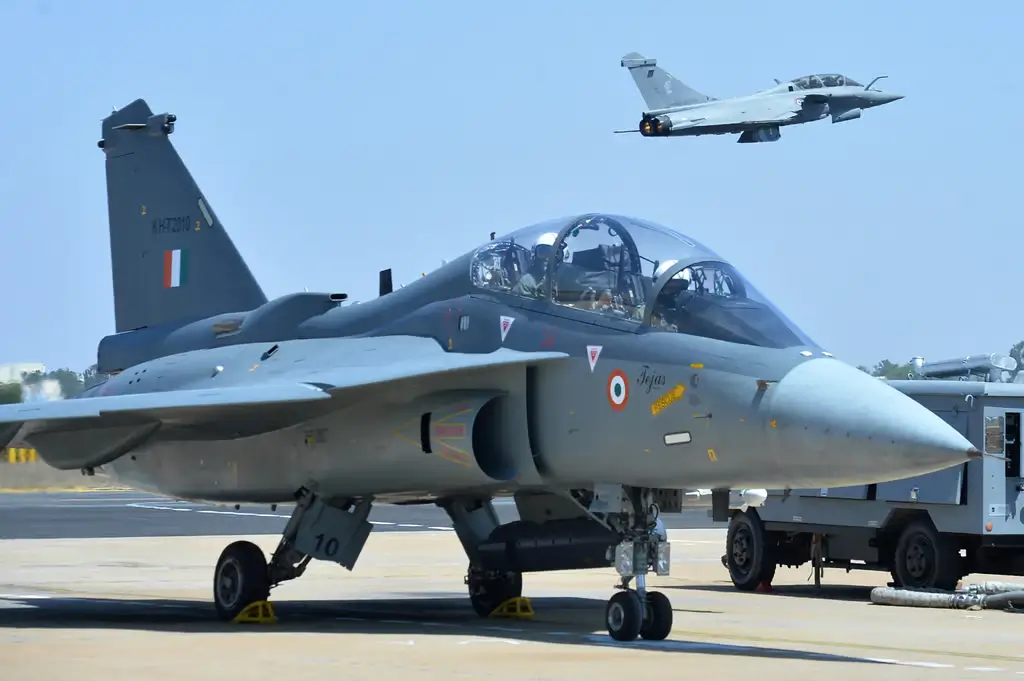
LONDON/NEW DELHI — An in-depth investigative report from the British aviation and defense magazine Key Aero has detailed what it describes as catastrophic losses for the Indian Air Force during the May 2025 aerial engagement with Pakistan. The September 2025 issue, in a feature titled "Understanding the Rafale Kills," alleges the loss of four Dassault Rafale fighter jets, specifically identifying them by serial numbers: BS-001, BS-021, BS-022, and BS-027.
Authored by veteran aviation correspondent Alan Warnes, the report draws on exclusive access to Pakistan Air Force (PAF) debriefs and electronic intelligence (ELINT) data. It asserts that these losses occurred during a high-intensity, 52-minute beyond-visual-range (BVR) battle on May 7, 2025, challenging the long-held assumption of Indian air superiority in the region.
Report Findings
- Specific Losses: Four Rafale jets identified by serial numbers (BS-001, BS-021, BS-022, BS-027).
- Tactical Edge: Pakistan utilized integrated multi-domain operations, including Erieye AWACS and dedicated electronic warfare jamming to blind Indian Su-30MKI radars.
- Weaponry: The Chinese-supplied PL-15E missile, with its dual-pulse motor and ranges exceeding 145km, proved decisive against the European Meteor.
- Confirmation: French intelligence sources cited by Reuters partially corroborated the loss of at least one airframe, though Dassault Aviation remains silent.
Clash: Pahalgam Attack and Operation Sindoor
The chain of events began on April 22, 2025, when gunmen ambushed a group of tourists in the Baisaran Valley near Pahalgam, claiming 26 lives. New Delhi swiftly blamed Pakistan-based militant groups, including Lashkar-e-Taiba (LeT) and its offshoot The Resistance Front (TRF). The incident, described as a targeted massacre, reignited the volatile Kashmir dispute.
On the night of May 6-7, the Indian Air Force (IAF) executed Operation Sindoor, launching missile strikes on alleged terrorist camps in Pakistan-administered Kashmir using Rafale jets armed with SCALP cruise missiles. While India claimed successful strikes on command centers, Pakistan reported civilian casualties and vowed "immediate and proportionate" retaliation, setting the stage for the major aerial confrontation the following morning.
May 7 Aerial Engagement: 52-Minute Firefight
The core of the conflict unfolded in the skies over the Line of Control (LoC) on May 7. Analysts have dubbed it the most significant BVR air battle since the 1991 Gulf War. The engagement pitted approximately 72 Indian aircraft against 42 Pakistani jets, all operating at standoff ranges exceeding 100 kilometers to avoid visual detection.
According to Key Aero, the PAF's success stemmed from a meticulously planned "kill chain." Saab Erieye airborne early warning and control (AWACS) platforms provided real-time targeting data to J-10C fighters via Link-17 data links. This allowed the J-10Cs to fire PL-15E missiles in "silent mode," locking onto the Indian formation without alerting their radar warning receivers until the terminal phase.
The Report claims that electronic warfare (EW) played a critical role. Indian Su-30MKI radars were reportedly jammed by ground-based systems, preventing them from effectively guiding their Russian R-77 missiles. "We could have shot down more Rafales than we did, but we held back," a senior PAF officer told Warnes, citing fears of nuclear escalation. The report alleges that the four named Rafales were among six total IAF losses, with the others including a Su-30MKI and a MiG-29.
Detailed Air Power Audit
Conflict served as a brutal stress test for Western, Russian, and Chinese military technologies. The data below suggests a significant shift in the technological balance of power:
| Platform/Weapon | Origin | Key Specification | Role in Conflict | Outcome/Notes |
|---|---|---|---|---|
| Dassault Rafale | France | RBE2 AESA Radar / Meteor Missile (Ramjet) | Deep Strike & Air Superiority | 4 Confirmed Losses. Suffered from EW jamming and BVR surprise. |
| Chengdu J-10C | China | KLJ-7A AESA Radar / PL-15E | Primary Interceptor / Air Dominance | Credited with Rafale kills. Proved superior in data-link integration. |
| PL-15E Missile | China | Dual-Pulse Motor / >145km Range | Long-Range Kill Weapon | Outranged the Meteor in specific engagement envelopes. |
| Saab Erieye | Sweden/Pak | S-band AESA Radar | Battlefield Management | Provided "God's Eye" view, directing intercepts while staying out of range. |
| Su-30MKI | Russia | Bars PESA Radar | Combat Air Patrol | Radar jammed heavily; unable to maintain locks. 1 loss reported. |
Claims, Silence, and Geopolitical Fallout
Post-conflict narratives have diverged sharply. Pakistan's Air Chief Marshal Zaheer Ahmad Babar claimed "overwhelming dominance," releasing geolocated wreckage photos of a tailfin purportedly belonging to Rafale BS-001 near Bathinda. India's Chief of Defence Staff General Anil Chauhan, in a May 31 interview, confirmed "aircraft losses" but rejected the specific count, emphasizing "lessons in multi-domain integration."
The silence from Paris has been deafening. Dassault Aviation has issued no formal denial regarding the specific serial numbers, a move analysts suggest is designed to protect the jet's export prospects. Meanwhile, Western intelligence assessments cited by CNN suggest that while the exact number remains classified, the IAF suffered "material degradation" of its frontline squadrons.
Expert Insights & Strategic Lessons
The Royal United Services Institute (RUSI) noted that the engagement highlighted critical "intelligence gaps" regarding the performance of Chinese avionics. The Stimson Center's Michael Kugelman told Al Jazeera that the engagement signaled "the death of air superiority myths," warning that next-generation warfare will rely more on sensor fusion than airframe agility.
"The Rafale's downfall wasn't technological inferiority but operational surprise. The J-10C and PL-15E combination created a kill box that the IAF could not escape."
— Sidharth Kaushal, RUSI Senior Fellow
As the region remains under a fragile ceasefire mediated by the U.S., the revelations in the Key Aero report serve as a stark warning: in the era of networked warfare, even the most advanced platforms are vulnerable if the digital battleground is lost.



 Skasif