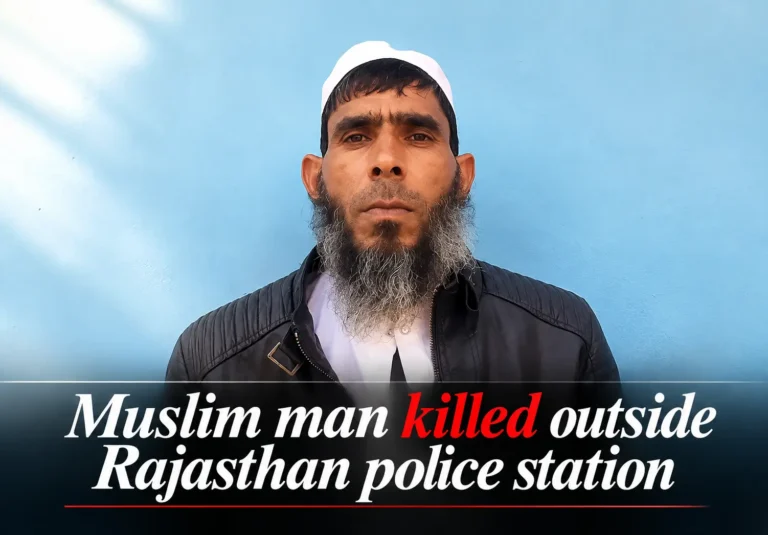
India, Uttar Pradesh – In the Sidhari area, the murder of seven-year-old Shahzeb has left his family and neighbors in shock. Shahzeb, a Muslim child, was killed by his neighbor, and the loss has torn through the community. His death is not just one family’s tragedy it comes at a time when anti-Muslim hate speech, mob attacks, and riots are on the rise across India, creating fear that touches millions. The hardest question now weighs on his grieving parents: was their little boy targeted simply because he was Muslim?
An Agonizing Wait and a Horrific Discovery
The details of the case are so cruel, so visceral, they feel like a punch to the stomach. It was a late September evening in 2025. The day was winding down like any other in the quiet neighborhood. Shahzeb, the eldest of three children, had just finished his after-school tutoring and was making the short journey home. His father, Saheb Alam, a hardware shop owner who worked tirelessly to build a better future for his children, was waiting. Shahzeb was the apple of his eye—"sharp as a tack, always curious about everything," Saheb would later recall, his voice frayed with a grief that is still fresh and overwhelming.
But as dusk settled, Shahzeb did not appear. The initial parental concern soon spiraled into full-blown terror. The family’s peaceful home became a center of frantic activity. They paced the streets, their calls for Shahzeb echoing into an increasingly ominous silence. That night was an eternity of dread, a sleepless vigil where the knot in every stomach tightened with each passing hour.
When the sun rose on Thursday, it illuminated a nightmare. It was neighbors who made the horrific discovery. Shahzeb’s small, lifeless body was found stuffed inside a sack, bearing signs of a severe beating, and callously left hanging from a gate as if he were discarded trash. The image is one of profound, almost unimaginable cruelty—a deliberate act of desecration that has left an indelible stain on the community.
A Community's Accusation and an Official Narrative
In their raw, immediate grief, the family did not hesitate. They pointed directly to their next-door Hindu neighbor, Shailendra Kumar Nigam. They spoke of a man they had exchanged pleasantries with, a man they considered a neutral, if not friendly, presence. Now, they accused him of something monstrous: luring Shahzeb away under the pretense of a twisted ritual sacrifice. This dark rumor, whether born of fact or the community’s desperate search for reason in the face of senseless evil, spread quickly through the tight-knit lanes of Sidhari.
Police response was swift, but to many observers, it felt immediately inadequate. A case was registered—but under the section for kidnapping. The suspect, Nigam, and an accomplice named Raja, were apprehended near the local dental college in what authorities described as an "encounter," a term that often raises eyebrows in India for its association with extrajudicial killings. The official report mentioned minor injuries to the suspects and the recovery of firearms.
Yet, for Shahzeb’s family and a growing chorus of concerned citizens, this official narrative rings hollow. Where, they demand to know, are the murder charges? Why is there no serious, transparent investigation into the family’s allegation of a ritualistic killing motivated by religious hate? The gap between the brutality of the crime and the narrow scope of the police investigation feels like a deliberate downplaying of the incident’s most inflammatory element. It creates a chilling perception that the authorities are afraid to name the ugliness at the heart of this tragedy, choosing instead to sweep the real motive under the rug.
Echoes of Hate in a Divided Nation
To understand the profound impact of Shahzeb’s death, one must recognize that it is not an isolated horror. It is the latest, most piercing note in a crescendo of violence that has been building across India, particularly since 2024. The story reverberates with the echoes of other unforgettable crimes that have targeted the Muslim community, creating a sense of collective trauma.
Who can forget the case of eight-year-old Asifa Bano from Kathua in 2018? The little Muslim girl who was kidnapped, held captive in a temple, raped repeatedly, and then murdered in a calculated plot to terrorize her nomadic community and drive them from the area. That case, like Shahzeb’s, laid bare how religious hatred could be weaponized against the most vulnerable.
The data paints a stark and unsettling picture. In 2024, organizations like the India Hate Lab documented a staggering 1,165 instances of hate speech delivered in public forums—a 74% increase from the previous year. The vast majority of these speeches targeted Muslims. This torrent of verbal poison is not harmless; it actively fuels physical violence, creating an environment where prejudice is normalized and perpetrators are emboldened.
This environment has manifested in several terrifying ways:
Brutal Lynchings
The violent mob killings often linked to false rumors of cow smuggling or beef consumption have seen a grim resurgence. In June 2024, in Raipur, Chhattisgarh, two Muslim men were beaten to death on baseless accusations. In September, in Haryana, a humble trash collector named Sabir Malik was brutally assaulted by a mob simply for having goat meat in his bag.
Deadly Riots
Communal clashes have skyrocketed, with data from the Centre for Study of Society and Secularism (CSSS) noting an 84% increase in riots in 2024, leading to 59 major incidents. In these clashes, the Muslim community has borne a disproportionate burden of the casualties and displacement.
Attacks on the Most Vulnerable
Perhaps most chilling is the fact that not even children or the elderly are spared. Beyond Shahzeb, there have been reports of other attacks, like the swarming and beating of three Muslim children, aged six to eleven, in Ratlam, Madhya Pradesh. A 65-year-old Sufi man was killed in a quiet place of worship; another elderly man was clubbed simply for begging in the "wrong" neighborhood. For Muslim families across India, this relentless drumbeat of violence has fundamentally altered daily life. The simple, universal act of letting a child walk home from school is now fraught with anxiety. Parents find themselves giving their children grim lessons in caution that no seven-year-old should have to learn. “You don’t want to scare a seven-year-old with the world’s shadows,” a cousin of Shahzeb’s family remarked, wiping away tears. But the shadow of Shahzeb’s death is long and dark, forcing that very fear upon an entire generation.
When Justice Feels Out of Reach
If the violence itself is the first blow, the frequent failure of the justice system to respond adequately is the second, often deepening the wound. In case after case, the path to justice for Muslim victims seems fraught with obstacles and indifference.
In Shahzeb’s case, the gap between the family’s accusations and the police’s charges is a glaring example. The initial filing of kidnapping, while murder charges remain absent, feels like a profound failure to acknowledge the gravity of what happened. This is part of a devastating pattern. Watchdog groups consistently report that a shockingly low percentage of hate-motivated crimes are even registered correctly under appropriate sections of the law. Often, the legal process moves at a glacial pace, if it moves at all, allowing perpetrators to operate with a sense of impunity.
The situation is compounded by two highly controversial state tactics:
Bulldozer Strategy
In the aftermath of incidents involving Muslims, authorities in several states, most notably Uttar Pradesh, have repeatedly used bulldozers to demolish homes and businesses owned by Muslim individuals accused of crimes. In 2024, an estimated 7,400 properties were flattened across India, with a disproportionate 37% being Muslim-owned. The Supreme Court of India finally intervened in November 2024, calling the practice “an act of collective punishment” and putting a stop to it, but not before thousands of families were rendered homeless without due process.
Police Encounters
The police practice of "encounters"—where suspects are shot dead in alleged confrontations—has also drawn intense scrutiny. Data analysis reveals that Muslims are disproportionately killed in these incidents. Since 2017, over 200 Muslims have been killed in such encounters in Uttar Pradesh alone, a figure that is starkly out of proportion to their population share. Human rights activists consistently label many of these as extrajudicial killings, arguing they bypass the justice system and deny victims their right to a fair trial.
This two-tiered system of justice—one for the majority and another, far more punitive and neglectful, for the minority—sends a chilling message. It tells the Muslim community that the state may not be a protector, but a participant in their marginalization. When mobs can act with impunity and the legal system responds with silence or overwhelming force, it breeds a deep and justified sense of alienation.
All the Victims Were Muslim. The Accused, Hindu.
Behind the overwhelming statistics and the political analysis are human beings. They are fathers, mothers, sons, and daughters whose lives were cut short by hatred. To honor them, we must look beyond the numbers and remember the stories that often get buried in the silence.
While a comprehensive list is tragically long, here is a glimpse into some of the lives lost to hate-driven violence from early 2024 onward, cases where justice remains elusive:
- Sabir Malik (Haryana, September 2024): A trash collector beaten to death on suspicions of carrying beef.
- Firoz Qureshi (Shamli, UP, July 2024): Lynched by a mob; police were accused of inaction and instead targeted journalists covering the story.
- Two Unnamed Men (Raipur, Chhattisgarh, June 2024): Beaten to death on false accusations of cow smuggling.
- Victims of the Haldwani Unrest (February 2024): Five Muslim men were killed by police fire after authorities demolished a mosque and madrasa, sparking protests.
- Victims of the Sambhal Clash (November 2024): Four Muslim men died during violence that erupted over a mosque survey.
These names, and countless others, represent a national crisis. Organizations like the Association for Protection of Civil Rights (APCR) and CSSS documented at least 17 confirmed hate killings in 2024, with 15 of the victims being Muslim. They also logged 74 physical assaults motivated by hate. The true number is likely much higher, as experts estimate only about 13% of such incidents are ever formally reported.
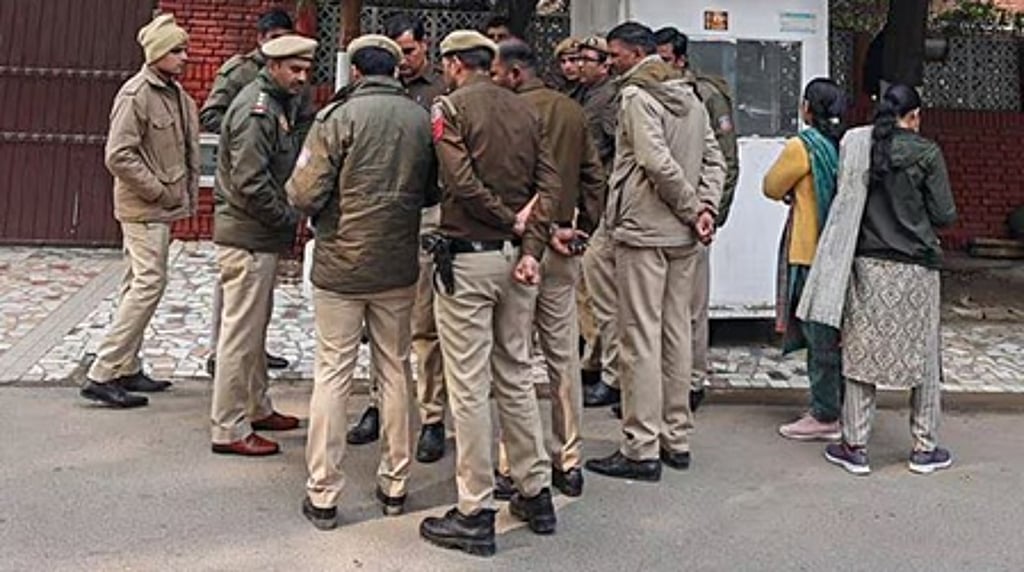
Shahzeb went missing on Wednesday after his tuition classes. He was last seen with one of the accused, identified as Shailendra Kumar Nigam, also known as Mantu.
Call for Humanity
Shahzeb was not a symbol. He was not a political pawn. He was a seven-year-old boy who loved to learn, who was the center of his family’s universe. His death is a raw, screaming reminder of the human cost of hatred. It is a call to conscience for a nation that prides itself on its diversity and secular heritage.
The pain of his father, Saheb Alam, is a universal pain. The fear now gripping Muslim parents across India is a fear no parent should ever have to bear. To look away from Shahzeb’s story, to dismiss it as just another tragic headline, is to become complicit in the silence that allows such hatred to fester. His story, and the stories of all the others, demands more than fleeting outrage. It demands a relentless pursuit of justice, a critical examination of our institutions, and a collective reaffirmation that in India, every life regardless of faith is sacred and worthy of protection. The soul of the nation depends on it.

 Skasif