What’s Next After Hwasong-20? Experts Warn of a New Arms Race
Kim's latest show of force with a missile that could potentially reach the US mainland has defense experts on high alert.
Read MoreLatest News, Trends, Tech Updates, and Political Insights.
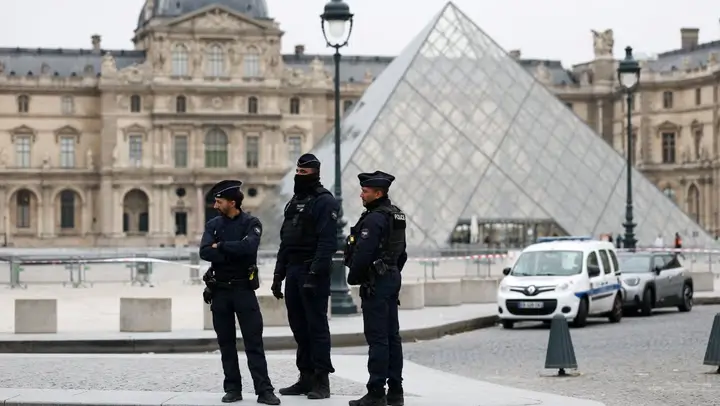
PARIS, France — The unthinkable happened in the heart of Paris on October 19, 2025. In a move straight out of a Hollywood movie, a group of daring thieves turned the world's most famous museum, the Louvre, into their own personal treasure chest. The perfectly executed robbery took less than seven minutes, during which they stole priceless pieces from the French Crown Jewels collection. The bold daytime crime, which involved a construction crane and a high-speed scooter getaway, has sparked a global search and reminds many of the popular Netflix show Lupin.
"This is a direct hit on France's soul—those jewels aren't just gems; they are a key part of our history, woven into the story of our nation," said a visibly shaken Culture Minister Rachida Dati at an early morning press conference. "We will look under every stone, in every corner of the world, to get them back."
The sequence of events began with chilling precision at 9:30 AM, just as the Louvre's grand doors opened to the usual morning rush of tourists under a clear autumn sky. Security cameras, which are now being analyzed frame by frame, showed a non-descript white truck parking near the museum. Dressed convincingly like construction workers in bright vests and hard hats, a team of three to five masked individuals used the truck's hydraulic crane to lift two members of their crew up to a second-floor window.
Their entry was shockingly fast. Using a high-powered angle grinder, they cut through the reinforced window glass in under 30 seconds. The ongoing construction work provided the perfect cover, allowing them to bypass the initial motion detectors without raising suspicion. Once inside, they moved with purpose, running 200 meters directly to the Galerie d’Apollon, a breathtaking room filled with priceless treasures from Napoleon's time. In a flurry of shattered glass, they used hammers to smash open the cases, grabbing nine specific, high-value items. They stuffed them into black backpacks and rappelled back down to the street.
The museum's main alarms finally blared at 9:35 AM, triggering an immediate and chaotic lockdown. Over 4,000 visitors were quickly herded out through emergency exits by confused but firm guards. By 9:37 AM, the thieves had jumped on powerful scooters, which they had stashed nearby, and disappeared into the dense Paris traffic. The Louvre was immediately closed for the day, its iconic glass pyramid surrounded by police cars and forensic vans. The museum remains closed indefinitely as the investigation continues, and the French President has called an emergency cabinet meeting to address the national crisis.
One witness, a teacher from Lyon, told reporters, "It was completely unreal, like a movie. One minute I'm admiring the beautiful jewels, and the next, there's a loud crash, glass is flying, and masked men are yelling. They were gone before anyone could even understand what was happening." Videos of the evacuation and the police response quickly went viral online, with the hashtag #LouvreHeist trending worldwide.
The investigation is revealing a plan of incredible detail and precision. The getaway truck was traced back to a rental company, and its telescoping crane, normally used for washing windows, was the key to their entry. They expertly cut the glass to avoid setting off alarms, which strongly suggests they either had inside help or had studied the museum's security systems for months.
Inside the gallery, they didn't waste a second. They used a sledgehammer to break open the display cases, grabbing only the most valuable items on their list. Their escape was just as clean as their entry: they went back down the crane and sped away on powerful scooters, easily blending in with the morning traffic. The scooters were later found abandoned, wiped clean of fingerprints.
The Interior Minister stated, "This was not a random act of smash-and-grab; it's the work of a large, highly organized group that planned this like a military operation. We've found tools that show they practiced this over and over." While police initially suspected an international jewel theft ring, DNA evidence from discarded masks suggests the crew was made up of people from several different countries, making them much harder to track.
By the afternoon of the robbery, INTERPOL had issued a "purple notice," a global alert for the stolen items, to police forces in 196 countries. Detailed descriptions and 3D models of the jewels were sent to border crossings, airports, and shipping ports worldwide. Alerts for the suspects, described as athletic men between 30 and 45 years old, were sent out soon after. Elite art crime units from the U.S. and the U.K. are now working closely with French authorities.
Security at all major European travel hubs has been intensified. A tip line has been flooded with thousands of calls, one of which led police to a blurry camera image of a suspect getting rid of equipment in a trash can. "We have a very short window, probably about 72 hours, to find these jewels before they are broken down, recut, and sold off separately," an INTERPOL official warned. Police are now using advanced AI software to search through thousands of hours of traffic camera footage for any sign of a suspect van.
The nine stolen items, with an estimated value of over €200 million, are irreplaceable symbols of French history from the height of Napoleon's First Empire. The most famous pieces include the stunning diamond necklace of Empress Marie Louise, featuring 2,500 stones; a famous pearl choker worn by Empress Joséphine; and the breathtaking emerald crown of Empress Eugénie. These are more than just beautiful jewelry; they are pieces of history that have witnessed coronations and revolutions.
A senior curator explained, with tears in her eyes, "To recut these stones would be to erase their soul. Their value is not in the carats, but in the history they hold." Investigators found a single chipped sapphire earring at the scene, giving them a small bit of hope, but the tracking signals from the other items went dark moments after the theft. High-quality photographs have been sent to every major auction house in the world to prevent the items from being sold openly, but experts fear the thieves are smart enough to disguise them.

These historical treasures have been on display since 1889 and represent the resilience of France. Their theft has left a painful hole in the nation's cultural story.
The stolen art business is a murky, hidden world, a global industry worth an estimated $8 billion a year. The priceless jewels from the Louvre are likely headed to "freeports"—ultra-secure, tax-free warehouses in places like Geneva or Singapore, where valuable goods can be traded secretly with no questions asked. The biggest fear is that they will be taken apart. The historic diamonds and emeralds will be recut and put into new, modern jewelry, making them nearly impossible to trace.
One expert on art recovery predicts, "There's an 80% chance they will be broken up and sold off within weeks. The buyers on the black market want gems they can wear or sell, not famous pieces they have to hide forever." The jewels could be sold at secret online auctions on the dark web or directly to billionaire private collectors. This crime shines a bright light on how easily stolen goods can be laundered through international gem markets in places like Dubai or Hong Kong.
The Louvre's multi-million-dollar security system, with its lasers, pressure plates, and hundreds of guards, failed because of a simple, ironic problem: the ongoing renovations that were supposed to make the museum safer actually gave the thieves the perfect opportunity. Scaffolding covered the side of the building, and their construction worker uniforms gave them the perfect cover. Worse, staff shortages meant there were fewer guards on patrol than usual during the busy morning hours.
Museum staff unions are now speaking out, saying they have been complaining for years about staff cuts that have strained the museum's ability to protect its vast collection. In the wake of the heist, the French president has ordered a top-to-bottom security review, but some politicians are already complaining about the potential cost. Other world-class museums, like the British Museum, have recently started using newer, more advanced tracking technology, and this robbery makes it painfully clear that the Louvre had fallen behind.
Paris was left in a state of shock and disbelief after the news broke. That evening, locals and tourists gathered for a candlelight vigil in the nearby Tuileries Garden. The story completely took over social media, with the hashtag #LouvreLoot generating over a billion impressions in the first 24 hours. The city's mayor has promised to invest whatever it takes to make the city's cultural sites "unbreachable," but the damage has been done. Many tourists have already canceled their trips, with hotels near the museum reporting a sharp 15% drop in future bookings.
INTERPOL is now warning that this stunningly successful robbery could inspire copycat crimes at other major museums around the world. "A crime this precise and this bold serves as a blueprint for other criminal organizations," an official said. Experts believe there's only a 40% chance of getting the jewels back in one piece, and only if they can close the borders and track them down quickly. The solution, they say, may be to create international art-crime task forces and develop new technology that can help ordinary citizens spot and report stolen goods.
This isn't the first time the Louvre has been the target of a major theft. When the Mona Lisa was stolen by an employee in 1911, it set the stage for this kind of high-profile art crime. That theft, along with the still-unsolved 1990 robbery of the Isabella Stewart Gardner Museum in Boston, showed that even the most famous and seemingly secure places can be vulnerable. Today's crime, however, is on another level in both its technological sophistication and its sheer boldness. It shows that museums are in a constant battle to update their security, because thieves are always finding new, creative ways to get around it.
Ironically, after the Mona Lisa was stolen over a century ago, more people than ever flocked to the Louvre to see the empty space where it once hung. This time, the immediate effect has been the opposite. Bookings have dropped, but some in the tourism industry believe a strange new trend of "heist tourism" could emerge. The Louvre's closure is a huge financial blow, costing the city an estimated €1 million every day in lost revenue. The robbery has tarnished Paris's image right after the success of the Olympics, but the city is strong and expects to bounce back, with a more secure and perhaps even more famous museum, by next spring.




 Skasif