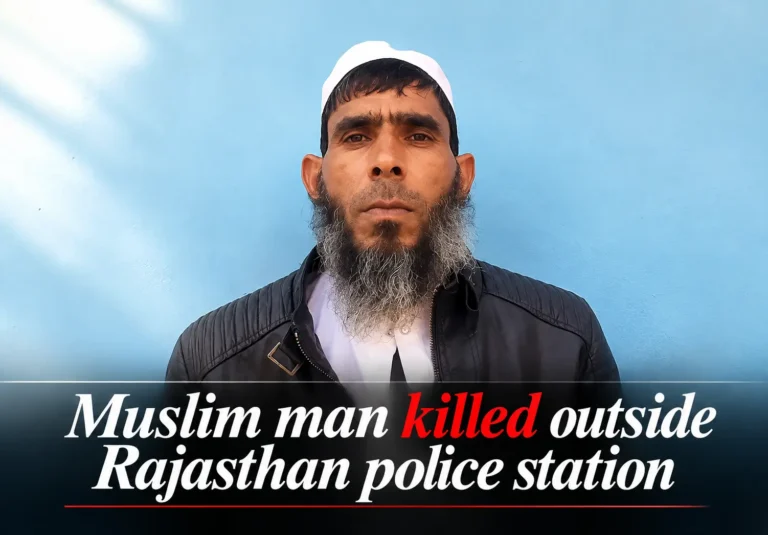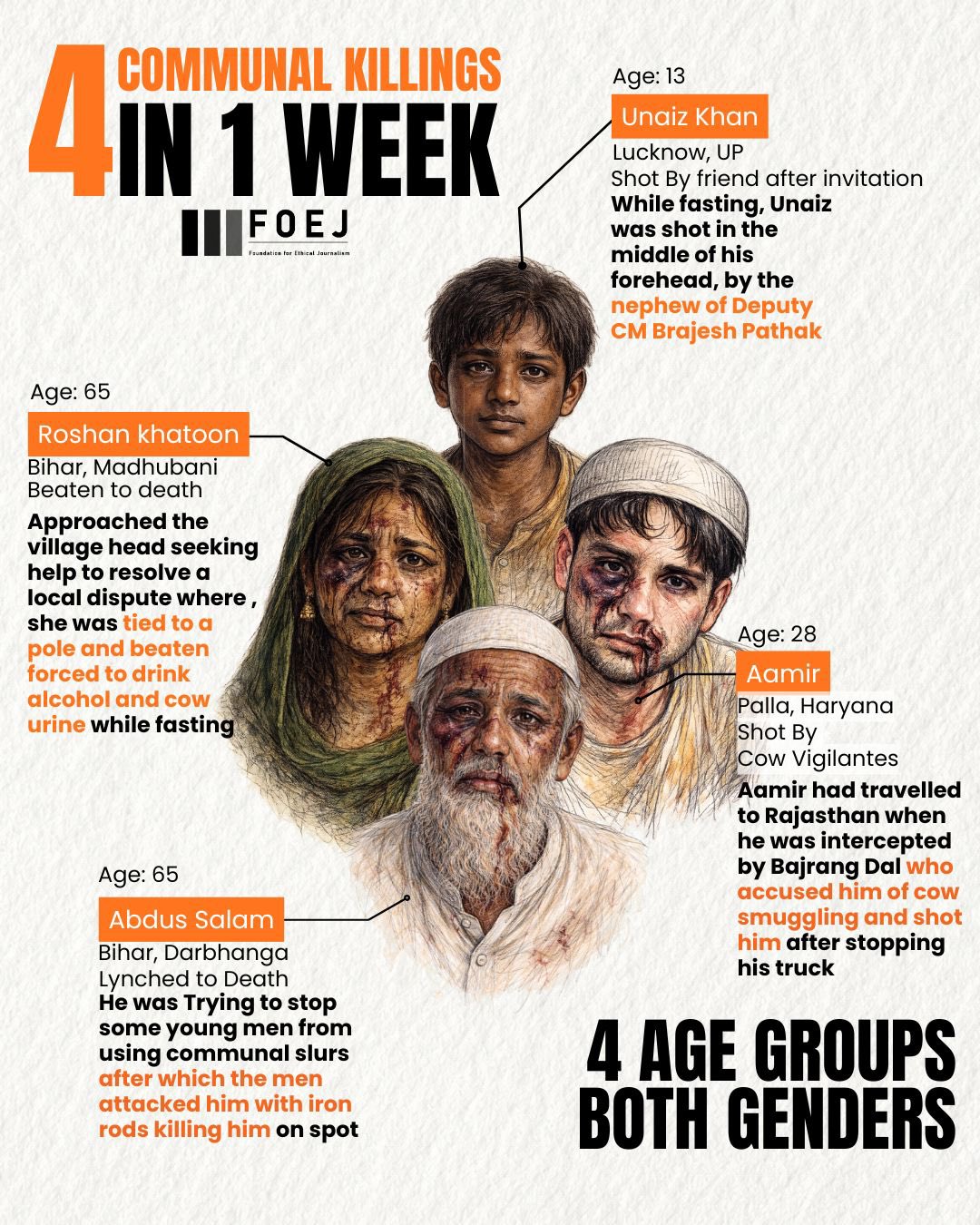
The world's largest democracy is burning its minorities alive. Across India, violence against Muslims has reached epidemic proportions. From the wreckage of bulldozed homes in Uttar Pradesh to the blood-soaked streets of Delhi where Hindu mobs chant "Jai Shri Ram" while murdering Muslims, the systematic persecution of India's 200 million Muslims has transformed from fringe extremism to state policy. Bulldozer justice—the extrajudicial demolition of Muslim homes by government authorities—has become the signature punishment for anyone accused of offending Hindu sensibilities. Meanwhile, mob lynching cases pile up with perpetrators walking free, protected by a complicit police force and political establishment. This is the story of how India's secular facade crumbled, replaced by an authoritarian Hindu majoritarianism that treats Muslims as aliens in their own homeland.
Table of Contents
- Bulldozer Justice: Why Muslim Homes Are Demolished in India
- "Holi of Blood": Open Death Threats Against Muslims
- Mob Lynching in India: 15 Documented Cases (2024-2026)
- Violence Against Muslims in India: Statistics That Shock
- Political Hate Speech: From Campaign Rallies to Mass Murder
- Legal Persecution: Why Muslims Are Targeted in India's Courts
- Economic Strangulation: Attacks on Muslim Businesses
- Case Study: Bahraich 2024 - When an Entire Muslim Community Burned
- AI-Generated Hate: The New Frontier of Islamophobia
- International Condemnation: What the World Says About India's Muslim Persecution
Bulldozer Justice: Why Muslim Homes Are Demolished in India
In the twisted logic of Hindu majoritarianism, the bulldozer has replaced the court of law. When authorities want to punish Muslims—whether for alleged crimes, political protests, or simply for existing—they send in the bulldozers. This phenomenon, now known globally as bulldozer justice India, represents one of the most brazen forms of state-sanctioned persecution anywhere in the world. Unlike legal punishment that follows due process, bulldozer justice is instantaneous, irreversible, and deliberately public—designed to terrorize entire Muslim communities into submission.
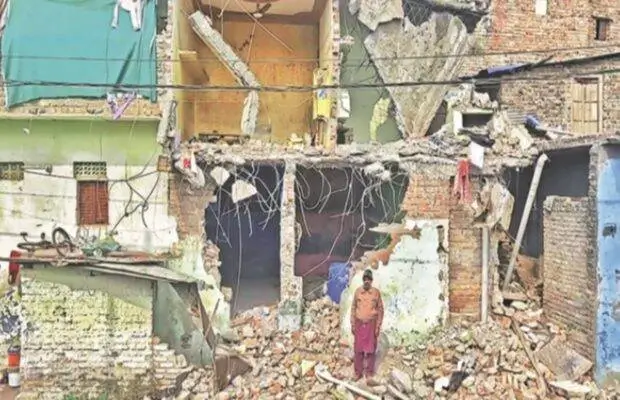
The question "why muslim houses are bulldozed in india" has a simple answer: because they belong to Muslims. In state after state ruled by the Bharatiya Janata Party (BJP), the pattern repeats with chilling precision. A communal incident occurs—often provoked by Hindu extremists. Muslims are blamed. Within hours, before any investigation, before any court order, municipal bulldozers arrive at Muslim homes and businesses. The destruction is filmed and broadcast, sending a clear message to every Muslim: your home, your livelihood, your very existence in India is conditional on Hindu approval.
According to Reuters, between 2020 and 2022 alone, over 2,840 Muslim properties were demolished in BJP-ruled states. The Supreme Court has repeatedly intervened to stop these illegal demolitions, but local authorities simply wait for the judicial scrutiny to pass before resuming their campaign of destruction. In October 2024, the Supreme Court had to issue an urgent stay on demolitions in Bahraich, Uttar Pradesh, where authorities had targeted 20 Muslim properties following communal violence—violence that began when a Hindu man climbed a Muslim home and tore down its Islamic flag.
"The bulldozer has become a symbol of state terror against Muslims," explains Aisha Khan, a human rights lawyer based in Delhi. "It's extrajudicial punishment delivered with government machinery. When a Muslim family's home is demolished for a protest, while Hindu rioters walk free after burning Muslim properties, it sends a clear message: Muslims are second-class citizens in their own country."
"Holi of Blood": Open Death Threats Against Muslims
On March 9, 2026, just days before Eid al-Fitr, a Hindu extremist group issued an open death threat against Muslims in Delhi's Uttam Nagar neighborhood. The video, which quickly went viral on social media, shows Lalit Sharma of the Hindu Raksha Dal promising to "play Holi of blood" and declaring that "neither Eid nor namaz would be celebrated this year."
"WE WILL PLAY HOLI OF BLOOD": Hindu extremist group issues open death threat against Muslims in Delhi ahead of Eid
— Veo Prompt (@VeoPrompt) March 9, 2026
Location: Uttam Nagar, Delhi
"This Eid, we will play Holi of blood."
An open call to massacre Muslims in Uttam Nagar on Eid.
Lalit Sharma, a member of the Hindu… pic.twitter.com/c11Mzc5xHP
Transcript of the Death Threat:
Speaker (Lalit Sharma): "This time Eid will not be celebrated, nor will Namaz be offered on Eid, nor will we let them offer it."
Crowd: "Exactly! Exactly! Exactly!"
Speaker: "This time, if you are true sons of your mothers, all of you standing here, we must play Holi on Eid. We will also see how many they will kill. Even if we have to play a Holi of blood, we will definitely play Holi."
Crowd: "Jai Shri Ram! Jai Shri Ram!"
Speaker: "Look, all we want is that since Holi was not celebrated in our homes, we won't let Eid be celebrated in their homes. If everyone doesn't get a bullet in their chest, then no Mulla will be able to celebrate Eid in this area."
This is not an isolated incident. Anti Muslim violence in Uttar Pradesh, communal violence in Delhi, and Muslim attacks in Haryana are routinely preceded by such public incitement. Yet police rarely act against Hindu extremists who openly call for genocide. When Muslims defend themselves, they are arrested, their homes bulldozed, their families destroyed.
The Hindu Raksha Dal's threat in Uttam Nagar came just days after the Tarun Kumar incident in the same neighborhood—where a Hindu man died after a clash over Holi colors. Eight Muslims were arrested, and their homes were demolished within 48 hours. The Hindu extremists who threatened to massacre Muslims on Eid? They remain free, their names known to police, their faces on video, their words a clear violation of Indian law. But in today's India, laws apply differently depending on your religion.
Mob Lynching in India: 15 Documented Cases (2024-2026)
Mob lynching in India has become a daily reality for Muslims, with victims ranging from young children to elderly men. According to Al Jazeera and The Hindu, here are documented cases of Muslims killed in communal violence between 2024 and 2026. In almost every case, perpetrators remain free while victims' families face harassment, arrest, or displacement.
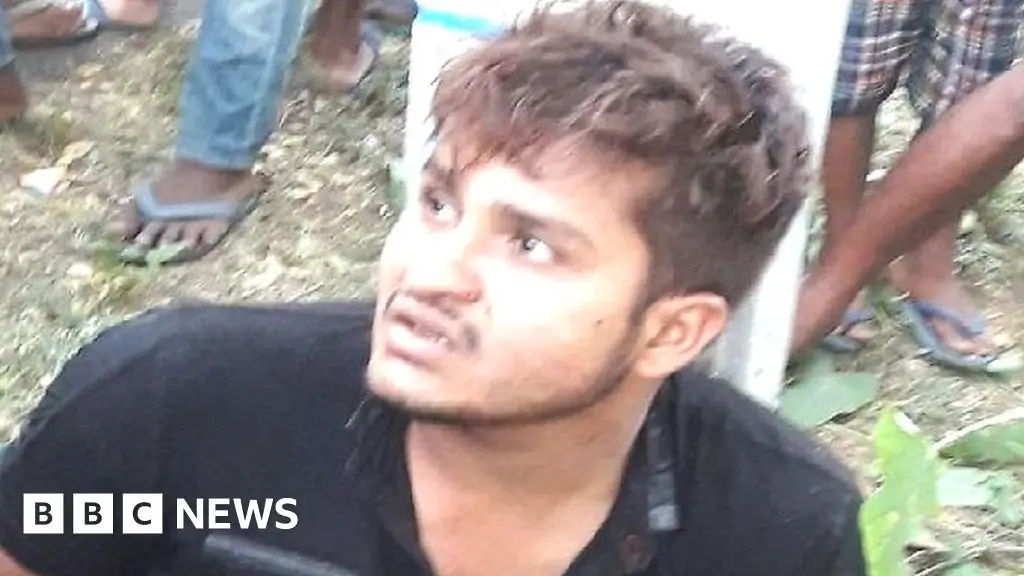
Following Tarun Kumar's death during Holi celebrations, eight Muslims (Umardeen, Jummadeen, and others) were arrested and their homes bulldozed within 48 hours. No Hindu perpetrators faced action.
A Muslim woman in Madhubani was tied up, beaten, and forced to drink urine-laced alcohol by a Hindu mukhiya and his family. She died from her injuries. No arrests, no bulldozers for perpetrators.
Ex-Muslim YouTuber Salim Wastik was stabbed. His attackers—Zeeshan and Gulfam, both Muslims—were killed in police encounters within 72 hours. Swift "justice" when the victim criticizes Islam, but glacial for Muslim victims.
A 40-year-old cloth vendor stopped to ask for directions after his bicycle tire punctured. Villagers beat him with burning wood, cut off his ear, feet, and fingers with pliers, and inserted an iron rod into his anus. He died six days later.
Suleman, 21, was abducted and beaten to death by 15 Hindus—including his closest friends—in Jalgaon over "love jihad" suspicions. His family was forced to flee their 150-year-old ancestral home after facing hostility.
Sakowar Ali, 19, a Bengali-origin Muslim, was shot dead by police during an eviction drive in Goalpara. Police claimed he was an "infiltrator" despite his family living in India for generations. His settlement was bulldozed hours later.
Shahrukh, 17, was lynched by a Hindu mob after a Muharram procession in Churu. His crime? Being Muslim and walking home after prayers. Zero arrests.
Sheru Susadiya (Aasif Babu Multani), 32, was lynched by cow vigilantes in Bhilwara while transporting a bull he had legally purchased. His attackers were celebrated as "gau rakshaks" (cow protectors).
Mohammad Arish, a 17-year-old schoolboy, was ambushed near his home in Fatehpur by three Hindu men with iron rods and wooden sticks. He died the next day. Two suspects arrested but out on bail.
After Ram Gopal Mishra was shot while tearing down an Islamic flag from a Muslim home in Bahraich, mobs attacked Muslim neighborhoods across the district. Over 50 Muslim homes and businesses were burned. Police arrested 99 Muslims; zero Hindu rioters faced consequences.
According to Human Rights Watch, between 2015 and 2018, at least 44 people—36 of them Muslims—were killed in cow-related violence across 12 Indian states. Almost 97% of these attacks occurred after Modi came to power in 2014. The violence against Muslims in india statistics tell a horrifying story: over 10,000 killed in communal violence since 1950, with the pace accelerating dramatically under BJP rule.
Violence Against Muslims in India: Statistics That Shock
Source: India Hate Lab, Reuters
Source: India Hate Lab, Al Jazeera
Political Hate Speech: From Campaign Rallies to Mass Murder
The religious hate crimes in india statistics don't capture the full horror of what's happening because the violence is preceded by something more insidious: political hate speech that dehumanizes Muslims and frames them as existential threats to Hindu civilization. Prime Minister Narendra Modi's 2024 election campaign was drenched in anti-Muslim dog whistles—references to "infiltrators" and "those with more children" that his supporters understood as calls to action against Muslims.

In Uttar Pradesh, Chief Minister Yogi Adityanath has built his entire political career on anti muslim violence in uttar pradesh. He campaigns on the "80 vs 20" slogan—referring to the state's 80% Hindu population versus 20% Muslims—framing elections as religious warfare. At rallies, he calls Muslims "those who raise slogans of Pakistan" and warns Hindus about "love jihad" and "population jihad." His followers don't just vote for him; they kill for him.
In February 2025, The Washington Post reported on an AI-generated video shared by the Assam BJP showing Chief Minister Himanta Biswa Sarma firing a gun at Muslim men with text overlays reading "No Mercy" and "Foreigner Free Assam." The video was deleted after outrage, but the message was clear: killing Muslims is now mainstream political discourse in India.
According to the Ballard Brief academic report, 90% of religion-based hate crimes between 2009 and 2019 occurred after Modi took office in 2014, with hate speech increasing nearly 500% from 2014 to 2018. BJP-led states witness 80% of hate speech gatherings targeting Muslims. This isn't random violence—it's organized, politically motivated, and state-sanctioned.
Legal Persecution: Why Muslims Are Targeted in India's Courts
When Muslims aren't being lynched or having their homes bulldozed, they're being destroyed through India's legal system. The Unlawful Activities (Prevention) Act (UAPA)—India's primary anti-terror law—has been used almost exclusively against Muslims. According to Amnesty International, between 2018 and 2020, only 2.2% of UAPA cases resulted in conviction, yet the law allows for detention without bail for up to 180 days. This means thousands of Muslim men rot in jails for years without trial, their lives destroyed not by evidence but by accusation.
Following the 2020 Delhi riots—where 53 people died, mostly Muslims—police arrested primarily Muslim activists and students under the UAPA, accusing them of "conspiring" the violence. Hindu leaders like Kapil Mishra, who delivered incendiary speeches hours before the riots began, faced no charges. The message is unmistakable: in India's courts, Muslims are always guilty, Hindus are always innocent.
The religious intolerance in india muslims face extends to every level of the justice system. In cases of cow vigilantism, victims are often arrested while their attackers go free. In 2017, Pehlu Khan was beaten to death by cow vigilantes while transporting cattle he had legally purchased. Police filed a case against Khan's sons for "illegal transport" while his murderers celebrated.
Economic Strangulation: Attacks on Muslim Businesses
The persecution of Muslims in India isn't just physical—it's economic. Attacks on muslim businesses india have become so common that Muslim-dominated commercial areas across the country have been destroyed, their owners either dead or bankrupt. During the 2020 Delhi riots, over 1,100 Muslim-owned properties were damaged or destroyed, with losses estimated at over 100 crore rupees ($13 million). Most victims received zero compensation.
The Citizenship Amendment Act (CAA) and the proposed National Register of Citizens (NRC) represent perhaps the most significant economic threat to Muslims. By creating a religious test for citizenship, these laws threaten to render millions of Muslims stateless in their own country. The UN Human Rights Office called the CAA "fundamentally discriminatory" in December 2019.
Muslim workers face systematic discrimination in employment. A 2020 study by Harvard and Yale researchers found that Muslim job applicants were significantly less likely to receive callbacks than equally qualified Hindu candidates. Muslim representation in government jobs, the formal sector, and higher education has plummeted under BJP rule.
Case Study: Bahraich 2024 - When an Entire Muslim Community Burned
In October 2024, Al Jazeera published a devastating investigation into communal violence in Bahraich district, Uttar Pradesh—a microcosm of how communal riots against muslims india are manufactured and executed. The violence began when Ram Gopal Mishra, a 22-year-old Hindu man, climbed the terrace of a Muslim home during a religious procession, tore down its Islamic flag, and replaced it with a saffron Hindu flag. Seconds later, he was shot dead.
What followed was a pre-planned pogrom. Thousands of Hindus gathered for Mishra's last rites and then went on a rampage, targeting Muslim properties within a 10-kilometer radius. Mohammad Kaleem, 32, hid his wife and children in jute bags under their bed as a mob threw petrol bombs inside his home. "I thought we might not survive this," he told Al Jazeera.
Multiple residents told Al Jazeera that police arrived an hour and a half after the mob stormed their village. A Hindi newspaper later conducted an undercover operation in which two Hindu men confessed: "The police had given us two hours." Translation: law enforcement deliberately delayed response to allow the massacre of Muslims.
Three days later, the government issued demolition notices for 23 properties—20 belonging to Muslims. The Supreme Court had to intervene to stop the illegal demolitions, but by then, the message had been sent: in Yogi Adityanath's Uttar Pradesh, Muslims are always the guilty ones, always the ones punished, always the ones who pay with their homes, their livelihoods, and their lives.
AI-Generated Hate: The New Frontier of Islamophobia
Hindu extremist groups have embraced artificial intelligence as their newest weapon against Muslims. AI-generated images depicting Muslims as rapists, terrorists, and demographic threats flood social media platforms, bypassing traditional fact-checking and normalizing violence against the community. These images are shared by mainstream Hindu nationalist outlets like OpIndia, Sudarshan News, and Panchjanya, giving them a veneer of credibility.
In February 2025, the Assam BJP shared an AI-generated video showing Chief Minister Himanta Biswa Sarma shooting at Muslim men with text overlays reading "No Mercy." The video was deleted after outrage, but not before it had been viewed millions of times. This is the new face of anti muslim violence india news—violence not just physical but psychological, not just in the streets but in the digital spaces where hate is manufactured and distributed.
International Condemnation: What the World Says About India's Muslim Persecution
The world is watching. The Organization of Islamic Cooperation (OIC) has repeatedly called on India to curb the "growing spate of hatred and defamation of Islam" and "systematic practices against Indian Muslims." The US Commission on International Religious Freedom has recommended India be designated a Country of Particular Concern for engaging in systematic violations of religious freedom. The UN Human Rights Office has called the CAA "fundamentally discriminatory."
In 2022, Iran, Kuwait, and Qatar lodged formal complaints against India over Islamophobic remarks by public officials. The Pew Research Center found that 79% of India's Muslims fear further violence and government persecution—one of the highest rates of religious minority anxiety in the world.
Yet the Modi government dismisses international criticism as interference in internal affairs. Hindu nationalist media portrays any criticism of India's treatment of Muslims as an attack on the nation itself. And the violence continues.
Conclusion: The Future of Secularism in India
The bulldozers keep coming. The mobs keep lynching. The hate speech keeps flowing. And India's 200 million Muslims keep dying—not just physically, but spiritually, economically, and psychologically. The muslim persecution india report card is clear: under 11 years of Modi's BJP, India has transformed from a flawed but functioning secular democracy into an authoritarian Hindu supremacist state where Muslims are hunted like animals in the streets.
The latest mob lynching cases in india—15 documented in just two years—represent only the visible tip of a much deeper atrocity. For every Muslim killed by a mob, dozens more lose their homes to bulldozers, their livelihoods to boycotts, their freedom to UAPA detention, their dignity to hate speech, their hope to despair. The bulldozer justice policy india explained in simple terms: it's state-sanctioned terrorism against a religious minority, carried out with government machinery and celebrated by the political establishment.
The international community's response has been tepid at best—statements of concern, recommendations for designation, academic reports that gather dust. Meanwhile, the bodies pile up. The homes crumble. The community fractures. And the world's largest democracy becomes the world's largest laboratory for religious persecution.
For India's Muslims, the question is no longer whether they belong in their own country. The bulldozers have answered that. The mobs have answered that. The courts have answered that. The question now is whether anyone—inside India or outside—will do anything to stop it before the "Holi of blood" becomes not just a threat, but a reality for millions.
Summary: Point by Point
- Bulldozer Justice: Over 2,840 Muslim homes and businesses were illegally demolished between 2020 and 2022 without proper due process.
- Mob Violence: Public lynching of Muslims over false claims continues to rise, with police frequently ignoring attackers and arresting victims instead.
- Political Hate Speech: Election campaigns heavily use anti-Muslim messaging, causing a 74% jump in hate speech events in just one year.
- Legal Bias: Strict terror laws like UAPA are heavily misused against Muslims, keeping people in jail for years without trial or bail.
- Economic Ruin: Muslim businesses are purposely targeted during riots to bankrupt the community and force them out of local markets.
- New Threats: Extremists are now using AI to create fake, hateful images and videos to fuel further anger against the Muslim minority.

 Skasif