‘Get Lost, Jihadi’: Radical Hindutva Member Slaps, Chases Muslim Men in UP
 Skasif
23/02/2026
Skasif
23/02/2026 
Budaun Attack: Muslim Men Beaten and Chased by Hindu Extremist
BUDAUN, Uttar Pradesh – The video lasts barely a minute. But it tells a story that India’s 200 million Muslims know too well.
A man on a scooter pulls up behind three elderly men walking down a dusty road in rural Uttar Pradesh. He demands their names. He forces one to remove his skullcap. Then he starts slapping them hard, open-handed blows to the face while shouting abuses. The men flee. He chases them for nearly half a kilometer, still shouting, still swinging.
The victims never fought back. They never raised their hands. They only ran.
Their crime? They were Muslim men collecting zakat the obligatory Islamic charity for a local madrasa ahead of the holy month of Ramadan.
The attacker? A 24-year-old local leader of the Bajrang Dal, the radical Hindu youth wing known for its militant Hindutva ideology and history of vigilante attacks on religious minorities.
His name is Akshay Thakur. And he’s in jail now, arrested after the video exploded across social media and forced police to act.
But for Abdul Salam, 60, one of the men he attacked, the arrest brings little comfort.
“He saw our Muslim clothes and our names,” Salam told reporters after the video went viral. “That’s why he stopped us. That’s why he hit us.”
Viral Video That Forced Police to Act
The footage, which spread rapidly across WhatsApp, Twitter, and other platforms beginning February 18, leaves little room for interpretation.
It was February 15 or 16, 2026, in the Ruadayan area under Islamnagar police station in Budaun district. The three men Abdul Salam, 60; Javed Khan, 55; and Mohd Arif, 35 were walking through the neighborhood, asking directions to a Muslim locality where they planned to collect zakat donations.
Then Thakur arrived on his scooter.
The video captures the following sequence:
Thakur stops his scooter behind the three men, blocking their path
He demands to know their names
He reaches out and forcibly removes the skullcap from one man’s head
He begins slapping them repeatedly, the sounds of the blows audible on the recording
He shouts abuses, including the slur “jihadi” according to multiple accounts
The three men turn and flee down the road
Thakur pursues them on his scooter for an estimated 400 to 500 meters
Local residents eventually intervene, visible in extended clips
The attack happened in broad daylight. On a public road. With witnesses nearby.
None of them stopped him. It took a camera to do that.
Within 48 hours of the video surfacing online, Islamnagar police station filed an First Information Report under multiple sections of the Bharatiya Nyaya Sanhita, India’s criminal code. Officers arrested Thakur on February 21 or 22. He remains in custody.
The Superintendent of Police for Budaun confirmed the arrest, stating that prompt action was taken after the video surfaced and a complaint was received.
“We acted on the basis of the viral video and subsequent complaint,” an officer at Islamnagar station said. “The investigation is ongoing.”
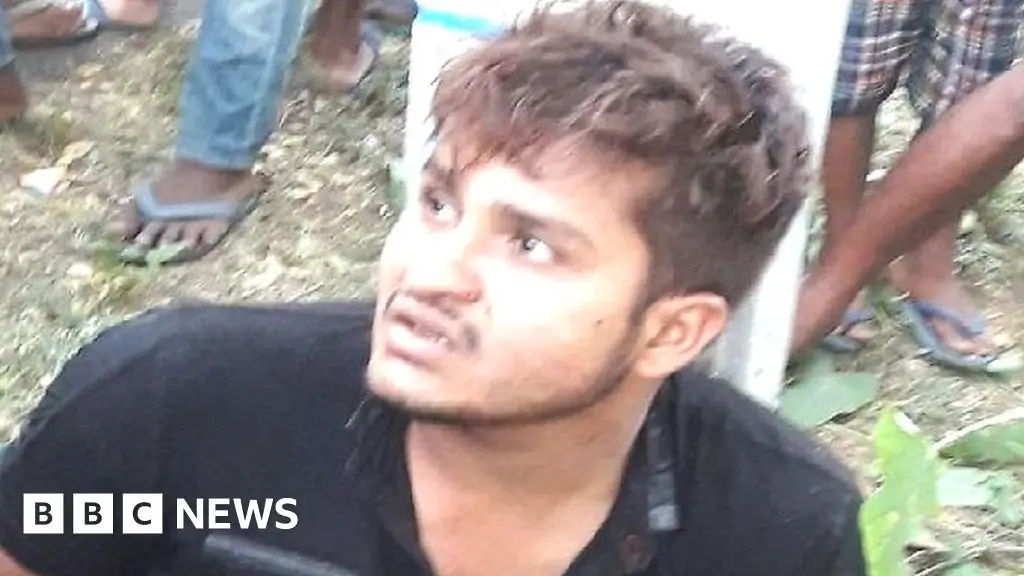
Victims: Who They Are and What They Were Doing
Abdul Salam has lived in Mohiddinpur village his entire 60 years. Javed Khan, 55, is his neighbor and longtime friend. Mohd Arif, 35, is the youngest of the three, known in the community for his work with the local madrasa.
They come from a community of roughly 700 Muslim families in the area, part of Budaun’s mixed population where Muslims and Hindus have lived side by side for generations.
On the day of the attack, they were doing what Muslims across India do before Ramadan: walking through neighborhoods, asking for zakat to support the madrasa, to feed the poor, to sustain their religious institutions.
What is zakat?
Zakat is one of the five pillars of Islam. It is required charity – a set percentage of one’s savings given annually to those in need. The funds support:
Poor and needy families
Religious educational institutions like madrasas
Community services and infrastructure
Debt relief for the impoverished
Collection increases sharply before Ramadan, the month of fasting, when charitable giving is considered particularly meritorious. The three men were engaged in routine community work. Nothing political. Nothing provocative. Nothing that should have drawn violence.
“We told him we were collecting charity,” Salam said. “He didn’t listen. He just kept abusing us and hitting us.”
They did not report the attack immediately. Fear of stigma, Salam explained. Fear of what comes after. Fear that has become familiar to minorities in an India where radical Hindutva groups operate with growing impunity.
It took the video set to a provocative song in some versions to force the issue.
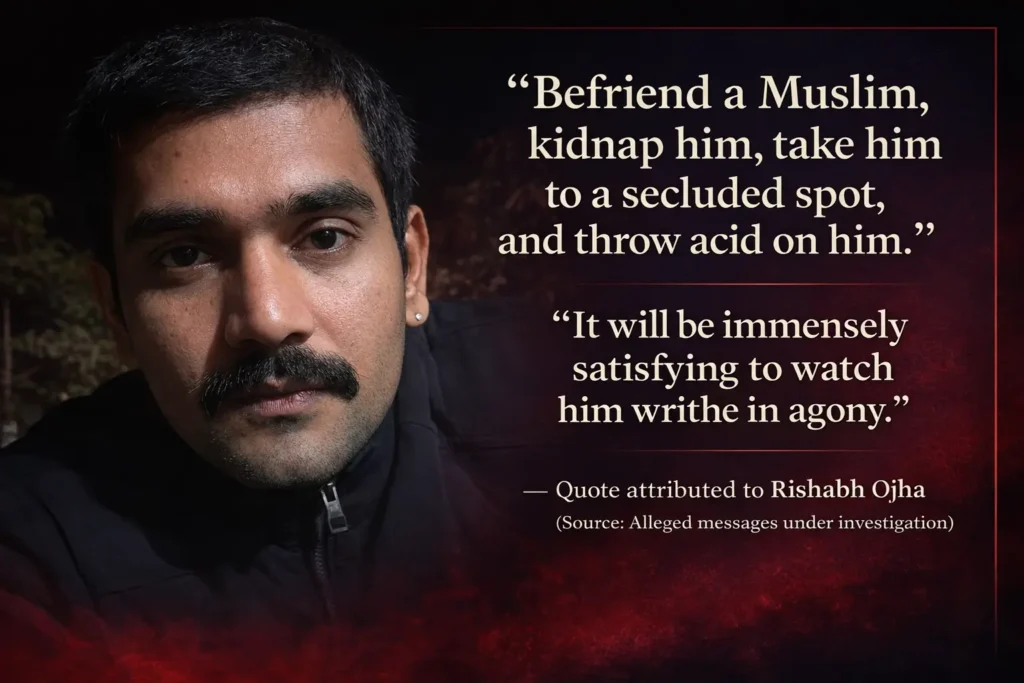
The Attacker: Akshay Thakur and the Bajrang Dal
His name appears in reports as Akshay Thakur, Akshay Kumar, or Akshay Singh. Locals call him Chhotu. He is 24 years old.
Congress party leaders, who first amplified the video and demanded action, identified him as a Bajrang Dal leader. The Bajrang Dal is the youth wing of the Vishva Hindu Parishad, part of the broader Sangh Parivar family that includes the ruling Bharatiya Janata Party.
Understanding the Bajrang Dal and Radical Hindutva
The Bajrang Dal is not a fringe group. It operates openly across India, particularly in states like Uttar Pradesh where the BJP holds power. Its members often function as an unofficial moral police, targeting Muslims, Christians, and anyone they deem insufficiently Hindu.
The group’s ideology draws from Hindutva a doctrine that envisions India as a Hindu nation and treats minorities as second-class citizens at best, enemies at worst. In this worldview, Muslims collecting zakat for a madrasa are not fellow citizens exercising their constitutional rights. They are targets.
Bajrang Dal has been implicated in numerous hate crimes, including:
Cow vigilante killings of Muslims suspected of transporting or consuming beef
Attacks on interfaith couples, particularly Muslim men with Hindu women
Campaigns against Muslim-owned businesses, forcing them to close
Vandalism of churches, mosques, and other minority religious sites
Physical assaults on Muslims during religious processions or festivals
Despite this record, the group continues to operate freely. Its members rarely face consequences. Its leaders are sometimes hosted by BJP politicians at public events.
Police statements in this case have been more cautious. They list the accused as Akshay Kumar, 24, and have not officially confirmed any group affiliation. They treat it as an individual assault case for now.
Bajrang Dal has issued no official comment on the incident.
Two Narratives: Road Rage or Religious Targeting?
Accounts of what sparked the attack differ in ways that reveal much about how India confronts – or fails to confront – hate crimes.
Road Rage Narrative
Some local reports, citing unnamed sources, describe a road rage incident. In this version, the attack began with a dispute over honking or right of way. Thakur was simply an angry young man who lost control. The religious elements were incidental.
This narrative minimizes the attack. It makes it about individual anger rather than systemic hate. It allows society to avoid uncomfortable questions about rising radical Hindutva violence.
Hate Crime Narrative
But the video tells a different story.
The skullcap removal – a symbolic act of humiliation targeting Muslim identity
The religious slurs, including “jihadi” – language that frames Muslims as enemies
The fact that the men were clearly identifiable as Muslim by their traditional attire and beards
The sustained chase – not a momentary outburst, but a deliberate pursuit
Many see a hate crime. A manifestation of the radical Hindutva ideology that has become increasingly normalized in India since 2014, when the BJP came to power nationally with a sweeping mandate.
Victim’s Perspective
One of the victims made the distinction clear:
“They saw our Muslim clothes and our names. That’s why he stopped us.”
Police have not applied a hate crime tag. They stick to the listed assault charges. But the distinction matters little to the men who were slapped and chased down a public road.

Radical Hindutva: Why This Attack Matters
The Budaun assault did not happen in a vacuum. It is part of a broader pattern of radical Hindu extremism that has grown more visible and more violent in recent years.
The Rise of Vigilante Violence
Since 2014, India has witnessed a surge in vigilante attacks targeting Muslims and other minorities. These attacks are often carried out by groups like the Bajrang Dal and its parent organization, the Vishva Hindu Parishad, with varying degrees of official sanction.
Notable incidents include:
Cow vigilante killings: Dozens of Muslims have been killed by mobs accusing them of transporting or consuming beef. In many cases, the attackers were linked to Hindutva groups. Few have been convicted.
Attacks on interfaith couples: Hindutva vigilantes regularly target couples they deem “love jihad” a conspiracy theory that Muslim men are converting Hindu women through marriage. Couples have been beaten, harassed, and even killed.
Campaigns against Muslim businesses: In some areas, Hindutva groups have organized boycotts and intimidation campaigns against Muslim-owned shops and businesses, forcing them to close.
Religious site vandalism: Churches and mosques have been vandalized, with perpetrators rarely brought to justice.
The Ideology Behind the Violence
Hindutva, the ideology driving these attacks, envisions India as a Hindu nation. In this framework:
Muslims and Christians are treated as “foreign” elements
Minority religious practices are portrayed as threats to Hindu dominance
Violence against minorities is framed as self-defense or righteous action
This ideology has found powerful patrons. Senior BJP leaders have made statements minimizing or justifying vigilante attacks. The party’s 2019 election manifesto praised the Bajrang Dal’s “patriotic” work. In 2022, a BJP spokesperson described the Prophet Muhammad’s relationship with his youngest wife in terms that sparked international outrage a reflection of the party’s growing comfort with anti-Muslim rhetoric.
What Experts Say
Scholars of religious violence in India have documented this pattern.
“Since 2014, there has been a systematic erosion of the norms that protected minorities,” said a political science professor at Jawaharlal Nehru University who studies communalism. “When the ruling party’s ideological affiliates openly attack Muslims and face no consequences, it sends a message that this behavior is acceptable. Even encouraged.”
Human rights organizations have documented hundreds of hate crimes against Muslims in recent years, with prosecution rates remaining low.
Political Reactions: Congress Points to Ideology
Congress has used the incident to attack the BJP, arguing that radical Hindutva groups like the Bajrang Dal operate with impunity under the current government.
Congress leader Jairam Ramesh posted the video on social media with a pointed message:
“This is the face of the vicious ideology that has flourished since 2014. Attacks on minorities are not isolated incidents. They are a pattern. When leaders of extremist groups feel emboldened to attack elderly citizens for their faith, it is not an accident. It is policy.”
Congress spokesperson Pawan Khera went further:
“From 2014 onwards, there has been a systematic assault on the idea of India. The idea that all citizens are equal regardless of faith. The idea that minorities have rights. The idea that violence is unacceptable. All of that is being destroyed by radical Hindutva.”
The BJP has not responded directly to these criticisms. State government officials have confined their comments to praising the police for the swift arrest.
No senior BJP leader has condemned the attack or the ideology that may have motivated it. No BJP leader has called out the Bajrang Dal by name.
Legal Proceedings: What Happens Next
Thakur remains in jail as of February 23, 2026. He can apply for bail. The court will hear evidence. The investigation continues.
The charges filed against him include:
| Section | Offense | Maximum Penalty |
|---|---|---|
| 115(2) | Voluntarily causing hurt | Up to 1 year imprisonment or fine |
| 353 | Mischief | Up to 6 months or fine |
| 351(3) | Criminal intimidation | Up to 2 years or fine |
| 352 (in some reports) | Assault or use of criminal force | Up to 3 months or fine |
Possible legal scenarios:
Bail granted: Thakur could be released on bail within weeks, pending trial. Trials in India often take years. He would be free during that period.
Bail denied: If the court considers him a flight risk or threat to witnesses, he could remain in custody. This is less common for assault charges.
Conviction: If convicted, he could face up to 3-4 years in prison under the various sections. Time served awaiting trial would count toward his sentence.
Acquittal: He could be acquitted if evidence is insufficient or witnesses recant. Witness intimidation in hate crime cases is not uncommon.
The case will be watched closely by human rights organizations and minority advocacy groups. Its outcome will be seen as a test of whether India’s courts take radical Hindutva violence seriously.
Social Media: The New Accountability
One factor made the arrest happen fast: the video.
In earlier decades, an attack like this might never have been reported, let alone prosecuted. The victims, fearing stigma and further trouble, would have stayed silent. The attacker would have gone about his life. The incident would have vanished into the vast archive of unpunished crimes against India’s minorities.
But the camera changes everything.
Once the clip went viral, ignoring it became impossible. Activists shared it. Journalists amplified it. Public pressure built until police had to act.
The Power of Video Evidence
Viral videos have become a form of accountability in contemporary India. They:
Document crimes that might otherwise go unreported
Create public pressure for police action
Make it harder for authorities to look away
Provide evidence that can be used in court
Alert the broader public to patterns of violence
But they are not a perfect solution. They capture only a fraction of incidents. They cannot undo the trauma. And they depend on someone being present with a camera a luxury many victims do not have.
Still, videos like this now shape how justice moves in India. They create accountability where none existed before.
Local Impact: Trust Shattered in a Mixed Community
Ruadayan has a mixed population. Muslims and Hindus have lived side by side for generations. Incidents like this shake that foundation.
One of the victims, Javed Khan, 55, issued a plea after the attack:
“Don’t judge anyone by their faith or appearance. We have lived together here for a long time. That should continue.”
It was a plea for the harmony that had existed, and a warning of what happens when it breaks.
The area’s roughly 700 Muslim families are now watching closely. Will this be treated as a one-off incident? Or will it be the start of something worse? Will the attacker face real consequences, or will he be out on bail within weeks, free to continue his activities?
The quick arrest offers some reassurance. But trust, once broken, takes years to rebuild. And in an environment where radical Hindutva violence has become increasingly common, reassurance is hard to come by.
Why It Matters: The Bigger Picture
Sixty-year-old Abdul Salam was collecting charity for a madrasa. He was doing what his faith requires. He was not protesting. Not provoking. Not threatening anyone.
A man on a scooter stopped him, ripped off his skullcap, slapped him, and chased him down the road while shouting “jihadi.”
That man is now in jail because a camera was rolling.
But there are cameras everywhere, and still the attacks happen. Still the skullcaps come off. Still the slurs fly. Still elderly men run from younger ones on scooters.
Questions That Remain
The Budaun assault raises questions India has not yet answered:
Why do radical Hindutva groups feel empowered to attack minorities in broad daylight?
Why are such attacks so rarely prosecuted as hate crimes?
What message does the lack of official condemnation send to vigilantes?
How many attacks go undocumented because no camera is present?
What happens to India’s Muslim minority if this pattern continues?
The question is not whether this attacker faces justice. The question is why he felt safe doing it in the first place. The question is what India becomes if that feeling of safety persists.
For now, one man sits in a Budaun jail. Three elderly men try to go back to their lives. And a video continues to circulate, reminding everyone what happened on a quiet road in February 2026.
This is a developing story. Bookmark this page for updates as the investigation continues and court proceedings unfold. Share this reporting with others who need to understand what happened in Budaun and what it means for India’s future.