SpaceX Shares Set to Begin Trading in Record-Breaking $75 Billion IPO
 Skasif
12/06/2026
Skasif
12/06/2026 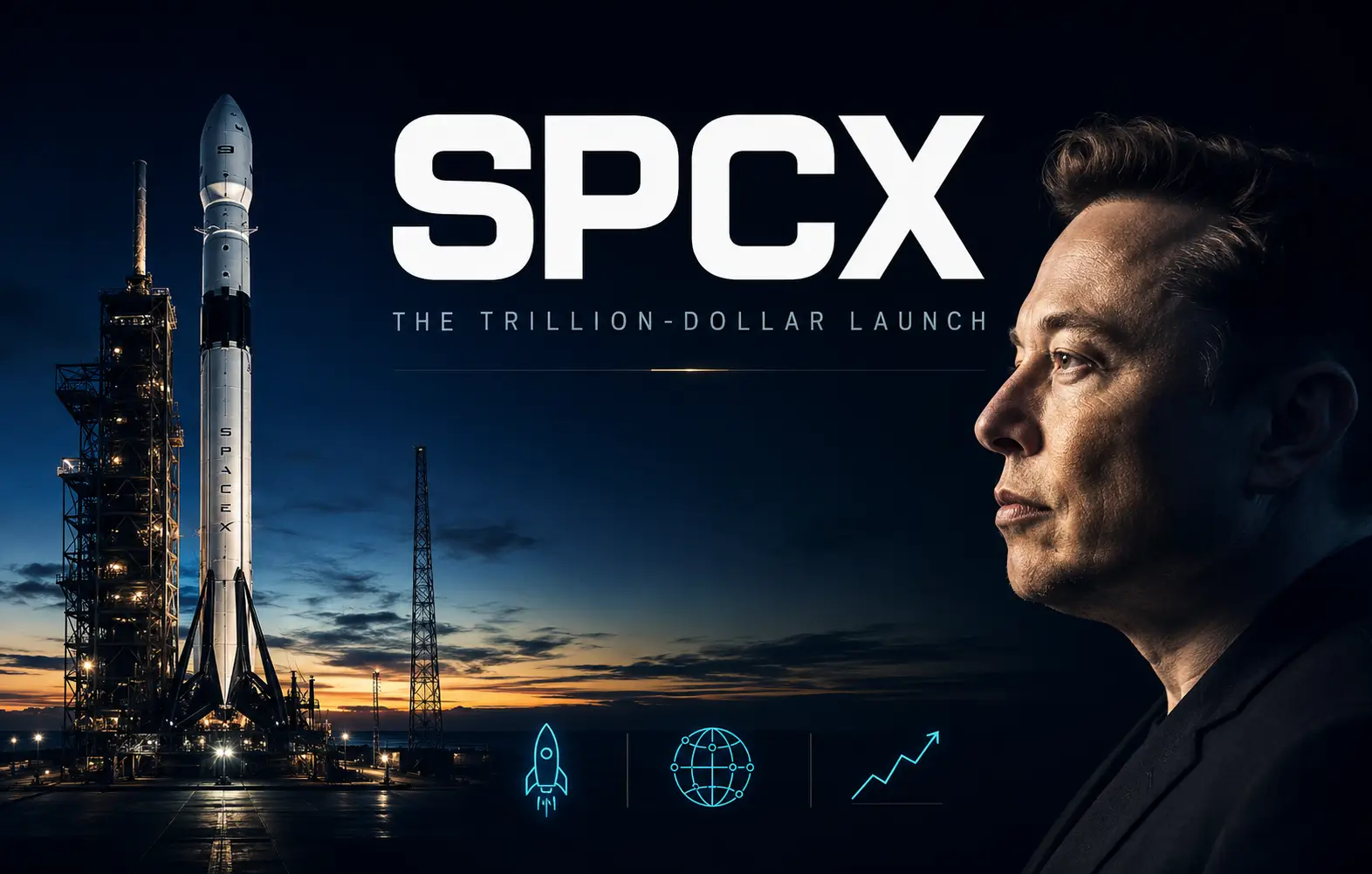
SpaceX founder Elon Musk is shown alongside a Falcon rocket in this graphic celebrating the historic SpaceX stock offering and its $1.77 trillion valuation.
SpaceX priced its historic share sale on Thursday, setting the stage for its stock to trade publicly on the Nasdaq on Friday. The rocket builder raised roughly $75 billion by selling 556 million shares at $135 each, valuing the company at a staggering $1.77 trillion. This record-breaking SpaceX IPO represents the largest initial public offering in market history, surpassing Saudi Aramco’s previous record of $29.4 billion in 2019.
Early indications show that demand for the stock is exceptionally strong, with buyers placing orders worth more than $350 billion. The decision to set a single price target of $135 rather than a standard pricing range reflects the hot market around tech and artificial intelligence. Elon Musk, who founded the firm in 2002, will retain a 49% ownership stake while controlling 82.4% of the voting power through special classes of stock.
This transition from a private startup to a public giant marks a massive shift for the commercial space sector. With proceeds destined to fund launch infrastructure, satellite networks, and space-based computing, the listing is a massive milestone. However, the sheer size of the valuation has also attracted substantial debate and skepticism from Wall Street watchdogs
How High Could SpaceX Shares Open Today?
Indications of interest shared among traders on Friday morning suggest that SpaceX stock could open near $175 per share when trading officially begins. If the first trades execute at that level, it would represent a swift 30% jump from the initial public offering price of $135. The exact timing remains flexible as investment banks and brokerages coordinate behind the scenes to balance buy and sell orders.
Trading debuts of this scale are notoriously volatile, meaning that early price discovery can swing wildly. Some institutional funds that received shares during the initial allocation may choose to sell immediately to lock in quick gains. At the same time, retail buyers who were shut out of the initial pricing might rush to buy on the open, pushing the price higher.
Market experts emphasize that high initial demand does not guarantee steady performance over the coming weeks. The first few hours of public trading will provide the first real test of how the broader market values the company’s business model. Brokerages are warning clients to expect rapid price swings as the market digests the high volume of shares changing hands.
Why Are Analysts Warning Against Buying SpaceX Shares?
Despite the immense hype surrounding the SpaceX stock debut, some prominent investment research firms are urging people to exercise extreme caution. Analysts at Morningstar recently issued a note to clients valuing the company at less than half of the $1.77 trillion valuation implied by the $135 IPO price. They suggest that the firm is overvalued at current levels, advising people to wait for more attractive entry points.
Richest People in the World 2026: Elon Musk Still Number One
The core of the disagreement centers on how much money the satellite internet division, Starlink, can realistically generate. In its filings with the Securities and Exchange Commission, the company highlighted a potential lifetime revenue figure of $1.6 trillion for the service. Morningstar analysts, however, estimate the realistic opportunity is closer to $129 billion due to physical and technical limits.
These analysts point out that satellite broadband networks face hard constraints on spectrum availability, satellite capacity, and ground station infrastructure. Additionally, as more users join the network in concentrated areas, bandwidth speeds can degrade, limiting the service’s appeal in densely populated regions. Morningstar argues that the current stock price assumes flawless execution across every business line, leaving no room for operational setbacks.
Elizabeth Warren Slams SEC for Approving the Listing
The record-setting SpaceX public listing has also caught the attention of lawmakers in Washington, sparking sharp political pushback. Democratic Senator Elizabeth Warren issued a statement on Friday criticizing the Securities and Exchange Commission for allowing the offering to proceed. She labeled the valuation figures as nonsense and raised concerns about the protection of ordinary investors.
Warren targeted the regulatory review process, claiming that the agency under the current administration rushed to approve a deal with questionable financial projections. She urged the regulatory body to perform its oversight duties and ensure that wealthy founders do not take advantage of public markets. The statement highlights the ongoing friction between progressive lawmakers and technology executives over market influence.
Supporters of the SpaceX stock offering countered by pointing out that the filing underwent months of detailed SEC scrutiny before receiving approval. They argue that sophisticated institutional investors, who make up the bulk of the demand, are fully capable of evaluating the risks. Nevertheless, the political spotlight ensures that the company’s financial disclosures will remain under intense scrutiny from both regulators and Congress.
How the SpaceX IPO Affects Its Employees
Beyond the Wall Street drama, the SpaceX market debut is creating an extraordinary wave of personal wealth for the people who build the rockets. According to data from the San Francisco-based investment platform Hill.com, roughly 4,400 current and former employees will become paper millionaires at the $1.77 trillion valuation. In addition, about 100 of those workers are set to reach centimillionaire status, with equity holdings valued at over $100 million.
Tech startups have a long history of offering equity compensation to attract top talent when cash budgets are tight. Early employees often accept lower base salaries in exchange for stock options, betting that the company will eventually succeed. In this case, that bet is paying off on a scale rarely seen in industrial manufacturing or SpaceX initial public offering history.
What makes this wealth distribution unique is the wide variety of roles that are benefiting from the stock options. Andrew Benson, the chief executive of Hill.com, noted that the equity pool extends far beyond top executives to include technicians, assembly line workers, and administrative staff. This broad-based participation contrasts with traditional aerospace firms, where financial gains are typically concentrated at the very top.
How Starlink Fuels the Company’s Financial Engine
While rocket launches grab the most headlines, the satellite internet business is the real cash engine for the company. Starlink generated more than 61% of total revenue in 2025, supported by 12 million active subscribers spread across the globe. The service uses a massive constellation of low-Earth orbit satellites to deliver high-speed broadband to remote areas, maritime vessels, and commercial aircraft.
On the very morning of the public debut, the company went ahead with a pre-planned launch of 29 Starlink satellites from Cape Canaveral, Florida. Chief Operating Officer Gwynne Shotwell remarked that only this company would execute a major orbital mission on the day of its public market opening. The comment highlighted the rapid operational cadence that has allowed the firm to dominate the global launch market.
This constant expansion is necessary to maintain service quality as the subscriber base continues to scale. However, maintaining and replacing thousands of short-lived satellites requires continuous, capital-intensive rocket launches. The capital raised from public investors will help fund the next generation of larger satellites designed to increase network capacity and support orbital data centers.
Ringing the Opening Bell in Two States Simultaneously
To celebrate the historic milestone, the company hosted a unique dual opening-bell ceremony that set a new precedent for the Nasdaq. Executives simultaneously rang the opening bells at the traditional MarketSite location in New York City and at the brand-new Nasdaq Texas exchange. The split-state celebration reflected both the company’s deep ties to Texas and the exchange’s recent geographic expansion.
Elon Musk delivered his remarks remotely via a video feed from the company’s sprawling headquarters in Starbase, Texas, located near Boca Chica. Meanwhile, President Gwynne Shotwell and Chief Financial Officer Bret Johnsen led the physical celebration on the ground in New York. The remote appearance allowed the founder to stay close to active engineering projects while celebrating the financial milestone with Wall Street.
This dual-location setup highlighted the massive physical footprint the company has established across the United States. From launch pads in Florida and California to development facilities in Texas and Washington, the business operates as a national infrastructure giant. The public market listing marks the end of its era as a closely held private enterprise, opening its books to daily public judgment.
Could SpaceX and Tesla Merge?
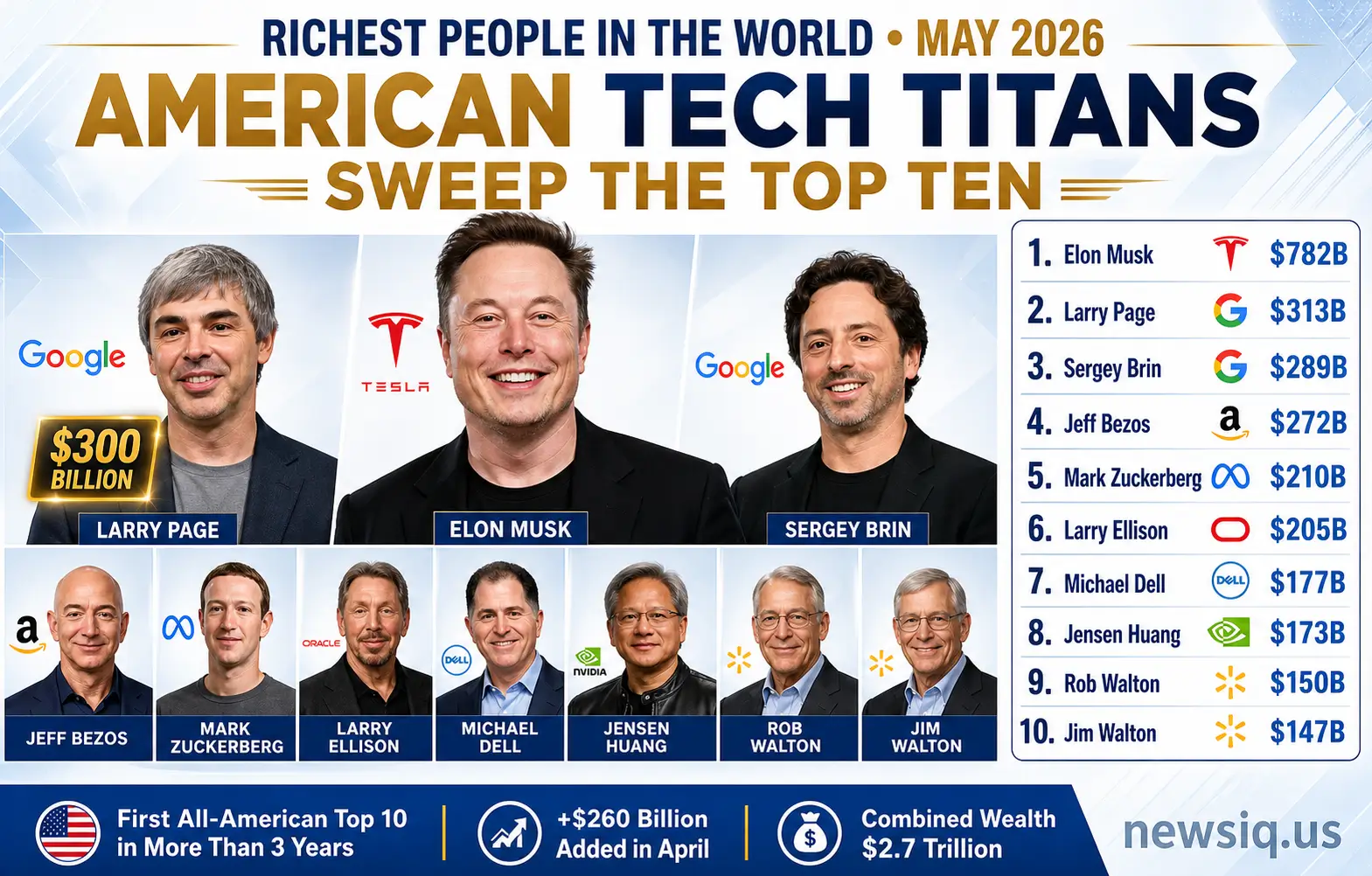
With Elon Musk now serving as the chief executive of two separate companies valued at over $1 trillion, some investors are wondering if a corporate merger could be on the horizon. Tesla currently holds a valuation of roughly $300 billion, while the rocket builder is priced at $1.77 trillion. A combination of the two giants would create an industrial and technology conglomerate of massive scale.
While a formal merger remains highly speculative, the operational overlap between the companies is already substantial. Tesla uses SpaceX’s materials expertise for its Cybertruck, and SpaceX incorporates Tesla battery technology into its spacecraft. Additionally, the recent merger between SpaceX and Musk’s artificial intelligence firm, xAI, has further intertwined his various business ventures under a single technological umbrella.
However, corporate governance experts point out that a formal merger would face immense legal and regulatory hurdles. Shareholders of both companies would need to approve the transaction, and antitrust regulators would likely scrutinize any deal closely. For now, the two entities are expected to remain separate public companies, even as they continue to share engineering talent and resources