Molly Miller’s ASU Success Story Became a ‘Beauty Trap’ Debate
 Skasif
24/03/2026
Skasif
24/03/2026 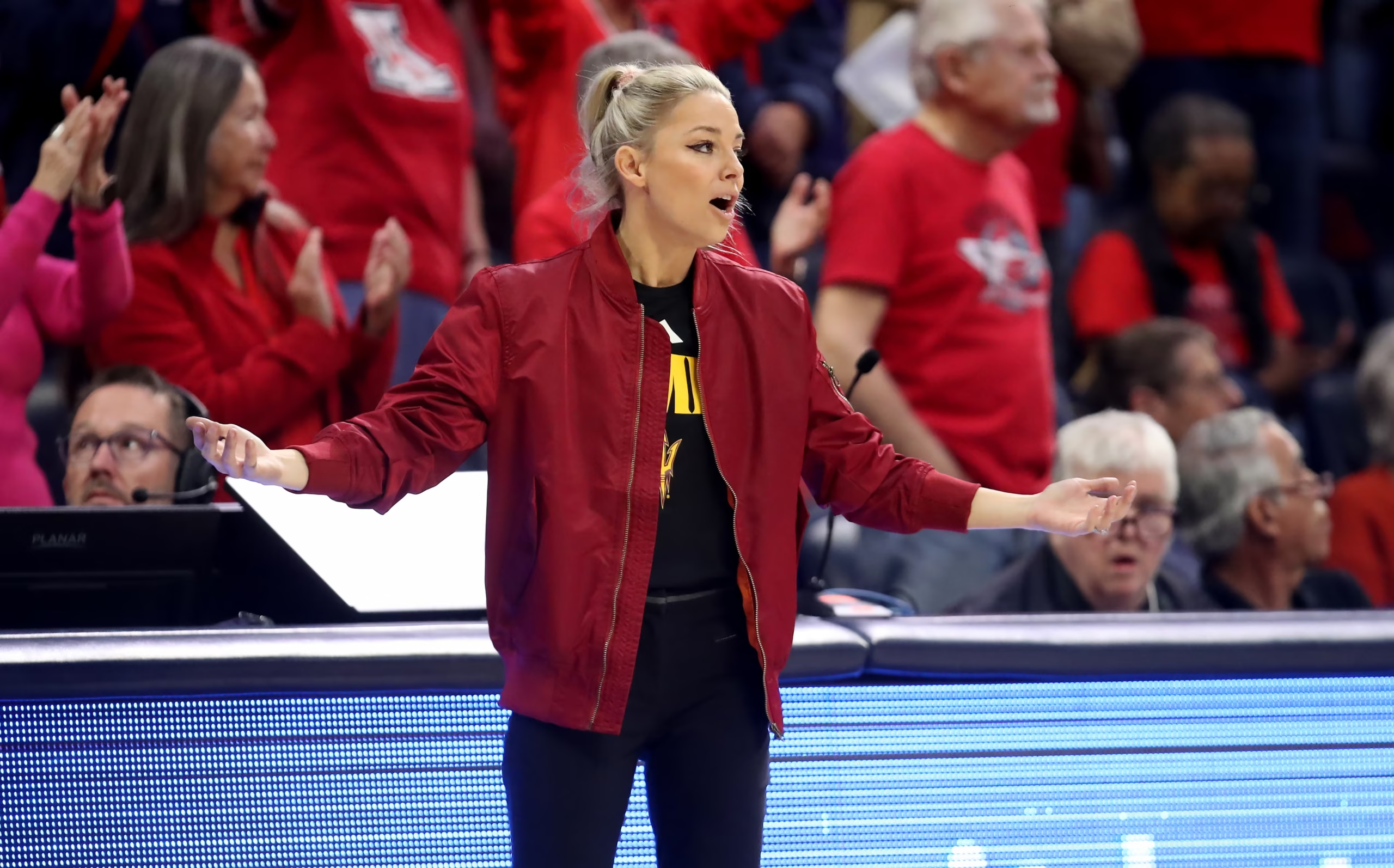
Molly Miller led Arizona State back to a winning season for the first time since 2019–20. Photograph: Icon Sportswire/Getty Images
Molly Miller did something this season that does not happen often in college basketball.
She took over a program that had not had a winning record in six years. The Arizona State Sun Devils were 10–22 before she arrived. In her first season, they went 24–11 and made the NCAA Tournament for the first time since 2020.
That is a coaching job worth talking about. But when Miller’s name started trending on March 24, most of the conversation was not about her defense or her work in the transfer portal. It was about how she looks.
A Guardian article came out that morning with a headline that pulled everything together: “Molly Miller, ‘pretty privilege’ and women’s basketball’s beauty trap.” By mid-morning, Google searches for “molly miller asu” shot up to 100 on their scale. People were also searching for “taylor rooks” and “paige bueckers”—two other women in basketball who have dealt with the same kind of attention.
The story here is not whether Miller is attractive. The story is why, after a clear coaching achievement, the internet decided to talk about something else.
Who Is Molly Miller?
Miller is in her early 40s. Before Arizona State came calling, she had already built a reputation as a winner.
She played at Drury University, then went back there as a coach. At the Division II level, she put up strong numbers. In 2020, she moved to Grand Canyon University. Over five seasons, she went 117–38. Her last season there was a 32–3 run with a 30-game winning streak and the program’s first NCAA Tournament appearance.
When ASU hired her in March 2025, the program was in rough shape. No winning seasons since 2019–20. No tournament appearances. A roster that needed work.
Miller used the transfer portal. She installed a defensive system built on pace and accountability. She changed the culture. The results showed up fast.
The Sun Devils started the 2025–26 season 15–0. They finished 9–9 in a tough Big 12 conference. They earned a No. 10 seed in the NCAA Tournament and lost a close game to Virginia in the First Four. Miller missed that game because she was sick, but she was back on the sideline after.
Analysts called it one of the best first-year turnarounds in recent Big 12 history. She earned a $50,000 bonus for making the tournament and is in line for a $100,000 retention bonus.
That is the part of the story that should have gone viral.
Why She Started Trending
The spike in attention happened on March 24. That is when the Guardian published its piece.
The article pointed to TikToks that had been floating around for weeks. In one video, the person talking praised Miller as “one of the best basketball coaches to ever walk the Earth.” But then he added that she “is a beautiful woman” and called Arizona State a “big party school” with “beautiful women.” Another TikTok with hundreds of thousands of views had a caption that said straight out: “Molly Miller isn’t going viral because of her coaching.”
The comments on these videos went where you might expect. People called her “so hot.” One person wrote, “so she’s a D.E.I hire, got it,” clearly as a joke or a jab.
The Guardian piece argued that this fits a long pattern in women’s basketball. Early WNBA marketing leaned hard into a “straight girl next door” image. Players like Paige Bueckers have dealt with sexualized TikTok edits and even stalking. Journalist Taylor Rooks, who has built a career from sideline reporting to NFL coverage and studio hosting, still has to answer questions about whether her success comes from “pretty privilege.”
Rooks talked about this on a recent podcast. She said: “To minimize somebody’s skill or capabilities or talent to the fact that they maybe look good to you is such a disservice to all the work they have put in.” She also said people assume that if she is good at her job, she must be “cheating” by using her looks.
That is the same dynamic playing out with Miller.

What Actually Happened on the Court
If you only watched the TikToks, you would miss what Miller actually did this season.
She inherited a 10–22 team. She turned them into a 24–11 team. That is a 14-win improvement in one year. She gave ASU its best non-conference record in years. She got a group of transfers to buy into her system. The defense was disciplined. The pace was fast. The team played with an identity that analysts called “relentless.”
That kind of turnaround does not happen by accident. It happens when a coach knows what she is doing.
The problem is that the online conversation drifted away from the work. Compliments about appearance are not new, and they are not unique to Miller. The issue is when they take over the story. The Guardian piece framed it as part of a system where women have to keep proving they belong instead of just being allowed to do their jobs.
There is nuance here. Some women in sports have used their appearance for branding or NIL deals without losing credibility. Others face objectification that distracts from real issues like pay gaps and media coverage. And the experience is not the same for everyone. Miller is a blonde, petite white woman. Black athletes and coaches often face a different, harsher version of the same scrutiny.
The Bigger Pattern in Women’s Sports
Women’s basketball is growing fast. Attendance is up. TV deals are bigger. NIL money is flowing. But some things have not changed.
The early WNBA pushed an image of conventional attractiveness. Today, players still deal with sexualized social media clips alongside serious analysis of their games. Paige Bueckers has been praised for her skill and also stalked online. Taylor Rooks still gets asked if her success comes from how she looks.
For coaches like Miller, the spotlight can feel even sharper because leadership roles in sports have mostly been held by men. Her hiring at ASU should have been about her success at Grand Canyon. Instead, some people online turned it into a conversation about campus aesthetics.
The question is not whether anyone should ever mention appearance. It is whether the conversation around women in sports—especially when they achieve something significant—can stay focused on the work.
What Comes Next for Miller and ASU
Miller has already shown she can win at the Power conference level. Next season, expectations will be higher. The “first-year” label is gone. Recruiting will get tougher. Her contract incentives are tied to sustained success, so the pressure is real. But that pressure comes from winning, not from TikToks.
For women’s basketball as a whole, moments like this show both progress and friction. More people are watching. More money is coming in. But the “beauty trap” conversation shows that some cultural habits are hard to break.
The spike in searches for Molly Miller came from genuine interest in her story mixed with the internet’s habit of latching onto visuals. Her achievements give the sport something real to celebrate. The hope is that next time, the coverage leans more toward the wins than the looks.