Top US Diplomat Rubio Visits India to Stabilise Key Partnership
 Skasif
23/05/2026
Skasif
23/05/2026 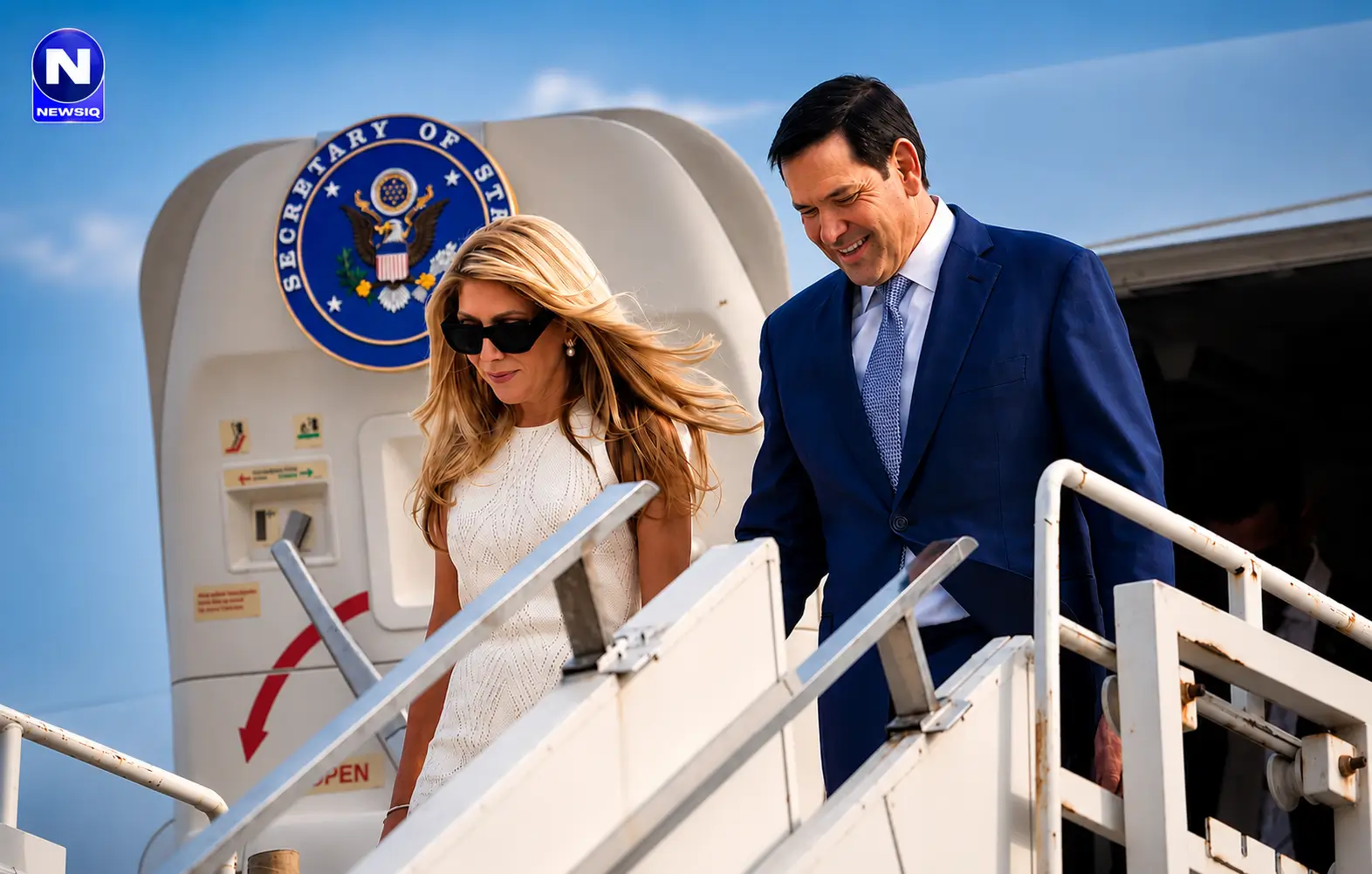
US Secretary of State Marco Rubio and his wife Jeannette disembark in Kolkata, India, during his four-day visit focused on repairing US-India ties, energy cooperation, and Quad strategy.
Marco Rubio Visits India to Repair Strained Ties with Modi
US Secretary of State Marco Rubio touched down in Kolkata on Saturday morning, May 23, 2026, kicking off a four-day visit to India. He brought his wife Jeannette along and started the trip with a stop at Mother Teresa’s Missionaries of Charity headquarters before heading to New Delhi for meetings with Prime Minister Narendra Modi.
This is Rubio’s first visit to India in his current role. It comes at a tense moment. Relations between the Trump administration and Modi’s government took a hit last year when the US hit Indian goods with steep tariffs. Now Washington wants to turn things around.
The trip includes stops in Agra and Jaipur after the main talks in the capital. Rubio will also join other Quad foreign ministers in New Delhi on May 26. The timing matters. Both sides need to show progress on trade, energy, and regional security before things get worse.
Why This Trip Matters Right Now
Relations between the US and India have seen better days. During Biden’s time in office, Modi got red-carpet treatment, including a state visit in 2023. Trump welcomed Modi to the White House early in his second term but then slapped tariffs on Indian exports, some as high as 50 percent. Many of those were tied to India’s purchases of Russian oil.
An interim deal in February cut tariffs to 18 percent, and a Supreme Court ruling later dropped them further to around 10 percent. But new investigations into unfair trade practices have Indian officials worried that higher duties could return. One person familiar with the talks said the US feels India has been dragging its feet on making concessions.
Rubio has a tough job. He needs to convince Indian leaders that Washington still sees them as a vital partner while pushing for better trade terms and more US energy sales.
🇺🇸🇮🇳 US Secretary of State Marco Rubio arrived in India on a key mission to repair strained ties, discuss tough trade tariffs, and strengthen the Quad alliance. pic.twitter.com/3mT8VxDu5K
— NewsIQ (@NewsIQLive) May 23, 2026
Trade Tensions at the Center of Talks
Trade sits at the heart of the friction. India wants permanent relief from the threat of new tariffs. The US wants India to open up more and stop what it sees as foot-dragging on a full agreement.
The interim framework helped, but it expires soon. Without a broader deal, other areas of cooperation could suffer. Analysts say the lack of progress on trade is clouding everything else.
For India, stable access to the huge US market remains critical. For the US, bringing supply chains closer to a democratic partner like India makes strategic sense, especially when competing with China.
Energy Security and the Shadow of the Iran War
The war in Iran has scrambled global energy markets. The closure of key shipping routes created shortages that hit India hard. New Delhi kept buying discounted Russian oil to keep factories running and prices in check.
Rubio made it clear before leaving that the US is ready to sell as much energy as India will buy. “We want to sell them as much energy as they’ll buy,” he said. American and Venezuelan supplies are on the table as alternatives.
US Treasury recently extended a sanctions waiver for Russian oil already at sea. That gave India some breathing room. But long-term, Washington wants to shift India away from Moscow.
This part of the agenda matters to everyday Indians. Higher energy prices hit families and businesses. For the US, successful energy deals could create American jobs and reduce India’s reliance on Russia.
Pakistan Factor and Regional Worries
US moves toward Pakistan have added another layer of discomfort in New Delhi. Islamabad played a role mediating during the Iran conflict and received approval for nearly $700 million in F-16 upgrades.
Recent clashes between India and Pakistan, including the deadly attack in Pahalgam and subsequent strikes, made things worse. While Trump claimed credit for a ceasefire, Indian officials pushed back on any suggestion of US mediation in their disputes.
Rubio will have to walk a careful line. India wants clear reassurance that closer US-Pakistan ties won’t come at its expense. At the same time, Washington needs Pakistan’s help on regional issues.

Quad Meeting and Indo-Pacific Strategy
The trip leads straight into the Quad foreign ministers’ gathering. The group US, India, Japan, and Australia is often called the Asian version of NATO. It focuses on keeping sea lanes open and pushing back against Chinese assertiveness.
India has pushed for a full leader-level Quad summit on its soil. So far, that request has gone unanswered. Some analysts call the current ministerial-only format an unannounced downgrade. Others see Rubio’s presence as a sign Washington still values the partnership.
The embassy in New Delhi posted on X about the Quad’s role in regional security and diversifying supply chains. That message was clearly aimed at calming nerves.
Ambassador Sergio Gor’s Quiet Work
US Ambassador Sergio Gor has been laying the groundwork since January. People inside the think tank world call him the “India whisperer.” As a Trump ally, he brings personal connections that could help Rubio close gaps.
Gor’s efforts show how personal relationships still matter in big-power diplomacy, even when policies create friction.
What Success Would Look Like
A good outcome would include concrete steps toward a lasting trade framework, new energy deals, and a clear commitment to the Quad. Both sides also want to set the stage for a possible Trump visit later.
India faces its own balancing act. It values ties with the US but maintains strong links with Russia and hosts the BRICS summit in September. Strategic autonomy remains a core principle.
Experts offer cautious views. Richard Rossow from the Center for Strategic and International Studies doubts Rubio can fully reverse the downward trend without a trade breakthrough. Others see room for momentum in areas where interests line up.
Broader Picture for US-India Relations
The relationship has grown steadily for decades. Defense cooperation, technology sharing, and people-to-people ties remain strong. But economic friction and competing regional priorities keep testing it.
For American businesses, India offers a massive market and an alternative manufacturing base. For Indian companies, the US is a top export destination and source of investment.
The Rubio visit won’t fix everything. But it could stop the slide and open doors for future progress. With tariffs looming and energy markets unstable, both governments have reasons to make this trip count.
The coming days will show whether high-level talks can deliver enough to rebuild trust. Markets will watch for any signals on trade. Diplomats will look for language on the Quad and regional security. And regular people in both countries will feel the effects through prices at the pump and jobs tied to bilateral business.
This visit is not flashy. It is practical diplomacy at a difficult moment. How Rubio and Modi’s teams handle it could shape the US-India partnership for years ahead.
Summary
US Secretary of State Marco Rubio is visiting India as the Trump administration moves to repair strained US-India relations. The trip is focused on preventing further damage to key partnerships in defense, energy, trade, and supply chains. Officials on both sides are trying to stabilize ties after months of economic pressure, geopolitical disagreements, and regional security tensions.
Key Issues and Developments
1. Trade Tariffs and Economic Pressure
Last year, the United States imposed heavy 50% tariffs on some Indian goods, arguing that India maintained unfair trade practices and continued buying Russian oil.
Since then, tensions have eased slightly:
- A temporary agreement reached in February reduced tariffs to 18%.
- A later US Supreme Court decision pushed effective rates closer to 10%.
- However, ongoing US investigations into trade practices continue to create uncertainty for Indian businesses and investors.
2. Energy Crisis and Russian Oil
The ongoing US-Israel conflict involving Iran has disrupted global energy markets and affected major shipping routes, including the Strait of Hormuz.
To reduce pressure on India’s energy supply:
- The US Treasury extended a 30-day waiver allowing stranded Russian oil shipments to continue reaching India.
- Rubio is also encouraging India to increase purchases of American and Venezuelan crude oil as an alternative source of energy.
3. Quad Alliance and Regional Tensions
Rubio’s visit comes ahead of an important Quad Foreign Ministers’ Meeting in New Delhi.
Quad made up of the US, India, Japan, and Australia has recently faced concerns about weakening momentum because of delays in holding a leaders’ summit.
At the same time, India remains cautious about Washington’s growing engagement with Pakistan. Concerns increased after the US approved a $686 million technology upgrade package for Pakistan’s F-16 fighter jets, especially following recent deadly clashes in Pahalgam.
4. Diplomatic Signals Before the Visit
Ahead of Rubio’s arrival, US authorities dropped major fraud charges against Indian businessman Gautam Adani after he pledged to invest $10 billion in the United States.
The move is widely seen as an effort to improve diplomatic relations and reduce tensions before high-level talks.
Strategic Importance
For Washington, maintaining strong ties with India is critical to its Indo-Pacific strategy and efforts to counter China’s growing influence in the region.
For India, improving relations with the US helps:
- Secure affordable energy supplies
- Protect exports and manufacturing from future tariffs
- Strengthen defense and technology partnerships
- Balance relations between Western allies and groups like BRICS while maintaining strategic independence
Overall, Rubio’s visit is viewed as a major diplomatic effort to reset trust and strengthen cooperation between two increasingly important global partners.