AI Bubble Strategies 2025 Hedge Fund Lessons from the Dot Com Era
 Skasif
24/10/2025
Skasif
24/10/2025 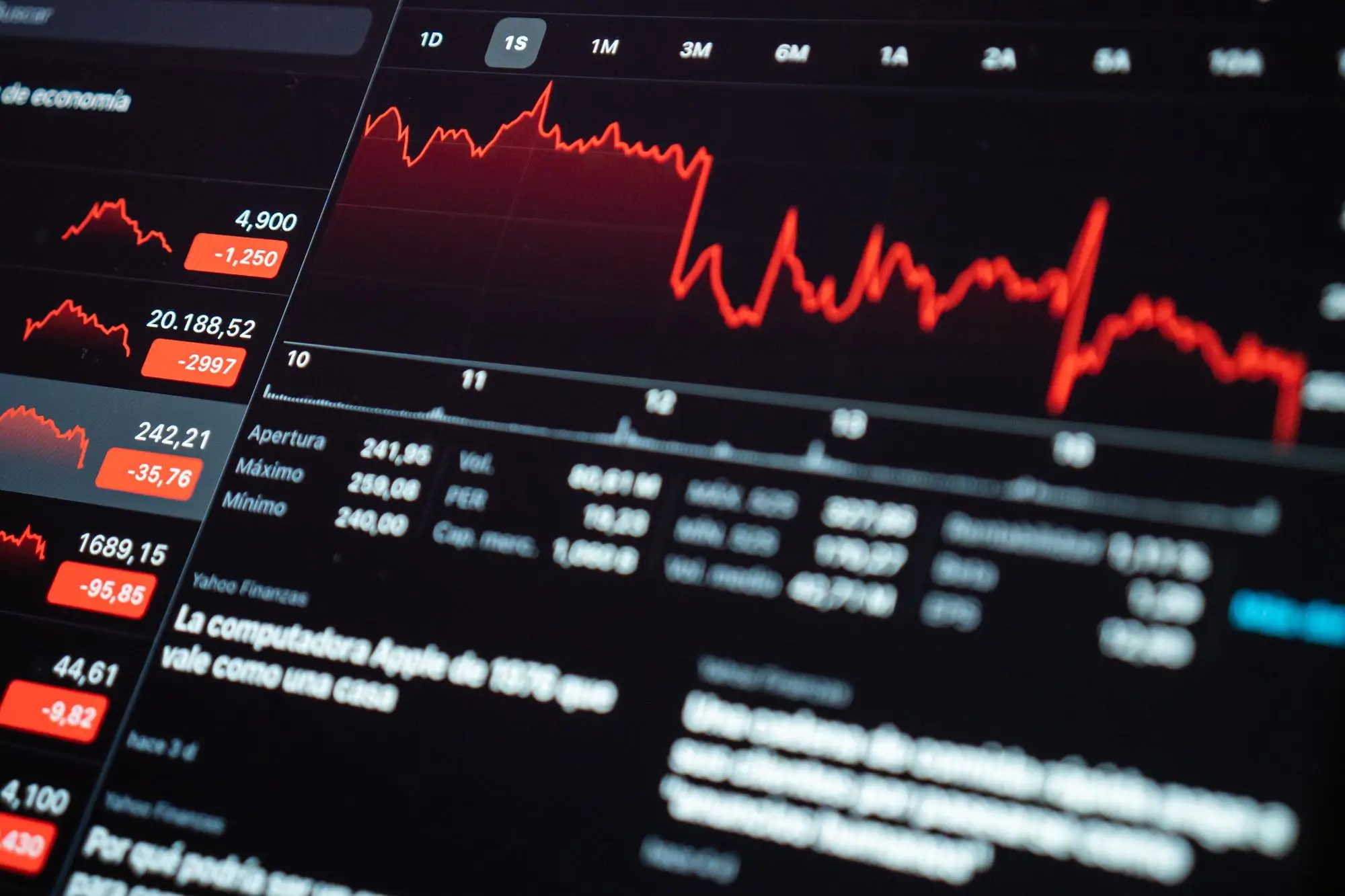
Yahoo Finance app displays the IBEX 35's red-hot downturn on Oct. 24, 2025 down 357 points or 1.5% as investors react to AI overvaluation fears echoing dot-com warnings.
Summary
- Wall Street spots the ‘building blocks of a bubble’ in tech investing.
- Smart diversification trades let investors catch the wave at the right time.
- This approach echoes hedge fund wins from 1998 to 2000.
- Pros weigh the sting of leaving AI plays against the danger of sticking around.
California, Oct. 24 (NewsIQ) – Big-time investors feel uneasy about the AI hype but hesitate to go all-in against it. They’re pivoting from overblown stocks to up-and-comers that could shine next. It’s a move straight out of the 1990s dotcom playbook, one that let savvy players duck the big bust.
U.S. stocks keep smashing records, and AI chip giant Nvidia (NVDA.O) has seen its value blast past $4 trillion. That’s got professional investors scrambling for ways to cash in on the bull run without getting burned. As of October 23, 2025, Nvidia’s market cap hovers around $4.4 trillion, a slight pullback from its mid-year peak near $4.6 trillion but still underscoring the relentless AI-driven surge. This valuation, fueled by explosive demand for AI chips, has Wall Street buzzing with both excitement and caution.
Plenty are glancing back at the 1990s internet surge. It started with startups, then swept into telecom and broader tech. Hedge funds surfed that tide by dumping sky-high stocks right before the top and snapping up ones with more upside.
“What we’re up to now is exactly what clicked from 1998 to 2000,” says Francesco Sandrini, multi-asset head and Italy CIO at Amundi, Europe’s biggest asset manager.
He points to clear red flags of irrational hype on Wall Street think wild trading in high-stakes options tied to top AI stocks. Still, he bets the tech buzz will keep rolling. His plan? Lock in profits by wagering on solid picks that could surge soon.
Sandrini’s team hunts for “the top growth spots the market hasn’t clocked yet.” That means shifting into software outfits, robotics firms, and Asian tech plays. In 2025, this strategy has gained fresh traction as AI investments poured in globally—$33.9 billion in generative AI alone, up 18.7% from 2023, according to Stanford’s 2025 AI Index Report. These moves aren’t just defensive; they’re about capturing the next leg of growth before the crowd arrives.
Other money managers plan to ease off Wall Street’s Magnificent Seven after Nvidia’s shares more than tripled in just two years. But they aim to stay in the AI game through fresh diversification. Through mid-October 2025, the Magnificent Seven—now including Broadcom alongside Alphabet, Amazon, Apple, Meta, Microsoft, and Nvidia—delivered about 18% total returns, but performance has been uneven, with Nvidia leading the pack while others like Apple lag. This lopsided run has prompted sharper rotations into adjacent sectors.
Asset Managers Stay Nimble to Catch the Wave
“The chance of this AI boom turning into a flop is pretty steep,” says Simon Edelsten, CIO at Goshawk Asset Management. “Companies are dumping trillions into it, all chasing a market that isn’t even here yet.” Edelsten handled telecom IPOs at London’s Dresdner Kleinwort Benson back in 1999.
He figures the AI frenzy will next hit sectors linked to Nvidia, Microsoft (MSFT.O), and Alphabet (GOOGL.O). Global AI spending is projected to hit $375 billion in 2025, climbing to $500 billion in 2026, per recent analyst reports—numbers that echo the dot-com era’s overzealous infrastructure bets.
Nailing the bubble’s stages has long been a safe bet for playing it without guessing the exact peak too soon.
Economists Markus Brunnermeier and Stefan Nagel studied it in a paper. They found hedge funds rarely shorted the dotcom bubble. Instead, they timed it sharp, outpacing the market by about 4.5% each quarter from 1998 to 2000. They dodged the worst crash by unloading pricey internet names early and rolling gains into fresher ones – before the crowd piled in.
“Quick movers raked in solid gains even as 2000 peaked,” Edelsten notes. He sees today’s setup mirroring 1999. His picks? IT consultants and Japanese robotics companies that could snag business from AI leaders. It’s the classic gold rush pattern.
“When someone hits gold, you grab the local hardware store,” he says. “Prospectors need shovels from somewhere.” Fast-forward to 2025, and this “shovel seller” mindset is alive in bets on supply-chain enablers, from chip packaging firms to energy providers powering the data center boom.
Staying in AI Without Going All-In on Risk
Investors want a piece of the action as hyperscalers like Amazon, Microsoft, and Alphabet pour trillions into AI data centers and cutting-edge chips. But they’re dodging straight bets on those giants.
Uranium tops the list for Becky Qin, multi-asset manager at Fidelity International. Why? Power-thirsty AI setups could devour nuclear energy. This bet has paid off handsomely in 2025, with nuclear stocks like Constellation Energy surging amid expansions into AI-hotspot regions like Texas. Morgan Stanley forecasts U.S. data centers will demand an extra 57 gigawatts of power by 2028—equivalent to adding another California to the grid. Stocks tied to uranium and nuclear infrastructure have been among the year’s top performers, reflecting the AI trade’s ripple effects.
Kevin Thozet, on the investment committee at Carmignac, is cashing out some Magnificent Seven gains. He’s building a stake in Taiwan’s Gudeng Precision (3680.TWO), which crafts shipping crates for AI chip makers like TSMC (2330.TW).
Asset managers worry the data center scramble could lead to too much supply, just like the fiber-optic overload in telecom days.
“Every big tech shift comes with overkill on the road from A to B,” says Arun Sai, senior multi-asset strategist at Pictet Asset Management.
Even with powerhouse earnings driving Microsoft, Amazon, and Alphabet, Sai spots “the building blocks of a bubble.” He likes Chinese stocks as a buffer if China’s AI leaps steal some U.S. thunder. Recent reports highlight China’s rapid AI advancements, potentially shifting global enthusiasm and pressuring U.S. valuations.
Not everyone buys this play-it-safe relative value strategy for AI.
Oliver Blackbourn, portfolio manager at Janus Henderson, hedges his U.S. tech bets with European and healthcare holdings. That way, if AI stocks tank, it won’t drag the whole U.S. economy under.
“You can’t predict how long the AI mania lasts,” he says. “Spotting the peak only works in the rearview. We’re basically in 1999 until it bursts.”
Bubble Warnings and Fresh Strategies
One year on, the AI narrative has only intensified, with fresh voices amplifying bubble concerns. Legendary short-seller Jim Chanos, known for calling the dot-com top, now warns that AI spending mirrors those excesses—trillions funneled into unproven markets with eroding skepticism. “Extended bull markets lead to reduced standards,” Chanos noted in a recent interview, teaching a course on financial fraud that draws direct parallels to today’s hype.
Fund managers surveyed in October 2025 rank an AI bubble as their top portfolio risk, yet they’re not bailing on stocks. A CNBC poll shows most plan to stay invested, opting for diversified plays over outright shorts. This echoes the original playbook: ride the wave, but with an exit ramp ready.
Even AI chatbots like Grok and ChatGPT, when queried, flag bubble risks—not in the tech itself, but in overhyped valuations and unsustainable capex. Economists argue the buildout has staved off recession so far, but a slowdown could ripple widely, hammering everything from construction to energy.
On the strategy front, 2025 has seen refined tactics. Investors are piling into “AI adjacents” like clean energy firms powering data centers. SolarEdge Technologies, for instance, has rebounded sharply this year on AI-driven demand. Others, per Medium analyses, follow McKinsey’s findings: over 80% of firms see no revenue lift from AI yet, so bets shift to execution-savvy operators, not just buzzwords.
Disciplined processes remain key, as one investment firm notes: stick to fundamentals even if it means missing short-term pops. In this vein, ETFs tracking Magnificent Seven alternatives have outperformed the group year-to-date, offering a nimble way to stay exposed without full froth.
Navigating the Next Phase
As 2025 wraps, the AI story feels like dot-com 1999 redux—euphoria laced with peril. A Guardian piece posits that if the bubble pops, recession looms, but it could pave the way for equitable rebuilding, boosting wages through smarter tech deployment. Optimists counter that AI’s foundational buildout is real, not illusory, per Seeking Alpha: fears are overblown amid solid enterprise adoption.
For investors, the playbook holds: diversify early, favor the “shovel sellers,” and hedge broadly. Whether the boom endures or bursts, those who learned from 2000 stand the best shot at thriving.
Ready to protect your portfolio from AI volatility? stay connected with NewsIQ