Pakistan Condemns Israel Recognition of Somaliland at OIC
 Skasif
11/01/2026
Skasif
11/01/2026 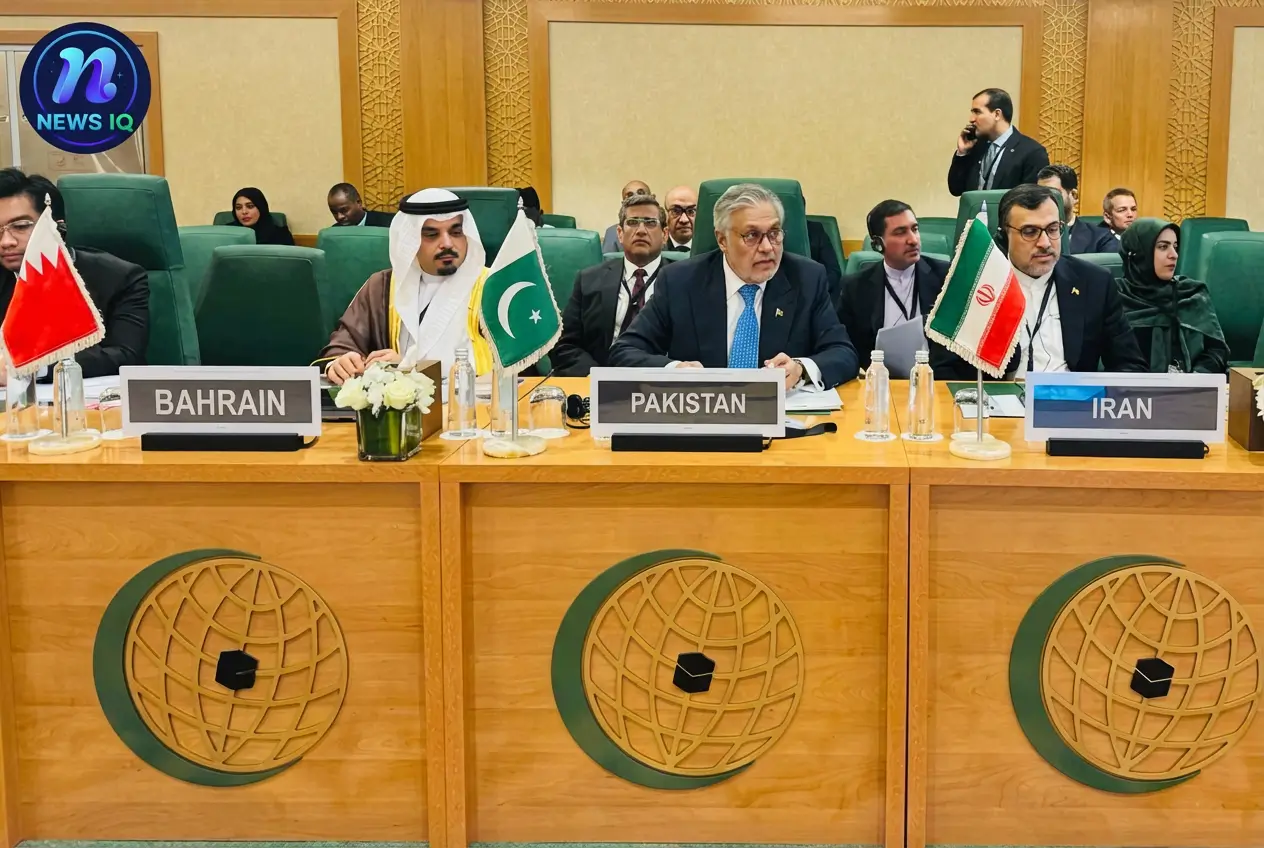
Pakistan has issued a strong diplomatic condemnation of Israel decision to recognise the self declared region of Somaliland, warning that the move violates international law and threatens regional stability. The remarks were delivered at the 22nd Extraordinary Session of the Council of Foreign Ministers of the Organisation of Islamic Cooperation, held in Jeddah on 10 January 2026.
Addressing representatives of OIC member states, Pakistan Deputy Prime Minister and Foreign Minister Mohammad Ishaq Dar rejected Israel recognition of Somaliland, describing it as illegal, irresponsible, and a direct challenge to established principles of state sovereignty and territorial integrity.
Support for Somalia Sovereignty
Pakistan reaffirmed its unequivocal support for the unity, sovereignty, and territorial integrity of the Somalia. Dar warned that recognising breakaway regions without consent of the parent state sets a dangerous precedent, particularly in fragile regions such as the Horn of Africa and the Red Sea corridor.
He cautioned that such unilateral actions could undermine peace, fuel separatist movements, and increase instability across a region already facing complex security and humanitarian challenges.
OIC Resolution and Collective Condemnation
The OIC Council of Foreign Ministers adopted resolutions condemning Israel decision and reaffirming collective solidarity with Somalia. Member states stressed that international borders cannot be altered through political manoeuvring or selective recognition, emphasising respect for international law and multilateral norms.
The bloc underscored that recognition of self declared entities risks weakening the global legal framework that governs statehood and international relations.
Palestine and Forced Displacement Concerns
During his address, Dar also reiterated Pakistan unwavering support for the Palestinian cause. He rejected any attempts at forced displacement of Palestinians and called for the establishment of an independent, contiguous, and sovereign State of Palestine based on pre 1967 borders.
Pakistan reaffirmed its position that Al-Quds Al-Sharif must serve as the capital of a future Palestinian state, in line with international consensus and United Nations resolutions.
Deputy Prime Minister/Foreign Minister Senator Mohammad Ishaq Dar @MIshaqDar50 addressed 22nd Extraordinary Session of the OIC Council of Foreign Ministers.
— Ministry of Foreign Affairs - Pakistan (@ForeignOfficePk) January 11, 2026
DPM/FM rejected Israel’s recognition of so-called ‘Somaliland’ as illegal and contrary to international law, reaffirming… pic.twitter.com/VTpnNVJojF
Jammu and Kashmir at the OIC Forum
Addressing South Asian concerns, Dar urged the OIC to intensify diplomatic efforts to support the right to self determination of the people of Jammu and Kashmir. He noted that the unresolved dispute continues to pose serious risks to regional peace and stability, describing it as a longstanding source of tension and a potential nuclear flashpoint.
Pakistan called for the implementation of United Nations Security Council resolutions and a peaceful resolution that reflects the legitimate aspirations of the Kashmiri people.
Background to Israel Recognition of Somaliland
Israel formally recognised Somaliland on 26 December 2025, becoming the first country to do so since the region declared independence from Somalia in 1991. The announcement was followed by high level diplomatic engagements, triggering strong reactions from Somalia, the African Union, Arab states, and now the wider OIC bloc.
Somalia has consistently maintained that Somaliland remains an integral part of its internationally recognised territory, a position supported by the United Nations and the African Union.
— Veo Prompt (@VeoPrompt) January 11, 2026
Regional and Global Implications
Analysts warn that Israel decision could increase geopolitical friction in the Horn of Africa, a region of strategic importance due to its proximity to major global shipping routes and ongoing security challenges. Concerns have also been raised that such recognition may embolden other separatist movements worldwide.
The issue is now being closely monitored by the international community, with calls for restraint, dialogue, and adherence to international law growing louder.