US Forces Capture Iranian Ship Touska in Hormuz Standoff
 Skasif
20/04/2026
Skasif
20/04/2026 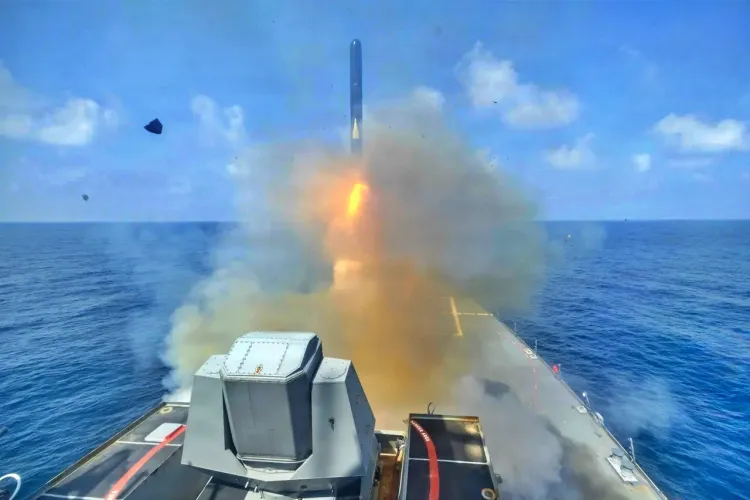
The United States military seized an Iranian container ship called the Touska in the Strait of Hormuz in the early hours of Monday. Forces from the guided-missile destroyer USS Spruance fired a 5-inch gun at the ship’s engine room after six hours of repeated warnings, then Marines from the USS Tripoli flew in by helicopter and rappelled onto the deck to take control. The operation was confirmed by US Central Command and President Trump. It marks the first known capture of a non-military Iranian cargo vessel since the US naval blockade began last week.
Iran reacted fast. Officials branded the seizure “armed piracy” and said it violated the ceasefire that had largely held since April 9. Hours later, Iranian Foreign Ministry Spokesperson Esmaeil Baghaei announced Tehran had no plans to send negotiators to Islamabad for talks the US had scheduled for Monday. Baghaei said Iran sees no seriousness from Washington on diplomacy and does not trust the US side. The Iranian military vowed a swift response.
What happened in the Strait of Hormuz
The Touska was sailing from the Arabian Sea toward the Iranian port of Bandar Abbas when the USS Spruance intercepted it. US forces issued multiple warnings that the vessel was violating the blockade. After the crew failed to comply over six hours, the destroyer ordered the engine room evacuated and then fired, disabling the ship. Video released by CENTCOM shows US Marines departing the USS Tripoli by helicopter, crossing the water, and sliding down ropes onto the Touska’s deck. The boarding went without visible resistance.
The ship flies the Iranian flag. It measures 294 meters long and 32.25 meters wide. Both the vessel and its owners sit under US Treasury sanctions for helping Iran evade restrictions. What it was carrying remains unknown. Trump posted on Truth Social that American troops are “seeing what’s on board.”
Why the US stopped the Touska
Since April 13 the US has run a naval blockade through the Strait of Hormuz. The goal is to stop Iranian ships and any vessels heading to or from Iranian ports from passing, except those from countries that cut separate deals with Tehran. In practice the blockade cuts off most of Iran’s oil exports. Al Jazeera calculations show Iran earned nearly $5 billion from oil sales in the month before the blockade started. US officials say the Touska was part of that enforcement push and had ignored clear orders to turn back.
— U.S. Central Command (@CENTCOM) April 19, 2026
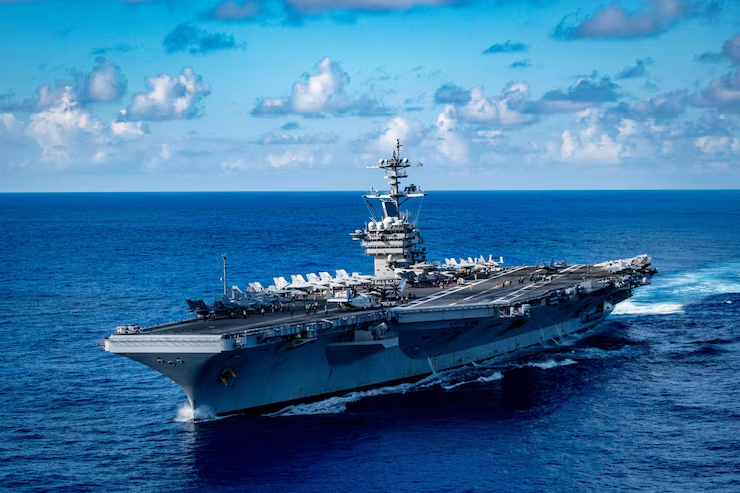
Defending Freedom, Forging Tomorrow
— U.S. Navy (@USNavy) April 20, 2026
The Navy League's Sea-Air-Space Exposition kicks off today! This premier maritime exposition in the U.S. brings together defense industry leaders and top military decision-makers from around the world to share the latest advancements in the… pic.twitter.com/JYsJnScLha
Iran’s response and rising tension
Iran moved quickly to frame the incident as an act of aggression. Baghaei told reporters the US had violated the April 9 ceasefire and showed no real interest in talks. He added there were “indications from the American side that there is no seriousness on the side of the US to walk down the path of diplomacy.” The Iranian military command warned it would “soon respond and retaliate against this armed piracy.” Pakistan, which had been preparing to host further negotiations as early as Tuesday, now faces uncertain plans. The US team of Steve Witkoff and Jared Kushner was still set to travel Monday, but the Iranian side had already pulled out.
Why this waterway matters
Strait of Hormuz sits at the mouth of the Persian Gulf and serves as one of the world’s busiest energy corridors. Even limited disruption here ripples through tanker routes, insurance costs, and fuel prices far beyond the region. The current dual pressure US forces actively stopping Iranian-linked ships while Iran has a history of harassing commercial traffic raises the chance of miscalculation. A single commercial vessel caught in the middle could turn a controlled standoff into something bigger.
Impact on US and European interests
For the United States the stakes are strategic and operational. The Navy keeps a steady presence in the area to protect shipping lanes and apply economic pressure. Any sustained escalation means more ships, more patrols, and higher risk to personnel. For Europe the concern centers on energy stability. Many EU countries still rely on Middle Eastern oil and gas flows, especially after recent global supply shocks. European shipping companies are already monitoring the situation. If insurers raise risk ratings for the area, costs climb fast and that pressure flows straight into higher fuel prices and tighter supply chains across the continent.
What happens to the seized vessel
US officials say the Touska will undergo a full inspection before any final decision. Possible paths include holding the ship as part of a sanctions case, redirecting it to a neutral port such as Oman, or releasing it if inspectors find nothing actionable. Each choice carries political weight. Holding the vessel deepens the standoff. Releasing it could be read as a de-escalation signal. The ship’s fate will likely be decided in the next day or two.
Ceasefire at risk
The April 9 ceasefire was already narrow and fragile. This incident tests its limits. Does routine maritime enforcement count as a violation? Will Iran treat the seizure as an act of war? Can outside mediators still bring both sides back to the table? So far neither Washington nor Tehran has formally declared the ceasefire finished, but the tone has hardened and trust is eroding quickly.
What remains unclear
Several key details are still emerging. Was the Touska carrying sanctioned cargo? Did Iran launch any immediate counter-action such as drone strikes? Were any crew members injured or detained during the boarding? Will there be additional seizures or direct retaliation in the coming hours? Until those answers surface the situation stays fluid.
What to watch next
The next 48 to 72 hours will likely set the direction. Watch for official word on the cargo contents, satellite tracking of naval movements, statements from European governments or NATO, oil price reactions, and any fresh incidents involving drones or patrols. If nothing escalates further, tensions could ease. If either side pushes back hard, the region could shift from a managed standoff to something more volatile.
The bigger picture
This is not a one-off event. It reflects the broader pattern of pressure, enforcement, and signaling that has defined US-Iran relations during the current conflict. Maritime routes have become a key front because they are visible, economically critical, and harder to control than land operations. The seizure of the Touska shows how fast an enforcement action can slide into direct confrontation and how thin the current calm really is. For people watching oil prices, shipping schedules, or the chance of wider war, the next few days matter a lot.