“BJP Will Destroy Bengal”: Farmers Threaten Suicide Over Cattle Ban
 Skasif
17/05/2026
Skasif
17/05/2026 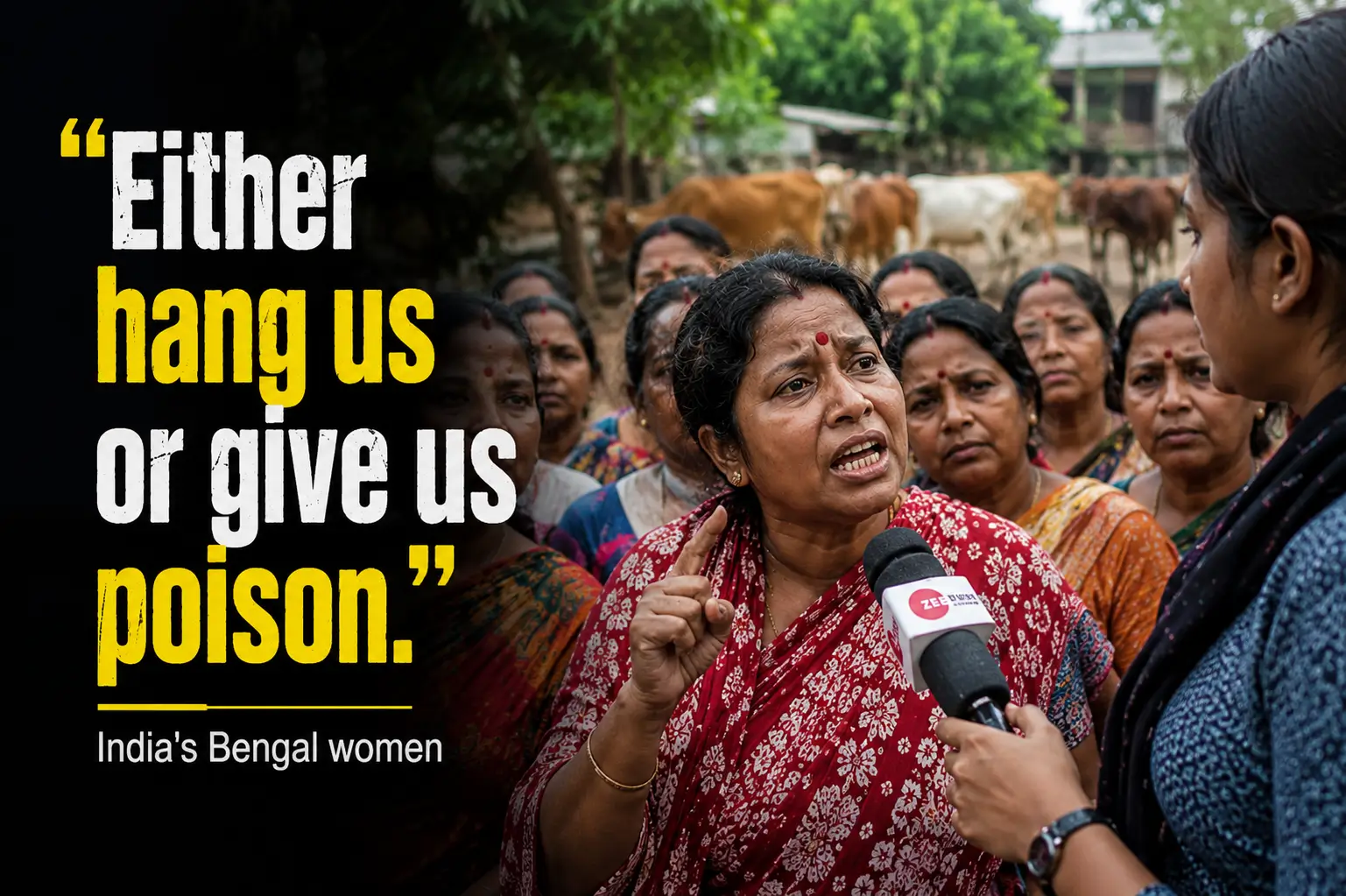
"Either hang us or give us poison"—Basirhat women demand an end to the cattle transport ban distress that has paralyzed the local livestock economy.
BASIRHAT: The lush green fields of the Bengal-Bangladesh border belt have become a stage for a desperate human tragedy. A severe cattle transport ban distress has gripped thousands of rural families, threatening to wipe out the small-scale livestock industry that powers the region. In the villages surrounding Basirhat, the mood is no longer one of celebration ahead of the upcoming festival season; it is one of pure, unadulterated terror.
For generations, Hindu families in this belt have reared cattle specifically for the high-demand Bakrid season. This year, however, the newly elected administration’s “Zero Tolerance” policy on livestock movement has triggered a West Bengal cattle crisis that many believe is a death sentence for the poor. According to local reports from the ground, the situation has moved beyond political debate into a full-blown humanitarian emergency.
Rekha Patra Cattle Controversy and Local Anger
The heart of the unrest lies in the Rekha Patra cattle controversy. Patra, a prominent face of the local political shift, is being accused by her own community of leading “Vigilance Teams” that stop trucks on the highways. While the government claims these actions are meant to stop illegal smuggling, local Hindu traders say the victims are the legitimate farmers who have all their papers in order.
“Either hang us or give us poison,” shouted Mithu, a local cattle rearer whose voice has become the face of this struggle. She, like many others, is trapped in a Basirhat livestock debt cycle that seems impossible to escape. “Rekha Patra is stopping our cows on the road. Can she feed them? Can she clean their dung for even one day? We voted for change, but this change is killing our children.”
The anger is not just directed at local leaders. The residents are openly questioning the senior leadership in Kolkata. They claim that the cattle transport ban distress is being used as a political tool without any regard for the empty stomachs in the villages. “Suvendu Adhikari is sitting on a throne, but he is kicking the stomachs of the poor,” another resident told Exclusive News media. The sense of betrayal is deep, especially among those who believed the new government would protect their interests.
Read the Video Transcript in English
First Woman (Mithu): Either put a rope around our necks and hang us, or give us poison. Poison is easily available these days for very little money. Ask Rekha Patra she is stopping the cattle. What sense does that make? Can she feed them? Can she even pick up a basket of cow dung?
I have a loan of five lakh rupees. All the women from the group are coming to my house, asking me to repay the loan. How will I do it? Come to my house and see the condition. Suvendu Adhikari, you are sitting on your throne, what are you doing? You are destroying everything in the name of the Hindu religion.
Second Woman: Let our Eid happen. We sell these cattle so we can at least be free from some of our debts.
First Woman (Mithu): Muslim brothers and Hindu brothers, we all live here together. We have always stayed together. No one ever pressured us or grabbed us by the throat. Let them have their Qurbani (sacrifice). We need to survive.
A woman like me has taken five lakh rupees from the women’s committee. Come to my bank, I have all the records of interest and principal payments. See what the situation has become. My husband drives a van. This is how we live. We have children how will we feed them?
Second Woman: We haven’t slept. We can’t sleep at night. Our heads are spinning with worry. What will we do? There is no way out. We can’t find a solution.
Interviewer (off-camera): What do you want now?
Second Woman: Let our Eid happen. We sell these cows. At least we can be free from some of our debt.
Interviewer (off-camera): Candidate Rekha Patra is stopping cows on the roads in various places.
Second Woman: She is stopping the cows. They are also getting scared. She is a woman herself how can she give such pain to other women?
First Woman (Mithu): Tell Rekha Ghosh (Patra) to come here and throw the cow dung first, then she will understand the struggle. I have five lakh rupees debt. My husband is out with his van because he is angry; he says he won’t even enter the cowshed. How will I feed my cows? I owe three lakh rupees at the fodder shop. I have all the ledger books ready.
Tell Rekha Didi, it is good that you won, but you should help the people. We are all living together. Let them have their Qurbani so we can survive. Otherwise, tell her to come and clean the dung.
I am a woman, I handle the business, I clean the dung, I feed the cows, I bathe them. This is not a lie, this is the truth. Tell Rekha Didi to come and sit in my house for one day. Suvendu Adhikari, you are sitting on a throne, but you are kicking the stomachs of the poor.
Come and shoot me. Bring the files, bring the bullets. I am saying, shoot me. If I die, I will be at peace. No more women will come to my door for money. I have been doing this business for 20 years. We sell these cows and pay off our debts. The fodder shop, the hay everything is a struggle now. We haven’t even lit the stove today; we haven’t cooked. We can’t feed the cows. They won’t give us fodder anymore because I am a woman and they think I can’t pay. Where will we get jobs? We are uneducated.
Mamata was running the state fine, everything was going on. Now where do we go? Come to the bank and see my loans. We don’t wear jewelry, we don’t wear good clothes. My daughter is in Class 5, my daughter-in-law is in college. Where will the money for their education come from? Modi should have sent free cows from Bihar if he wanted to save the business. We are dying here.
10 Lakh in Debt: Math of Despair
The financial reality behind the Basirhat livestock debt is staggering. A typical family in this region takes a loan of 5 to 7 lakh from local banks or self-help groups (SHGs) to buy calves and fodder. They often supplement this with high-interest loans from private moneylenders, bringing the total debt to over 10 lakh per household.
Plan is always simple: sell the mature animals during the Bakrid peak season, pay off the principal and interest, and keep a small profit to survive the rest of the year. But the West Bengal cattle crisis has frozen this entire cycle. With trucks being seized and markets closed, there are no buyers.
“I owe three lakh just to the fodder shop,” Mithu explained while pointing to her ledger books. “The bank people come to my door every day. We haven’t even lit the stove to cook food today because there is no money. If we cannot sell these animals, we will have to hide from the recovery agents or end our lives.”
Breaking the Backbone of the Bengal Rural Economy 2026
Bengal rural economy 2026 is built on a delicate balance of communal cooperation. For decades, Hindu rearers and Muslim buyers have worked together in a system that benefited everyone. This trade provided the liquidity needed for agricultural equipment, school fees, and medical emergencies.
However, the current cattle transport ban distress is tearing this social and economic fabric apart. By branding every movement of livestock as “smuggling,” the administration has effectively criminalized the primary source of income for thousands. Experts warn that if the West Bengal cattle crisis isn’t resolved by June, the ripple effects will hit the state’s milk supply and leather industry, leading to higher prices in the cities.
According to Local sources, the local police are under strict orders to allow no movement, even for animals with valid health certificates. This has led to a situation where cows are starving in their sheds because the owners can no longer afford fodder, yet they cannot sell them to anyone who can.
Demand for Survival Over Politics
women of Basirhat are now making a direct appeal to the state capital. They aren’t asking for subsidies or handouts; they are asking for the right to trade. They argue that their Muslim neighbors have always been their best customers and have never caused them harm.
“Why is the government stopping us from selling to Muslims?” asked one elderly trader. “They are our brothers. We have lived together for a hundred years. This Rekha Patra cattle controversy is just a way to divide us while we starve. If they want to save the cows, let them pay for the fodder. Otherwise, give us the bullets ourselves.”
The demand is clear: a safe corridor for legal livestock transport and an immediate moratorium on bank loans for affected families. Without these measures, the Basirhat livestock debt will likely lead to a wave of defaults that could collapse local rural banks.
Role of the New Administration
Chief Minister Suvendu Adhikari has maintained that his government is only enforcing the West Bengal Animal Slaughter Control Act of 1950. However, critics point out that the enforcement is being done by political workers rather than trained veterinary officers. This has added a layer of lawlessness to the cattle transport ban distress.
Bengal rural economy 2026 cannot survive on ideology alone. The people of Basirhat are sending a loud message that the “Zero Tolerance” policy needs a “Human Touch.” They are reminding the leaders that the very people who put them in power are the ones now being crushed under the weight of these new rules.
As the sun sets over the cowsheds of Basirhat, the silence is heavy. The animals are hungry, and the people are losing hope. West Bengal cattle crisis is no longer a headline in a newspaper; it is a ticking time bomb in the heart of rural Bengal. Whether the government listens or continues its current path will determine if the next few weeks bring relief or a tragedy that the state will never forget.