Iran War Pushes Oil Prices Up and Shakes Global Markets
 Skasif
10/03/2026
Skasif
10/03/2026 
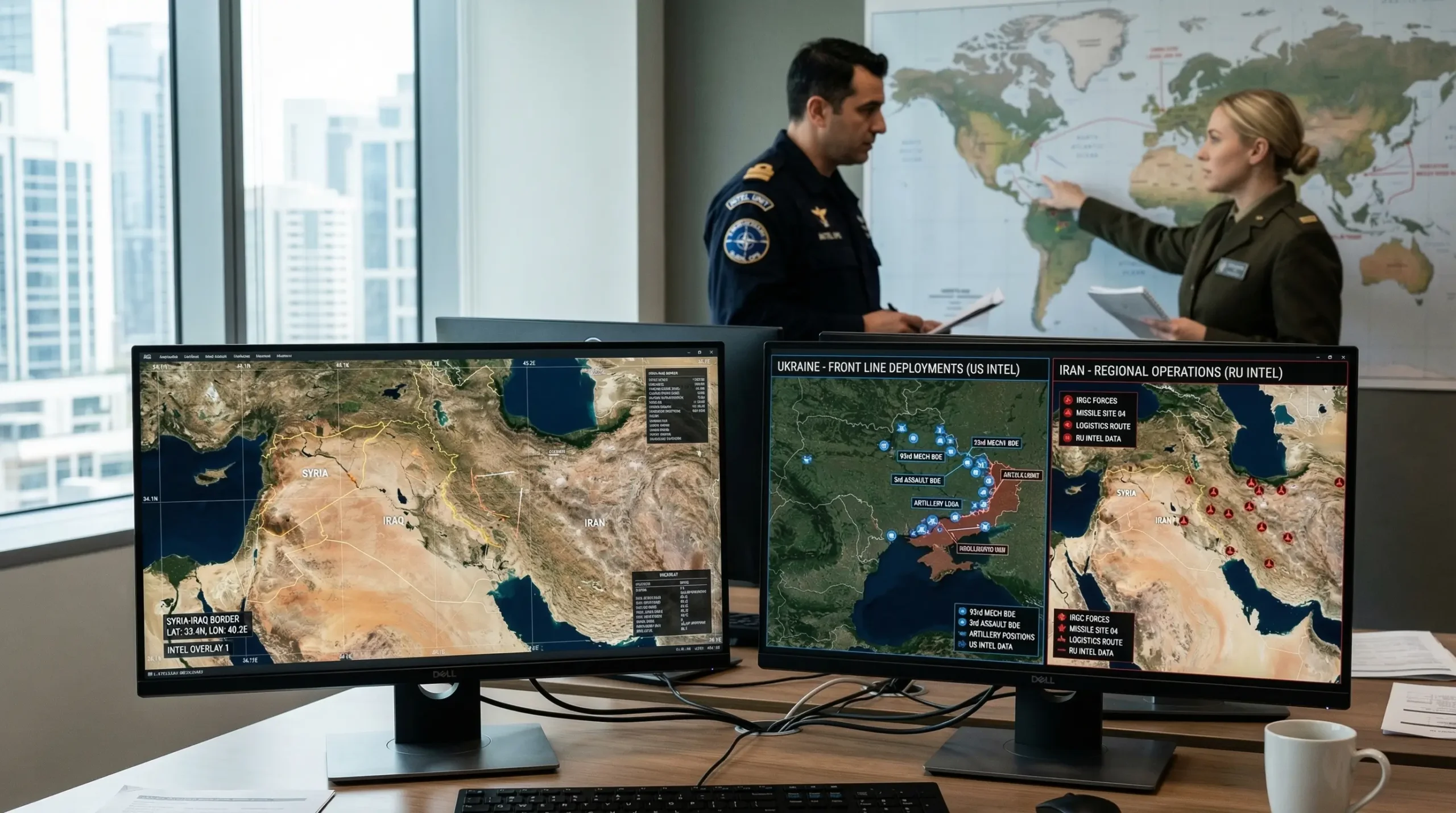
Iran war is raising oil prices and creating new risks for global shipping routes and energy supply. (AI Photo)
The War That Hit Your Wallet Overnight
A widening war involving the US, Israel, and Iran has turned the energy market upside down in less than two weeks, pushing oil prices toward recent highs and shaking stock markets across the US and Europe. Strikes on Iranian targets and retaliatory attacks across the region have disrupted shipping and raised fears that some of the world’s key oil producers could be forced offline. For US readers, the impact shows up quickly at the pump and in inflation data; for Europeans, it hits gas bills, industrial energy costs, and already fragile growth. The core worry on both sides of the Atlantic is the same: a supply shock that lasts long enough to tip economies toward slower growth or even recession.
Oil Supply Under Siege
The flashpoint is the Strait of Hormuz, the narrow channel off Iran that handles more than one fifth of the world’s seaborne oil flows in normal times. Iranian forces and aligned groups have threatened or attacked tankers and energy infrastructure, and while flows have not fully stopped everywhere, insurers, shippers, and energy majors are already rerouting or cutting activity through the choke point. Analysts warn that if Hormuz remains effectively shut or risky to transit, exports from major producers such as Iraq and Kuwait could be throttled within days, taking several million barrels per day off the market. Banks including Goldman Sachs and UBS have raised their Brent crude forecasts by around 10 dollars a barrel, signaling that they expect elevated prices to stick at least through the coming months.
On top of shipping risk, direct strikes on refineries, depots, and gas terminals across the Gulf are adding to the pressure. Qatar, a leading exporter of liquefied natural gas, has halted production at key sites after attacks, a move that could temporarily cut global LNG supply by close to a fifth and sharpen competition between Asia and Europe for cargoes. Each outage tightens the market and pushes traders to pay a higher premium for any crude or gas that can move reliably, feeding a cycle of higher prices and volatility.
How Prices Are Moving Now
Oil futures jumped sharply when the first waves of strikes hit, with Brent crude posting single‑day gains of more than 6 to 8 percent and briefly touching levels that traders had warned could trigger broader economic pain. In recent sessions prices have pulled back from their intraday peaks, but they remain well above prewar levels and are expected to stay elevated as long as Hormuz risk is unresolved. Some banks frame the current move as a “supply shock premium,” and say a full blockade or severe damage to Gulf infrastructure could still push prices into the triple‑digit range in a worst‑case scenario.
US gasoline prices, which tend to lag crude by days to weeks, are already climbing, and travel groups and auto clubs are warning that national averages could hit levels not seen since the last major energy spike. In Europe, the more immediate hit shows up in wholesale gas benchmarks, where Dutch contracts have jumped by more than 40 percent on some days as traders brace for reduced LNG flows from the Gulf. For both regions, higher energy costs filter into airfares, shipping, food pricing, and household bills, making the conflict feel less like a distant geopolitical story and more like a monthly‑budget problem.

US vs Europe: Who Feels It First?
US consumers are more exposed at the pump, with higher gasoline and diesel working their way into delivery costs, commuting budgets, and inflation readings watched by the Federal Reserve. Europe, which leaned heavily on LNG after cutting pipeline gas ties with Russia, now faces the risk of paying more to outbid Asian buyers for cargoes if Gulf volumes stay disrupted. That dynamic could squeeze energy‑intensive industries in Germany, Italy, and other manufacturing hubs that were only just recovering from the last gas shock.
Markets Reel, Then Partially Recover
Stock markets reacted on cue when the strikes began and tanker risk surged: energy names rallied, while airlines, shipping firms, and rate‑sensitive tech stocks sold off. In Europe, indexes like the FTSE 100, CAC 40, DAX, and Italy’s FTSE MIB have posted repeated down days, with some sessions seeing drops around 1.5 to 1.6 percent as investors priced in higher energy costs and profit pressure. US futures sank in the first waves of headlines, and the Dow, S&P 500, and Nasdaq have all seen sessions with losses near 1 to 2 percent as traders dumped risk and bought oil, gold, and defense stocks.
At the same time, markets have shown brief relief rallies whenever there are hints of de‑escalation or diplomatic movement, only to give back gains when new attacks or warnings hit the tape. That whiplash reflects a broader uncertainty: no one on Wall Street or in European trading rooms has a clear sense of how long the conflict will last, how deep strikes on energy facilities will go, or whether shipping through Hormuz can resume at normal insurance and security costs any time soon. Volatility indicators remain elevated, and strategists are telling clients to brace for sudden gaps in both directions around new headlines.
What Central Banks Are Watching
For the Federal Reserve and the European Central Bank, the Iran war arrives just as they were trying to guide inflation gently lower without choking off growth. Higher oil and gas prices risk stalling that progress, especially if they stay high long enough to push up transportation and food costs. Some analysts now expect central banks to stay cautious on rate cuts, arguing that they will want to see whether energy‑driven inflation proves short‑lived or sticky before making big moves.
Power Shift in Tehran, No Clear Exit
Inside Iran, the conflict has coincided with a major political shock: state media and regional outlets report that Mojtaba Khamenei, son of the late Ayatollah Ali Khamenei, has been named the country’s new Supreme Leader after his father was killed in early strikes. His rise, long discussed as a possible succession scenario, appears to have been pushed through under pressure from Iran’s powerful Revolutionary Guard network rather than through a full session of the Assembly of Experts, which normally oversees the choice. Analysts say that kind of wartime selection strengthens security hardliners and makes quick compromise with the US and Israel less likely in the near term.
Western leaders, including President Donald Trump, have criticized Mojtaba Khamenei’s appointment and signaled that they see the new leadership as more confrontational, at least for now. That tone, paired with ongoing strikes and threats on both sides, has deepened the sense in markets that there is no clear exit strategy or timeline. The result is a higher risk premium baked into oil, shipping, and even broader equity valuations, as traders assume that any ceasefire or de‑escalation could be fragile.
What It Means for US and European Daily Life
For US households, the near‑term changes are straightforward: higher gas prices when filling up, possible increases in airfares and shipping fees, and another bump in headline inflation data that can influence mortgage rates and credit costs. Drivers in car‑dependent suburbs and logistics‑heavy businesses such as trucking and parcel delivery feel it first, but the effect spreads as companies pass on higher fuel costs. If oil stays elevated for months, the pressure could show up in lower consumer spending on non‑essentials, as more income gets diverted to energy.
In Europe, the mix is a little different. High gas and power prices hit factories, data centers, and chemical and metals producers, raising the risk of production cuts or new cost‑saving rounds. Households that already saw big jumps in heating and electricity bills in recent years may face another uncomfortable winter if the crisis drags into the next cold season without alternative supplies locked in. Governments and the European Commission are also watching for any need to revive or expand energy support schemes that were rolled out in the earlier gas crisis.
What Investors and Workers Should Watch Next
Different groups will track different signals. Retail investors and pension savers will watch whether energy stocks continue to outperform and whether broader indexes can stabilize as headlines ebb and flow. Workers in energy‑sensitive sectors airlines, shipping, logistics, heavy industry will track company guidance on costs and potential hiring or investment freezes if margins get squeezed. Policy‑watchers will follow central bank statements for any hints that oil‑driven inflation is changing the path for interest rates, a key driver of mortgage and borrowing costs.
What Happens Next?
There are a few main paths from here, and none are guaranteed. One scenario sees limited de‑escalation, with enough naval security and quiet deals to allow most tankers back through Hormuz under higher insurance premiums; in that case, oil could drift lower but stay above earlier forecasts as a risk premium lingers. Another scenario involves deeper strikes on oil fields, export terminals, or gas hubs, combined with a longer disruption at Hormuz, which could push prices higher again and force emergency responses from the US and European governments, including releases from strategic reserves.
The toughest scenario for markets is a drawn‑out conflict with no clear settlement and repeated flare‑ups that keep shippers nervous and central banks on edge. Analysts are careful to stress that while they can model price ranges, they cannot model political decisions or miscalculations that might widen the war. For now, the one safe bet is that energy and markets will trade headline by headline, and that US and European households will keep feeling the knock‑on effects of a struggle playing out far from their own borders.