Putin’s Payback: Russia Helps Iran Target US Forces After American Aid to Ukraine
 Skasif
07/03/2026
Skasif
07/03/2026 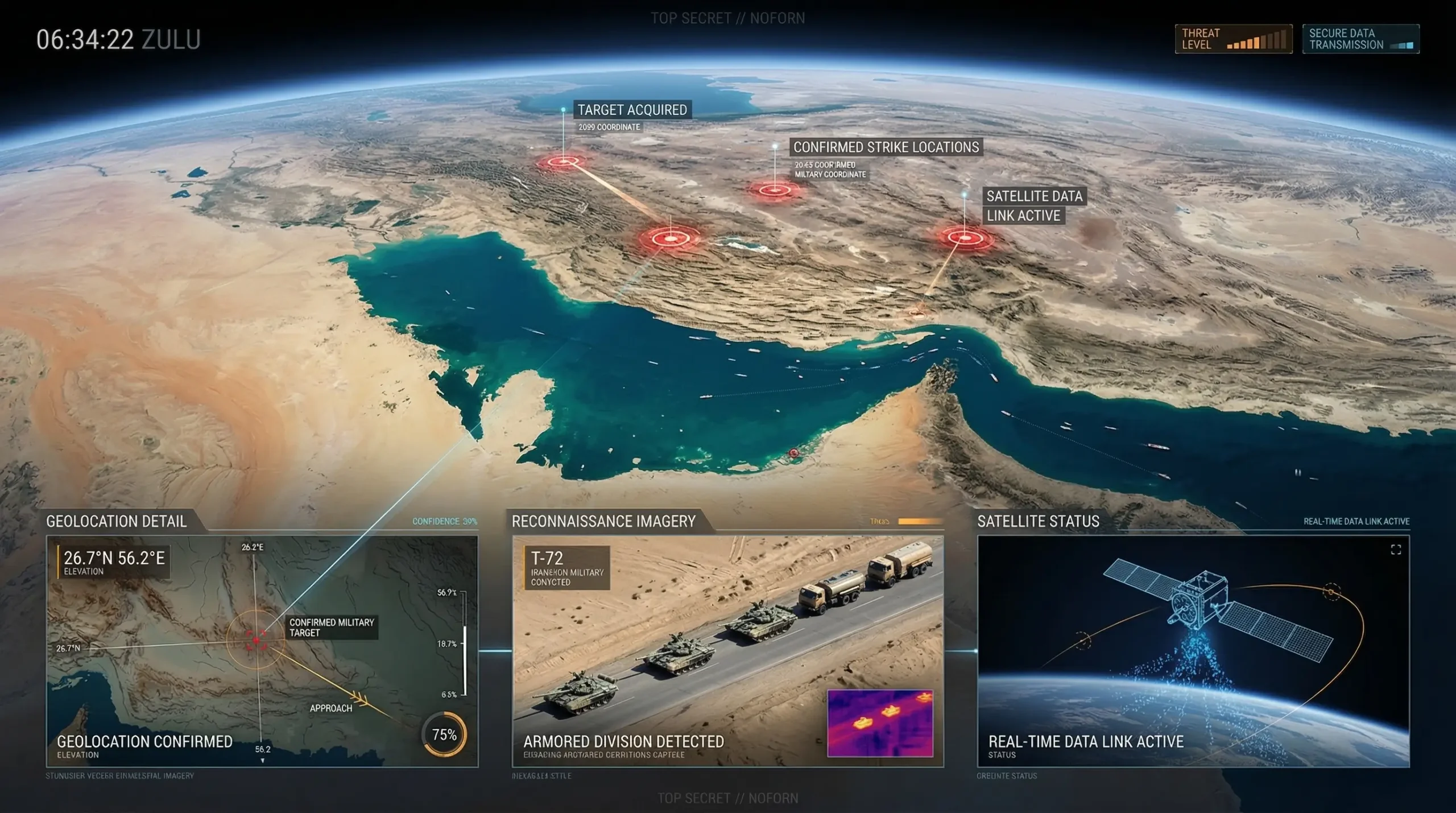
The Biden administration’s successor has expressed shock and concern this week over revelations that Russia is secretly sharing the locations of American military assets with Iran but the outrage masks an uncomfortable truth that geopolitical analysts say Washington must confront: the United States has been doing virtually the same thing for Ukraine for years.
According to multiple U.S. officials speaking to The Wall Street Journal, the Financial Times, and ABC News, Russia has been providing Iran with coordinates of American military ships, aircraft, and troop positions throughout the Middle East. The intelligence cooperation, first reported by The Washington Post, represents the strongest indication yet of deepening military coordination between Moscow and Tehran amid the ongoing Iran conflict.
But as White House Press Secretary Karoline Leavitt downplays the significance of Russia’s actions, insisting the United States is “completely decimating” Iranian forces regardless, critics argue the administration’s response reveals a fundamental contradiction in how Washington views intelligence sharing depending on who is doing it and who is being targeted.
‘A Reasonable Conclusion’: What Russia Is Providing Iran
The classified U.S. intelligence finding, described by officials to The Wall Street Journal, indicates Russia is sharing information about the locations of U.S. military forces throughout the Middle East. While the intelligence doesn’t explicitly show that Moscow is providing this data for targeting purposes, one U.S. official told the Journal that “would be a reasonable conclusion for why Russia is doing it.”
According to The Wall Street Journal, the types of information being shared include the coordinates of U.S. military ships and aircraft operating in the region. A former Russian intelligence officer, who had been briefed on the topic, confirmed that Moscow was providing a limited amount of satellite-derived intelligence to Iran, which lacks a sizable fleet of its own reconnaissance satellites.
The Financial Times reported that multiple sources confirmed Moscow had provided Tehran with intelligence on U.S. military assets, including planes and warships. The intelligence cooperation, according to two people familiar with the matter, has helped Iran unleash a barrage of drone and missile strikes against American forces and its allies since the conflict escalated six days ago.
ABC News, citing two people familiar with the intelligence, described the assistance as “alarming” because it would enable Iranians to target specific locations with ballistic missiles and drones, putting U.S. service members at risk. An intelligence official confirmed to ABC that the U.S. believes Russia is supplying Tehran with intelligence, though declined to specify exactly what type of information was being shared.
Strategic Partnership: Russia and Iran’s Growing Alliance
The intelligence sharing represents the latest evolution in what has become one of the most significant strategic partnerships to emerge from the Ukraine war. Russia and Iran have deepened their military cooperation dramatically since Moscow launched its full-scale invasion of Ukraine in 2022.
Reuters has previously reported that Iran has provided Russia with thousands of Shahed attack drones, which Moscow has deployed with lethal effect against Ukrainian cities and critical infrastructure. The “swarm” tactics enabled by these drones have become a hallmark of Russia’s campaign, overwhelming Ukrainian air defenses and causing widespread devastation.
Last year, the two nations signed a strategic partnership treaty, pledging to deepen their economic and military cooperation. The agreement formalized what had already become a robust relationship built on shared opposition to U.S.-led international order.
The Financial Times revealed that last July, following U.S. strikes on three Iranian nuclear facilities, Tehran requested thousands of advanced shoulder-fired missiles from Moscow. The allies subsequently struck a secret $500 million arms deal for 500 Verba launch units and 2,500 9M336 missiles, with delivery scheduled over three years starting in 2027.
Nicole Grajewski, a nonresident scholar at the Carnegie Endowment, told The Wall Street Journal that while the assistance wouldn’t surprise her, “there are also coverage gaps in Russian satellite imagery,” suggesting the practical value of Moscow’s reconnaissance data may be limited compared to American or Chinese capabilities.

American Response: Dismissal and Defiance
The White House has responded to revelations of Russian intelligence sharing with a combination of dismissal and defiance, insisting that whatever assistance Moscow provides will not alter the outcome of the conflict.
According to ABC News, White House Press Secretary Karoline Leavitt told reporters Friday that U.S. forces are “achieving the military objectives of this operation, including destroying some 30 ships and crippling Iran’s ability to launch ballistic missiles.”
Leavitt dismissed reports that Russia was supplying targeting intelligence to Iran, saying they “clearly” would not affect the war’s outcome because “we are completely decimating them,” the Financial Times reported.
Defense Secretary Pete Hegseth, in an interview with “60 Minutes” scheduled to air Sunday, declined to directly confirm Russia was sharing targeting information but indicated the military was monitoring the situation closely. “We’re tracking everything,” Hegseth said, according to an excerpt shared on social media. “Our commanders are aware of everything….No one’s putting us in danger.”
Double Standard: America’s Own Intelligence Sharing With Ukraine
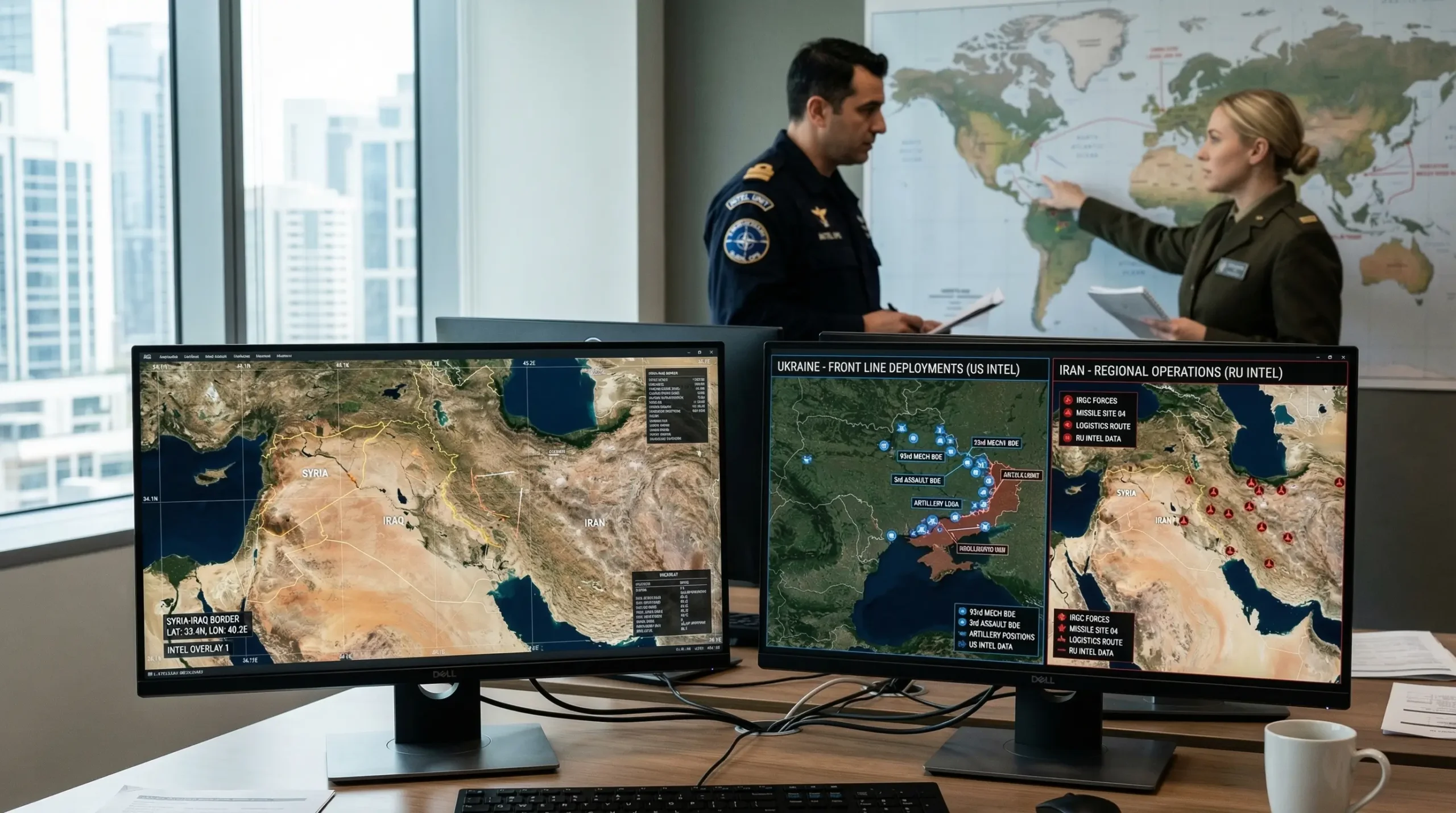
Yet as U.S. officials express alarm over Russia’s assistance to Iran, geopolitical analysts point to Washington’s own extensive intelligence cooperation with Kyiv cooperation that has included providing targeting information that Ukrainian forces have used against Russian troops and commanders.
Since the early days of Russia’s invasion, the United States has provided Ukraine with real-time intelligence about Russian military positions, troop movements, and command locations. According to multiple reports from The New York Times and The Washington Post, this intelligence sharing has been instrumental in enabling Ukrainian forces to target Russian generals, ammunition depots, and supply lines with precision artillery and missile strikes.
Former U.S. intelligence officials have openly acknowledged that the partnership includes providing targeting data that helps Ukrainian forces kill Russian soldiers. In 2022, The New York Times reported that U.S. intelligence had helped Ukraine target numerous Russian generals, resulting in their deaths on the battlefield.
The Biden administration has consistently defended this cooperation as legitimate assistance to a democratic ally defending itself against imperial aggression. When pressed on whether U.S. intelligence was enabling Ukrainian strikes that killed Russian commanders, administration officials have argued that Ukraine is exercising its inherent right to self-defense under international law.
Moscow’s Perspective: Mirroring American Strategy
From the Kremlin’s perspective, the logic of providing targeting intelligence to Iran follows the same reasoning Washington has used to justify its support for Ukraine. If the United States can help Ukrainian forces kill Russian soldiers and commanders, Russian officials appear to believe, then Moscow can help Iranian forces target American military assets in the Middle East.
The symmetry is not lost on Russian officials, though they have been careful not to directly confirm their involvement. According to ABC News, Kremlin spokesman Dmitry Peskov has previously stated that Iran hasn’t asked for help, while maintaining that Russia’s “consistent position” on the conflict remains unchanged.
Earlier this week, Peskov told reporters that “It’s not our war” when asked about Russia’s stance on the Iran conflict, The Wall Street Journal reported. Moscow has officially stated it plans to stay out of the fighting, even as evidence mounts of its behind-the-scenes support for Tehran.
Yet the Kremlin faces competing pressures. With the majority of Russia’s military forces tied up in Ukraine, Moscow is in no position to provide direct military aid to Iran. President Vladimir Putin has also been cautious about angering the Trump administration while the White House has dangled the prospect of normalizing relations if Moscow can reach a peace deal with Ukraine, the Journal noted.
What’s at Stake: Iran’s Intelligence Gap and Russia’s Limited Capabilities
The practical significance of Russia’s assistance depends heavily on what Moscow can actually provide. Iran operates a limited satellite fleet, creating significant intelligence gaps that even minimal help from Russia could partially fill.
The Wall Street Journal reported that Russia’s space and satellite capabilities lag significantly behind those of the United States and China, leaving questions about how helpful its reconnaissance data would actually be. Coverage gaps in Russian satellite imagery mean Moscow cannot provide the persistent surveillance that American systems can maintain.
Nonetheless, even intermittent satellite intelligence could help Iran identify high-value targets and time its strikes more effectively. Since the conflict began, Iran has attempted to strike U.S. forces throughout the Gulf region, hitting the embassy in Riyadh, a troop base in Kuwait, and multiple targets in Israel.
The Financial Times reported that the U.S. military said Thursday that Iran’s ballistic missile attacks had decreased 90 percent since the start of the war and its drone attacks by 83 percent statistics the administration cites as evidence of its military success, but which could also reflect Iran’s intelligence limitations.
Ukraine Connection: Why Russia’s Stakes in Iran Go Beyond the Middle East
For Moscow, the outcome of the Iran conflict carries implications that extend far beyond the Middle East. Regime change in Iran would deprive Russia of its closest partner in the region a partner that has provided weapons, drones, and political support for Moscow’s war in Ukraine.
The two countries have been united in their opposition to U.S.-led international order and are joined by multiple security agreements, including the strategic partnership signed last year. Iran’s leadership has consistently supported Russia’s position on Ukraine, refusing to join Western sanctions and maintaining robust trade relations throughout the war.
According to The Wall Street Journal, Moscow was forced to stand by and watch earlier this year as former Venezuelan President Nicolas Maduro another close Russian ally was captured and taken to the United States to face charges of narco-terrorism and drug trafficking. The incident demonstrated Russia’s limited ability to protect its partners when they come into direct conflict with American power.
Looking Forward: Escalation Risks and Diplomatic Complications
The revelation of Russian intelligence sharing comes at a delicate moment in U.S.-Russia relations. The Trump administration has been spearheading efforts to negotiate an end to the war in Ukraine, holding off on placing pressure on Moscow while brokering talks. On Thursday, the United States even eased sanctions to allow India to purchase more Russian oil a move that would have been unthinkable just months ago.
The Financial Times asked whether Moscow’s involvement on Tehran’s side would hinder a peace deal with Kyiv. Leavitt responded that “peace is still an achievable objective with respect to the Russia-Ukraine war. It’s something this administration still wants to see and something I know the president will continue to work on.”
Yet the intelligence cooperation complicates that picture. If Russia is actively helping Iran target American forces, sustaining diplomatic momentum for a Ukraine peace deal becomes politically more difficult particularly if American casualties mount as a result of Russian-provided intelligence.
Analysis: The New Normal of Proxy Warfare
What the current controversy reveals, analysts say, is the new normal of 21st-century warfare: great powers providing intelligence, weapons, and training to partners and proxies while maintaining official non-belligerency. The United States did it in Ukraine. Russia is doing it in Iran. Both insist they are not parties to the conflicts in which their partners are engaged.
The difference lies in whose soldiers are dying. When Russian troops die from American-provided intelligence in Ukraine, Washington calls it legitimate self-defense. When American troops face targeting from Russian-provided intelligence in the Middle East, Washington calls it alarming escalation.
The Washington establishment’s shock at Russia’s actions may therefore be genuine, but it also reflects a worldview in which American intelligence sharing is defensive and benevolent while Russian intelligence sharing is aggressive and dangerous. From Moscow’s perspective, the distinction is difficult to see.
As one former U.S. intelligence official told The Wall Street Journal on condition of anonymity: “We spent two years helping Ukraine kill Russians with our intelligence. Did we really think the Russians wouldn’t return the favor when they had the chance?”
For American service members now serving in the Middle East, that question may have life-or-death implications in the days and weeks ahead.