Resign if you can’t maintain law and order: Allahabad HC on Sambhal mosque prayer restrictions
 Skasif
14/03/2026
Skasif
14/03/2026 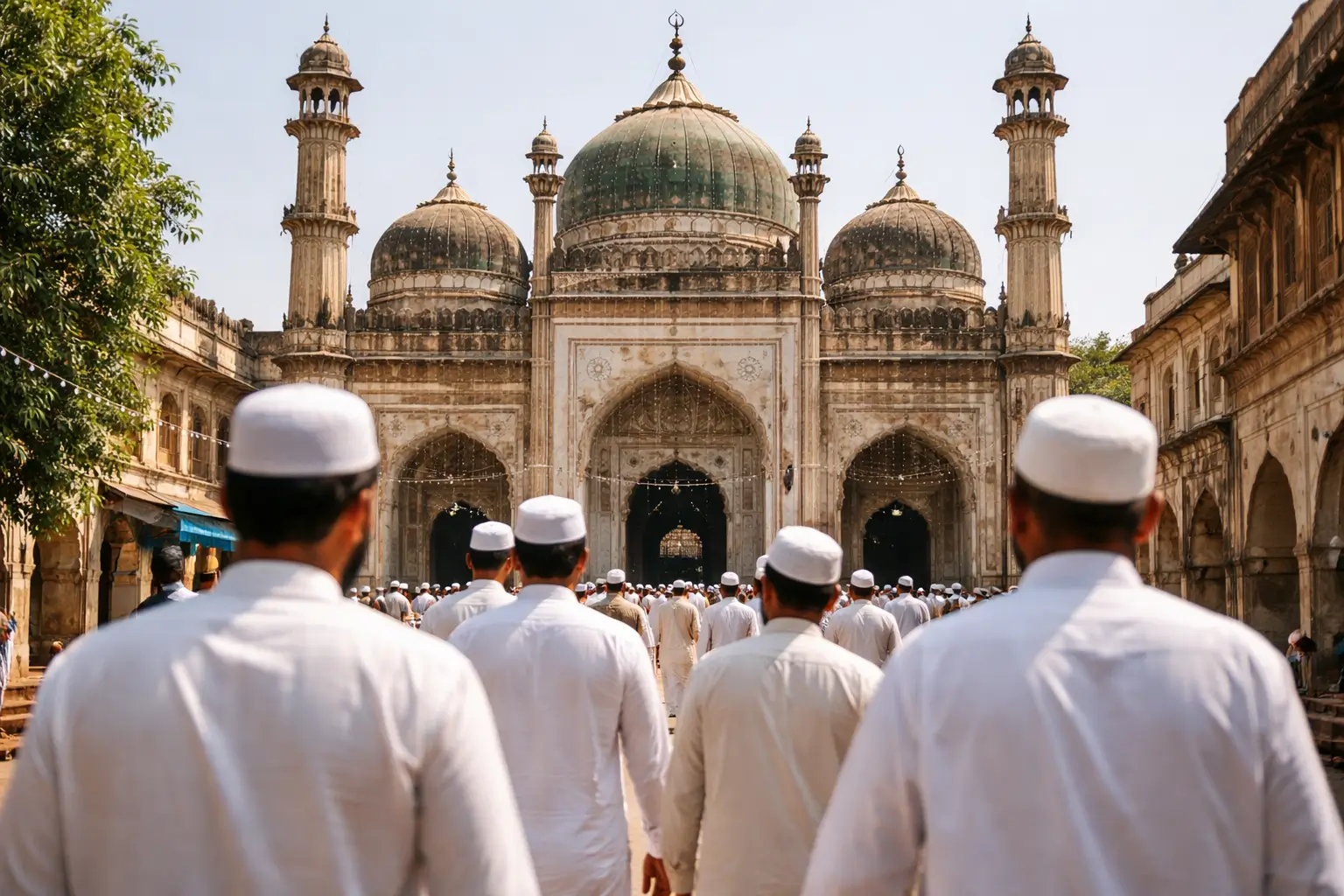
Allahabad High Court Says Muslims Can Pray Without Permission on Private Property
The Allahabad High Court has made it clear that people do not need government permission to offer prayers inside a place of worship or on private property.
Hearing a petition related to a mosque in Sambhal district during Ramzan, the court said the State has a duty to ensure that every community can pray peacefully.
A division bench of Justice Atul Sreedharan and Justice Siddharth Nandan also took strong exception to the local administration’s decision to limit the number of worshippers at the mosque.
The court said if officials cannot maintain law and order, they should step down instead of restricting people’s right to worship.
The case will be heard again on March 16.
What the Allahabad High Court said about prayer permission
The High Court made a clear legal point.
If prayers are held inside a designated place of worship or within private property, permission from the State is not required.
The bench said this legal position had already been settled in earlier rulings.
The judges stated that the role of the State becomes necessary only in certain situations. For example, if religious gatherings are held on public land or if the gathering spreads onto public property.
In such cases, authorities may require prior permission because public order could be affected.
But when worship takes place within a private property boundary or an established religious structure, there is no need for government approval.
The court said the State must ensure that people can pray peacefully in such places.
Why the Sambhal mosque case reached the High Court
The case began after a petition was filed regarding a mosque located at Gata No. 291 in Sambhal district of Uttar Pradesh.
According to the petitioner, local authorities were preventing Muslims from offering namaz at the mosque during the ongoing month of Ramzan.
Ramzan is one of the most important months in Islam, when Muslims gather more frequently for prayers, including the evening Tarawih prayers.
The petitioner told the court that restrictions were being placed on worshippers entering the mosque.
Because of this, the matter was brought before the Allahabad High Court.
Advocate Wahaj Ahmad Siddiqui represented the petitioner in the case.
Why the administration limited worshippers
During the hearing, the State government informed the court that only 20 worshippers had been allowed to pray at the mosque.
Officials said this decision was taken due to a “perceived law and order situation”.
In simple terms, authorities believed that allowing a larger number of people to gather at the mosque could create tensions or public order problems.
Because of this concern, they decided to limit the number of people who could offer namaz.
However, the High Court was not convinced by this explanation.
The judges strongly criticised the approach taken by local authorities.
Court’s strong message to police and district officials
The bench delivered a sharp message to the district administration.
The judges said maintaining law and order is the responsibility of the State. Restricting lawful religious practice cannot be used as a shortcut.
The court said that if officials believe they cannot control the situation, they should resign or seek a transfer.
According to the bench, a Superintendent of Police or District Collector cannot claim inability to enforce law and order.
If they feel incapable of managing the situation, they should not remain in the post.
This remark shows the court’s strong view that administrative failure cannot be used to limit constitutional rights.

Ownership dispute over the mosque land
Another issue raised during the hearing was the ownership of the land where the mosque is said to be located.
The State told the court that there is a dispute regarding ownership of the property.
Because of this, authorities argued that restrictions were necessary.
However, the court noted that the petitioner had not yet submitted photographs of the mosque.
The judges said that proper documents must be presented before the court can fully examine the claim.
These include photographs of the mosque and revenue records related to the land.
Such documents would help establish whether the place is indeed a mosque and whether prayers have historically taken place there.
What the court asked both sides to do next
The High Court has asked both parties to submit further material before the next hearing.
The State government has been directed to respond formally to the petition.
At the same time, the petitioner has been asked to bring evidence on record.
This includes:
• Photographs of the mosque
• Revenue records of the land
• Proof showing that prayers are offered at that location
Once these documents are submitted, the court will review them and proceed with the case.
The next hearing is scheduled for March 16.
Why this ruling matters beyond Sambhal
Although the case relates to one mosque in Sambhal, the legal observation made by the High Court has wider importance.
The court has reaffirmed a key constitutional principle.
Every citizen has the right to practice their religion peacefully.
India’s Constitution guarantees freedom of religion under Articles 25 and 26.
These provisions allow individuals and communities to perform religious practices, subject to public order and law.
By stating that permission is not needed for prayers on private property or inside a place of worship, the court clarified how these rights should operate in practice.
This clarification could influence how local administrations handle similar situations in the future.
The Ramzan context behind the dispute
The timing of the case is also important.
The restrictions came during the month of Ramzan, when mosques usually see larger gatherings.
Many Muslims visit mosques for daily prayers, and special congregational prayers are held in the evenings.
Because of this, limits on the number of worshippers can become a sensitive issue.
The petitioner argued that the restrictions prevented people from performing their religious obligations.
The court’s observation suggests that such restrictions must have strong legal grounds.
Simply citing law and order concerns may not be enough.
What happens next in the case
The final outcome will depend on the evidence submitted before the next hearing.
If the petitioner provides proof that the site is a mosque and located on private property, the court may examine whether the restrictions imposed by authorities were legally justified.
The State will also have an opportunity to explain its actions in detail.
Courts usually examine three key questions in such cases:
• Whether the site is legally recognised as a place of worship
• Whether the land is public or private
• Whether restrictions were necessary for public order
Based on these factors, the High Court will decide the next steps.
For now, the court’s remarks have sent a strong signal that administrative convenience cannot override the right to peaceful worship.