FBI Alert on Iran Drone Threat Puts California on Notice
 Skasif
12/03/2026
Skasif
12/03/2026 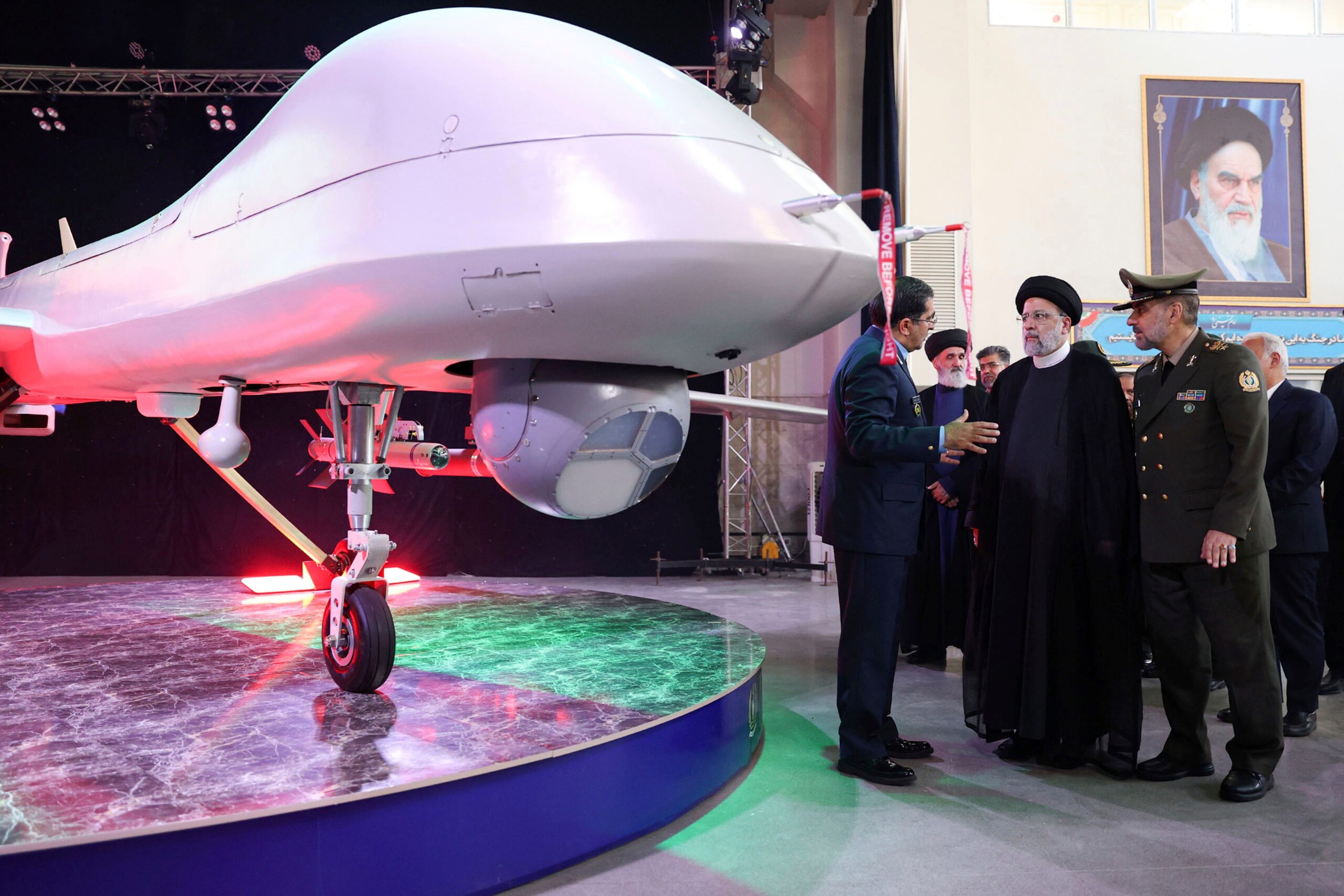
FBI quietly warned law enforcement agencies across California in late February about intelligence suggesting Iran had discussed the possibility of launching drone strikes against targets along the West Coast if the United States carried out military action against the Islamic Republic.
The bulletin, reviewed by multiple news outlets including ABC News, landed in police departments just days before the U.S. and Israel launched strikes that killed Iran’s supreme leader, Ayatollah Ali Khamenei, in Tehran on Feb. 28. Now, as the conflict enters its second week, state and local officials are walking a careful line between public reassurance and quiet preparedness.
Gov. Gavin Newsom confirmed Wednesday that his office has been in constant contact with federal authorities since the warning surfaced. Speaking at a news conference in Hayward, he described the state’s approach as “a posture of preparedness for a worst-case scenario” while emphasizing that no specific or imminent threats have been identified.
San Francisco Mayor Daniel Lurie echoed that message, saying federal partners “have assured us there are no imminent threats to us here in San Francisco.”
The warning reads like a lot of intelligence bulletins that cross law enforcement desks when the U.S. is engaged overseas: heavy on caution, light on specifics. The FBI alert stated that officials had “recently acquired information that as of early February 2026, Iran allegedly aspired to conduct a surprise attack using unmanned aerial vehicles from an unidentified vessel off the coast of the United State Homeland, specifically against unspecified targets in California.”
The document added a crucial caveat: “We have no additional information on the timing, method, target, or perpetrators of this alleged attack.”
What the FBI Actually Told California Police
The February alert was distributed through standard channels meant to keep local agencies aware of potential risks tied to international events. Law enforcement sources who spoke on condition of anonymity described the bulletin as cautionary rather than actionable the kind of heads-up that lands with some regularity when U.S. forces are operating in volatile regions.
The timing mattered. The warning went out before the war began, at a point when tensions were already running high but no strikes had been launched. That’s a key detail because it means the intelligence predates the assassination of Ayatollah Khamenei and the subsequent leadership transition to his son, Mojtaba Khamenei, who was named the new supreme leader by Iran’s Assembly of Experts in early March.
A senior law enforcement official familiar with the assessment told ABC News that the 12 days of U.S. bombardment since the war began have “severely degraded Iran’s capabilities” to carry out the kind of long-range operation described in the warning. That assessment aligns with what other officials have said privately: the intelligence pointed to an aspiration, not an active plot with ships positioned and drones ready to launch.
The Oakland Police Department confirmed it has been in touch with federal partners about potential security risks tied to the Middle East conflict. A spokesperson said the department is “maintaining close contact with local, state, and federal law enforcement” and will “determine if there is a need to increase police presence.”
For now, no such increase has been ordered.
Why California?
The mention of California in the FBI bulletin raises an obvious question: Why here? The state is home to major ports, military installations, and population centers — any of which would carry symbolic weight if struck. But intelligence analysts who spoke with reporters in recent days stressed that no specific targets were named in the warning, and no intelligence has emerged suggesting Iran has the means to project power across the Pacific in a meaningful way.
What Iran does have is experience with drones. The Islamic Republic has used unmanned aircraft extensively in regional operations, including against U.S. bases in the Middle East and Gulf states that host American forces. Shahed drones — the kind Russia has deployed against Ukraine — have been launched at targets across the region in recent days, with varying degrees of success.
But launching a drone from a vessel off the U.S. coast is a different kind of operation entirely. It requires getting a ship close enough without detection, maintaining communications and control over the aircraft, and executing strikes with precision. Even if Iran wanted to attempt something like that, the logistical hurdles are significant.
Former Department of Homeland Security intelligence chief John Cohen, now an ABC News contributor, said the concern isn’t just about what Iran might do directly. “We know Iran has an extensive presence in Mexico and South America, they have relationships, they have the drones and now they have the incentive to conduct attacks,” Cohen said. He called the FBI warning “smart” for putting state and local agencies on notice.
The mention of Mexico adds another layer. U.S. intelligence has been tracking the expanding use of drones by Mexican cartels, including a September 2025 bulletin that noted “an uncorroborated report suggested that unidentified Mexican cartel leaders had authorized attacks using UAS carrying explosives against US law enforcement and US military personnel along the US-Mexico border.”
That bulletin, also reviewed by ABC News, described such an attack as “unprecedented but exemplifies a plausible scenario.”

Leadership Change in Tehran Adds Uncertainty
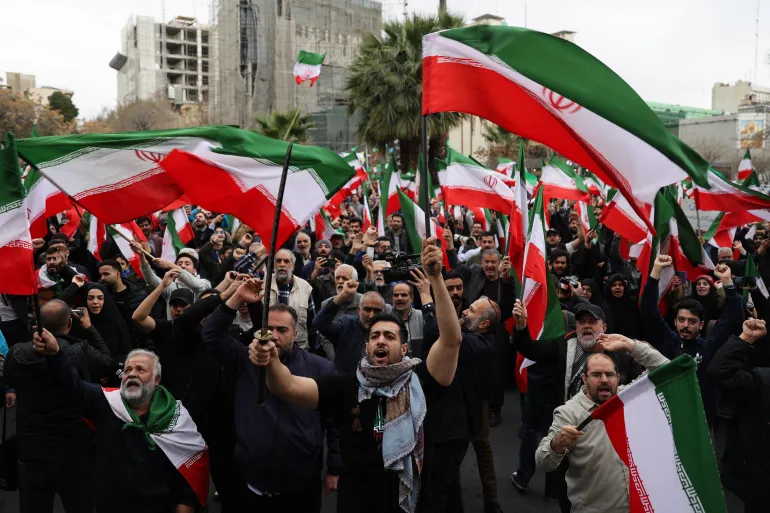
The Feb. 28 strike that killed Ayatollah Ali Khamenei fundamentally shifted the conflict. The supreme leader’s death and the swift appointment of his son Mojtaba as his successor has been met with large public rallies in Tehran and other cities, with demonstrators condemning U.S. actions and expressing support for the new leadership.
Mojtaba Khamenei, a hard-line cleric with close ties to the Islamic Revolutionary Guard Corps, has not appeared publicly since the strike that killed his father. Reports suggest he may have been wounded in the same attack, though nothing has been confirmed. His absence has fueled speculation, but Iran’s official channels have portrayed the leadership transition as smooth and the country’s resolve as unshaken.
Under the new supreme leader, Iran has continued its regional retaliation campaign. Drone and missile barrages have targeted U.S. bases, Israeli positions, and Gulf states hosting American forces. On Tuesday, multiple drones hit fuel storage tankers at Oman’s Salalah port, spreading thick smoke across the area before Omani air defenses intercepted and brought down several of the aircraft.
More than 1,300 people in Iran have been killed since the conflict began, according to CNN. In Lebanon, where Israeli strikes began last week, at least 630 people have been reported killed.
Oman’s Sultan Haitham bin Tariq Al Said spoke by phone with Iranian President Masoud Pezeshkian after the Salalah attack to reaffirm the country’s neutrality and express “unequivocal condemnation” of the targeting of its territory. Days earlier, Pezeshkian had apologized to Iran’s Gulf neighbors only for the regime to launch fresh strikes hours later.
Russia’s Role and the Drone Connection
The drone threat isn’t purely an Iran story. Russia has been supporting Iran with advanced tactics learned from its war in Ukraine, Ukrainian President Volodymyr Zelensky said on X this week. “It will definitely help with missiles, and it is also helping them with air defence,” he wrote.
Kremlin spokesman Dmitry Peskov confirmed Tuesday that Russia is in “constant contact” with the Iranian leadership and ready to contribute to “restoring peace and stability in the region.” The assistance reportedly includes drone warfare techniques that Russia has refined through its attacks on Ukrainian infrastructure.
The Telegraph reported that the mooted attack on California echoes drone launches from Russia’s shadow fleet of oil tankers, which have struck European airports and military bases over the past year. That model using commercial vessels as launch platforms is one that both Russia and Iran have studied and, in some cases, deployed.
But again, there’s a difference between striking targets across Europe and reaching the U.S. mainland. Detection capabilities, distance, and the likelihood of a massive response all factor into any calculus about whether such an operation would be attempted.
What Officials Are Telling the Public
For California residents, the message from every level of government has been consistent: There is no reason to change your daily routine.
Newsom’s office said the Governor’s Office of Emergency Services is “actively working with state, local and federal security officials to protect our communities.” The State Operations Center is sharing information with local agencies through California’s emergency coordination network.
The Los Angeles Sheriff’s Department said it is maintaining an “elevated level of readiness” given global events and has “continued increased patrols around places of worship, cultural institutions, and other prominent locations throughout the County” out of an abundance of caution.
“Out of an abundance of caution, and in recognition of current religious observances, the Department has continued increased patrols around places of worship, cultural institutions, and other prominent locations throughout the County,” the department said in a statement. “We have proactively reviewed our deployment plans, enhanced coordination with our patrol stations, and ensured that additional resources are available should they be needed.”
The San Francisco FBI office declined to comment when contacted by SFGATE. The San Francisco Police Department did not respond to requests for comment before publication.
Iran’s Position and the Path Forward
From Tehran’s perspective, the strikes that killed Ayatollah Khamenei represent an unprecedented escalation. The supreme leader had held power for decades, and his death along with the ongoing bombardment of Iranian military targets has unified a country that has sometimes been divided in its response to external pressure.
Mojtaba Khamenei’s appointment signals continuity. He has deep ties to the IRGC and the security establishment, and his elevation suggests the regime intends to maintain its hard-line stance rather than moderate in the face of U.S. attacks. The large public rallies in his support, while not necessarily representative of all Iranian opinion, indicate that the leadership retains significant backing.
The question now is whether the conflict widens. Iran has focused its retaliation on regional targets so far U.S. bases, Israeli assets, Gulf states. Striking the U.S. homeland would represent a major escalation, one that would almost certainly trigger a massive American response and potentially draw in other actors.
U.S. officials have said they believe Iran’s capabilities have been degraded by the ongoing bombardment. Two unnamed military officials told the New York Times that the Pentagon does not have “full clarity” on Iran’s remaining capabilities and that the White House may have misjudged how Tehran would respond to the initial strikes.
President Trump has sent mixed signals about the war’s aims. Speaking to reporters outside the White House on Tuesday night, he said Iran’s defenses had been dismantled and the U.S. planned to continue operations. “We’ve knocked out their navy, their military, all forms. We’ve knocked out just about everything there is, including their leadership twice,” he said. “We have hit them harder than virtually any country in history has been hit, and we’re not finished yet.”
At the same time, he suggested the conflict could end soon a contradiction that reflects the uncertainty surrounding the war’s trajectory.
For Californians, the immediate takeaway is straightforward: The FBI warning exists, officials are monitoring it, and no one with access to the intelligence is advising public alarm. The iran California connection, as described in the February bulletin, remains a hypothetical based on pre-war intelligence not an active plot with ships in position and drones ready to fly.
That could change. Conflicts have a way of escalating in ways no one predicts. But for now, the message from Newsom, Lurie, and local law enforcement is the same: We’re watching, we’re prepared, and there’s nothing imminent to fear.
The broader lesson may be about how information flows in a crisis. The FBI alert was shared quietly with police departments weeks ago. It only became public this week, after the war began and after reporters started asking questions. That timing the gap between the warning and the public learning about it is itself a story about how the government manages information during conflict.
What happens next depends on events thousands of miles away. If the war de-escalates regionally, concerns about homeland attacks will likely fade. If it widens, new intelligence could emerge. For now, California remains in a state of informed readiness aware of the possibility, alert to the risk, and focused on the day-to-day work of keeping residents safe.