2,700 People Became Muslim in Dubai in 3 Months
 Skasif
26/04/2026
Skasif
26/04/2026 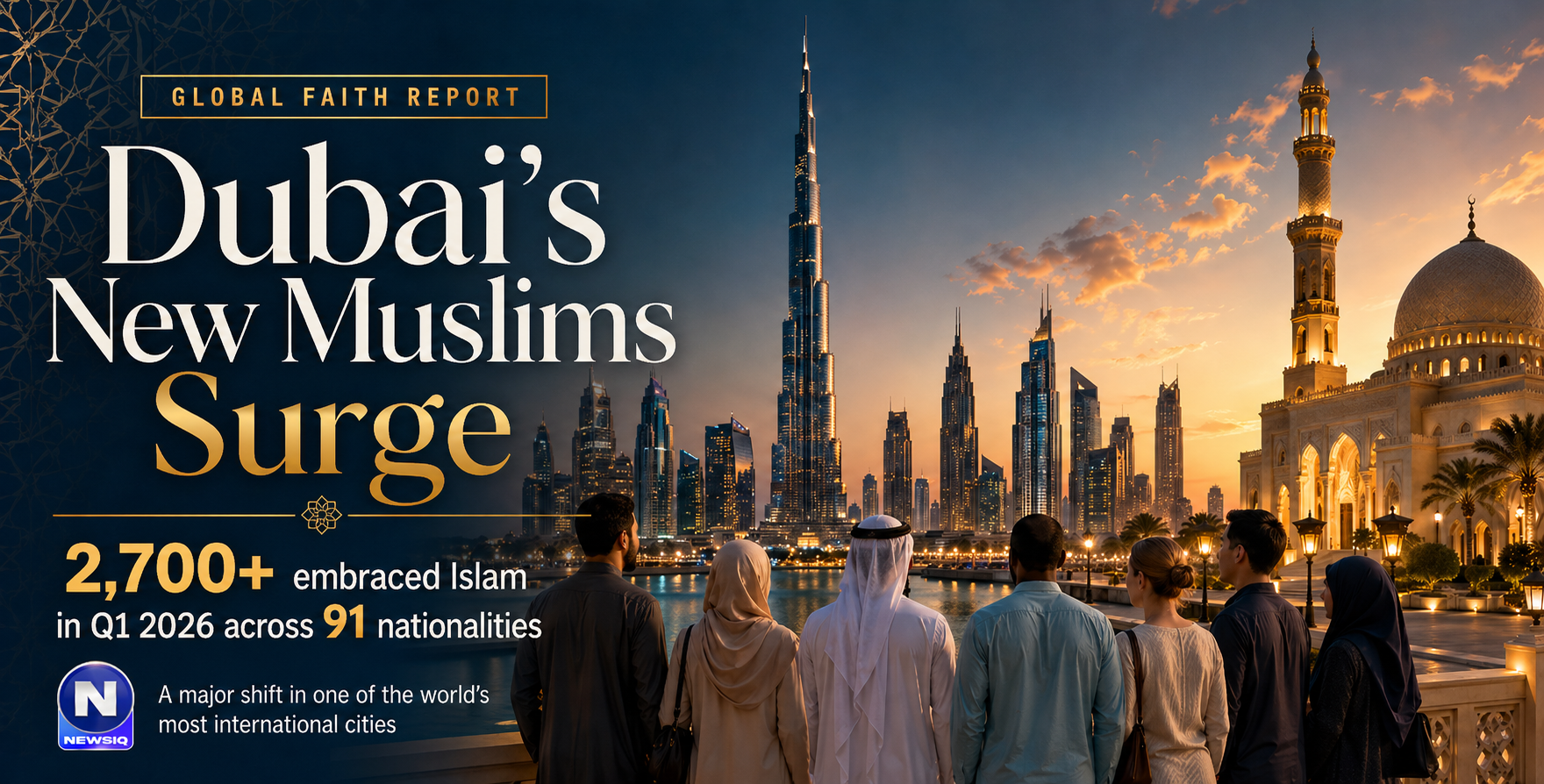
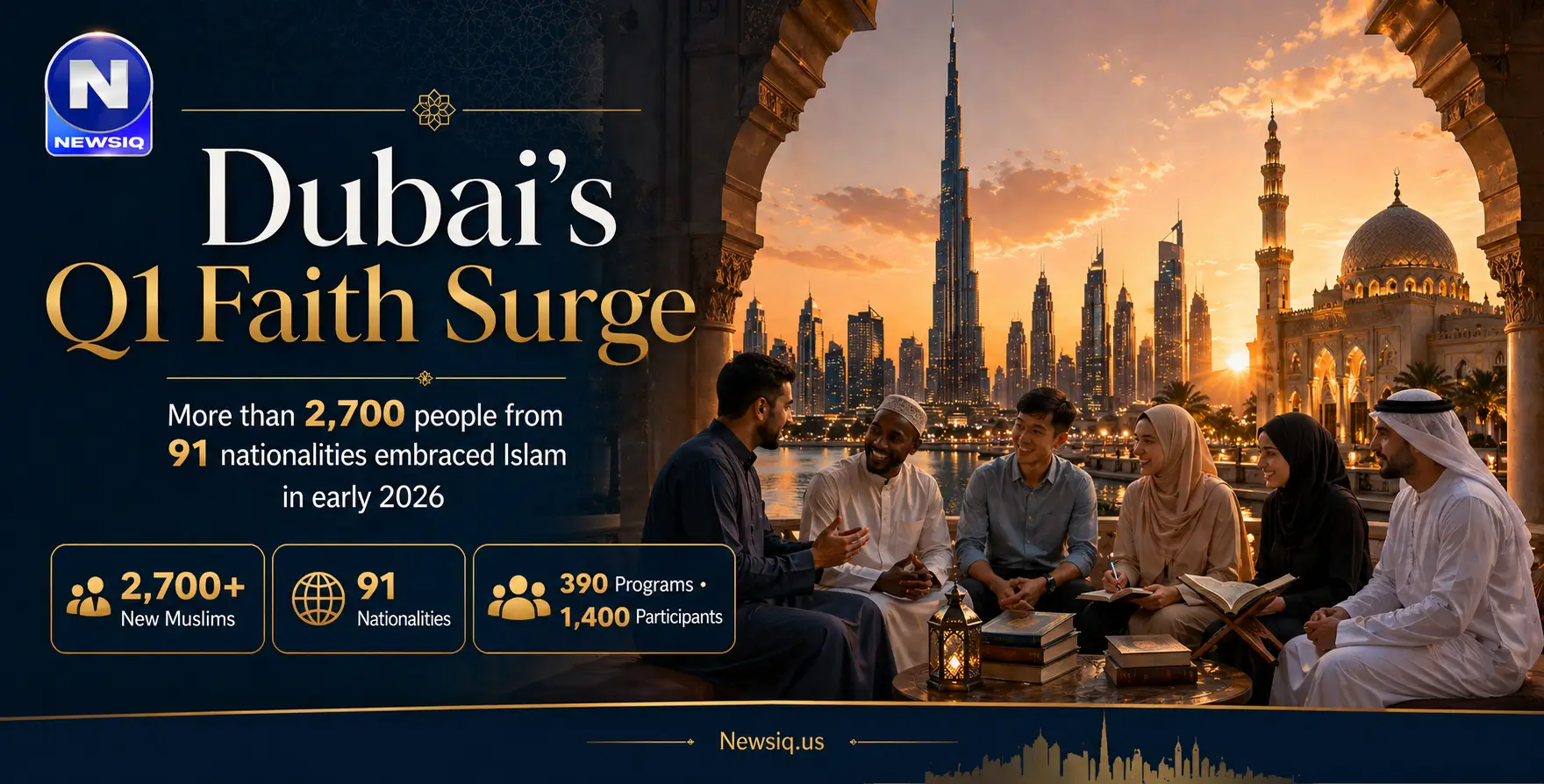
A visual representation of Dubai’s Q1 2026 surge, where over 2,700 people from 91 nationalities embraced Islam, highlighting the city’s role as a global crossroads for faith and culture
A little past midday on April 25, IACAD released the quarter’s tally. The number landed hard. In three months, a city of roughly 3.6 million people recorded more than 2,700 conversions. That is not a projection. It is not a survey. It is a count of people who walked into a centre, asked questions, studied, and chose to enter Islam.
And they came from 91 nationalities. That detail alone explains why the story is moving far beyond the Gulf.
What the quarter actually shows
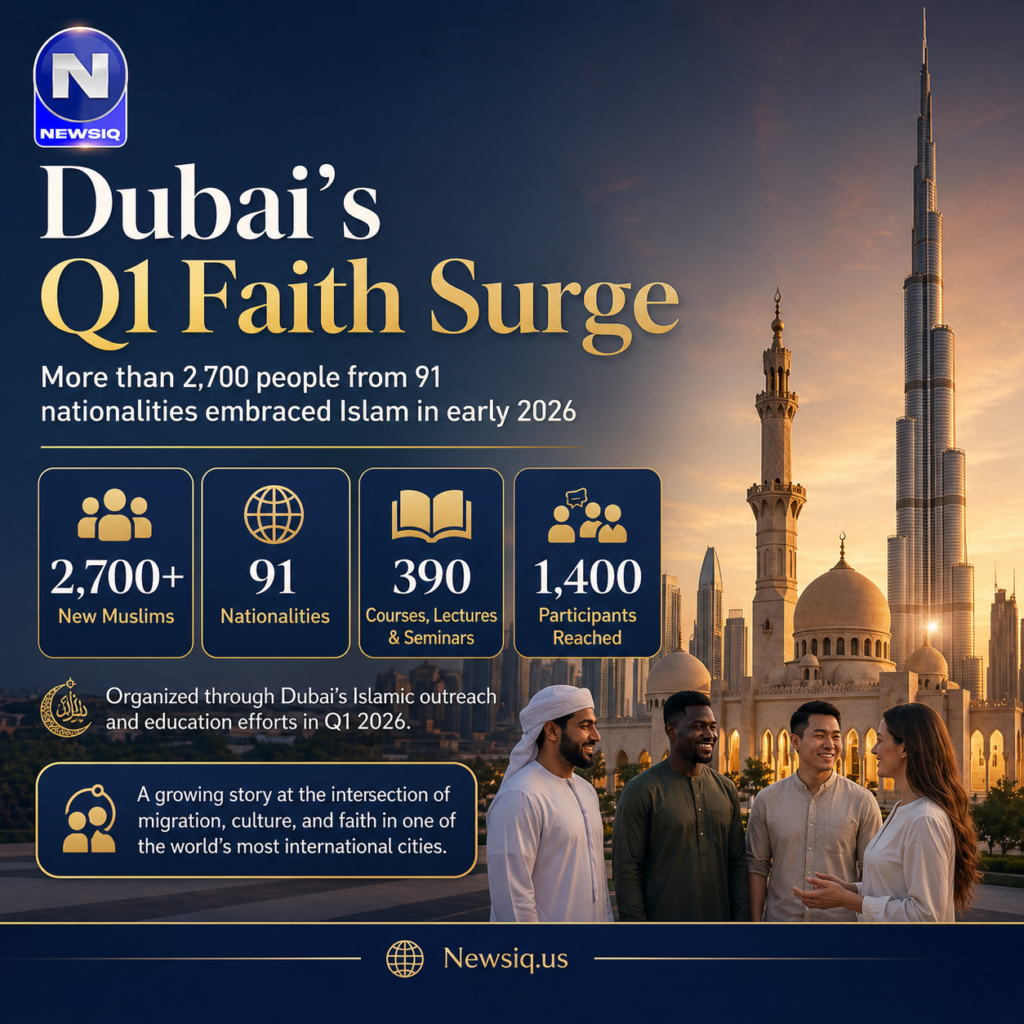
The headline figure did not come out of nowhere. IACAD said the Mohammed bin Rashid Centre for Islamic Culture organized around 390 courses, lectures, and seminars during the quarter. Nearly 1,400 people participated.
That is a high-contact quarter. For comparison, the same centre recorded 1,300 student enrollments across the first six months of 2025. The pace has not just held. It has accelerated.
The centre’s programming is not abstract. It covers Islamic principles, culture, and the practical side of living as a Muslim. There is also the Sustainable Knowledge Room, an immersive 360-degree learning space that added another 190 beneficiaries through interactive workshops last year. The department runs fatwa services, Quran distribution, mosque management, Hajj and Umrah logistics, digital tools for prayer times and mosque locations, and a religious awareness plan built for 2026.
All of that forms a working system. When officials talk about outreach, they mean a full infrastructure, not a pamphlet rack.
The personal stories that make the numbers stick
Numbers move fast. Stories stay. And the ones emerging from this quarter explain more than any chart can.
Mariyam, a Russian national, told the Khaleej Times that her understanding of Islam began to shift after she moved to Dubai. She watched how Muslims from different cultures treated women. One moment during Eid Al Fitr prayers in March 2025 at Next Generation School in Al Barsha stayed with her: people from different backgrounds standing shoulder to shoulder. She converted in 2012, a year after arriving. Her story is part of this quarter’s coverage because it shows the timeline is often slow and personal before it becomes official.
Vaso, a research assistant at NYU Abu Dhabi who grew up in Montenegro, described the people around him as the kindest he had met. He said Islam gave him emotional clarity and a sense of purpose he had not found before.
Then there is Yahya Van Rooy, originally from Minnesota, raised Catholic. He searched across countries and belief systems. Friendships in Saudi Arabia eventually led him to Islam in 2016. His path echoes what many American and European readers recognize: a search that starts far from the Gulf and ends in a decision that surprises even the person making it.
These do not read like crisis conversions or impulsive decisions made under pressure. They read like slow realizations, shaped by daily contact, friendships, and observation.
Why the US and Europe are paying attention
Dubai operates as a global junction. Millions of people from the United States, Europe, Asia, and Africa live and work there. Many arrive with little prior exposure to Islam. What they encounter public calls to prayer, workplace adjustments during Ramadan, large communal Eid gatherings, and everyday courtesy rooted in religious teaching becomes part of their normal.
For European readers, this touches live debates about public religion, integration, and what happens when faith is visible rather than confined. For American readers, the Minnesota example makes the story land closer to home. It connects to familiar questions about identity, belonging, and what people do when old answers stop working.
The story also travels because it does not fit the conflict narrative that often frames Western coverage of religion in the Middle East. There is no confrontation here. The model is built on dialogue, classes, open doors, and visible example. IACAD’s director, Jassim Al Khazraji, framed it around “building bridges of cultural and religious dialogue” and “presenting a bright image of Islam rooted in tolerance, knowledge, and exchange.”
That language matters. The department is not claiming a campaign. It is describing a steady, structured presence that people can approach on their own terms.
What the data does not yet show
The public release gives totals, nationalities, and program volume. It does not provide a breakdown by age, gender, occupation, or length of residence in Dubai. It also does not map the routes people took whether through a friend, a mosque visit, an online resource, or a formal class.
Those gaps are worth watching. They will shape how researchers, religious communities, and analysts read the trend in the months ahead. A cleaner demographic picture would answer the question, “Who exactly is converting, and what does that tell us about the appeal?” Right now, the answer is broad: people from nearly 100 countries, across continents, with very different starting points.
The faith layer that frames the story for many
For Muslim readers, stories like this carry weight beyond the numbers. A well-known narration reports the Prophet saying that the message of Islam will reach every place touched by night and day, and that no house will remain without the faith entering it. That is one reason this news travels so fast on Muslim social feeds. People see Dubai’s quarterly count not as an outlier but as part of a larger unfolding.
Another narration, reported by Aisha, says, “If Allah Almighty intends goodness for a household, He lets gentleness enter their home.” The phrase gets shared often in connection with conversion stories because it matches the way many converts describe their path: not argument, but example. Not pressure, but patience. Not a single dramatic moment, but a slow accumulation of small encounters that reshaped how they saw the faith.
Those references, used carefully, add context without turning reporting into sermon. The core is still fact: 2,700 new Muslims, 91 nationalities, one quarter. But the emotional charge around the numbers comes from the belief that faith often travels through ordinary relationships before it becomes a formal declaration.
What comes next in 2026
The centre says it plans to expand its work in the second half of the year, with broader outreach and richer course content. The 2026 awareness plan points in the same direction, suggesting IACAD wants deeper engagement, not just wider reach.
The test is whether the pace holds. If the next quarter brings another strong total, this stops being a notable headline and starts looking like a structural trend. Dubai’s combination of migration, public religion, accessible education, and institutional support would then stand as a repeatable model one that other cities with large expatriate populations might study.
Right now, what is confirmed is enough. Dubai has reported one of its biggest recent quarterly conversion counts, supported by a dense network of classes, services, and daily visibility. The people in the stories come from Minnesota, Montenegro, Russia, and beyond. Their reasons differ, but the pattern is consistent: they lived here, they watched, they asked, and they chose.
Dubai’s Record Conversions Highlight Islam’s Global Growth
In the first quarter of 2026 alone, over 2,700 people from 91 nationalities embraced Islam in Dubai, according to the Islamic Affairs and Charitable Activities Department. The surge is supported by nearly 390 educational programs and a growing network of mosques, digital tools, and community outreach.
Personal stories from converts including a Russian expatriate, a Montenegrin academic, and a man from Minnesota show that many are drawn by the respect, kindness, and sense of purpose they witness in daily Muslim life, not by pressure or debate.
This mirrors a broader global reality: Islam remains the world’s fastest-growing religion. Much of that growth is driven by its core message of peace, justice, and clarity, values that continue to resonate across cultures, borders, and backgrounds in cities like Dubai, where millions of people from different faiths live and interact every day.