Saudi Arabia deploys first Arab satellite on Artemis II mission
 Skasif
07/04/2026
Skasif
07/04/2026 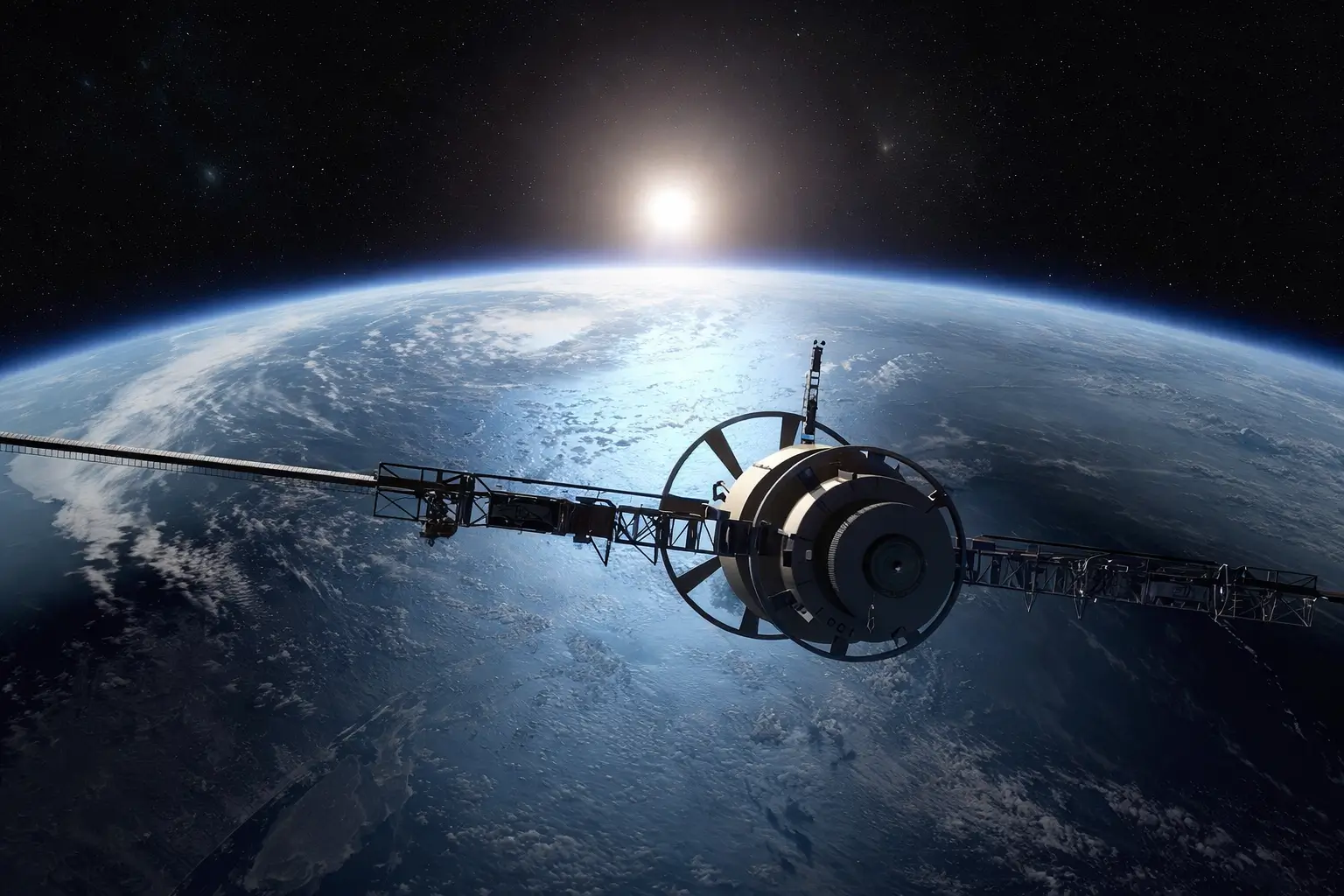
Saudi Arabia’s Shams Satellite Gives Artemis II a New Space Weather Role
Saudi Arabia enters Artemis through science
This is not a flag-waving one-off. It is Saudi Arabia’s first mission under the Artemis program, and it is tied to a clearly defined scientific job: study space weather from a wide, high Earth orbit. The Saudi Space Agency says Shams will monitor space radiation, solar X-rays, Earth’s magnetic field, and high-energy solar particles.
That matters because space weather can disrupt communications, aviation, and navigation systems. By collecting data across that orbit, the mission is meant to improve how those systems are protected and managed.
What Shams is doing
The satellite is flying in a highly elliptical orbit, with an altitude range of roughly 500 km to 70,000 km above Earth. That path gives it a broad view of the environment where solar activity and magnetic fields shape conditions near Earth.
NASA said the Saudi CubeSat agreement was signed in May 2025 and that the payload would ride on the Artemis II test flight as part of a broader international CubeSat effort. The Saudi Space Agency says the satellite was developed domestically and supported by national industrial and logistics programs linked to Vision 2030.
Why this orbit matters
A lower orbit would give less exposure to the full range of radiation and magnetic conditions the satellite is meant to study. A much higher, more distant path would not be as practical for the mission profile described by Saudi and NASA officials. The chosen orbit is what makes the mission useful for space weather work.
Why this is a bigger deal
Saudi Arabia signing the Artemis Accords in 2022 helped open the door to this kind of cooperation. The 2025 CubeSat agreement, announced during President Donald Trump’s visit to Riyadh, turned that policy into a payload on a NASA mission.
For Saudi Arabia, the payoff is not only visibility. It is also technical. The mission gives Saudi teams a place in a real flight campaign tied to lunar exploration, while also building experience in satellite design, deployment, and scientific operations.
What it means for the US and Europe
For the US, Artemis keeps working as a coalition program, not just a NASA project. That matters because the agency is using the mission to build out international support for lunar exploration and future deep-space work.
For Europe, this is another reminder that space policy is moving through partnerships, not just national programs. The Artemis framework already includes international contributors, and Saudi Arabia’s entry shows that the circle keeps widening. The practical result is more shared science, more shared hardware, and more shared standards for how lunar and near-Earth missions are run.
The space weather angle
Shams is the first national Saudi mission focused specifically on space weather monitoring, according to Saudi reporting. That makes the payload more than a symbolic add-on to Artemis II.
Space weather is a real operational issue. Solar activity can affect satellite links, GPS-like navigation services, radio systems, and flights that depend on precise timing and positioning. The data from Shams should help researchers understand those risks better, especially during periods of stronger solar activity.
What readers should watch next
The key question now is what the early data shows and how quickly Saudi teams can turn that into usable research. The other question is whether this flight becomes a template for future Saudi payloads on international missions.
If the mission performs as planned, Saudi Arabia will have shown that it can move from partnership to participation in a major NASA program. That is the real shift here.
The wider Artemis context
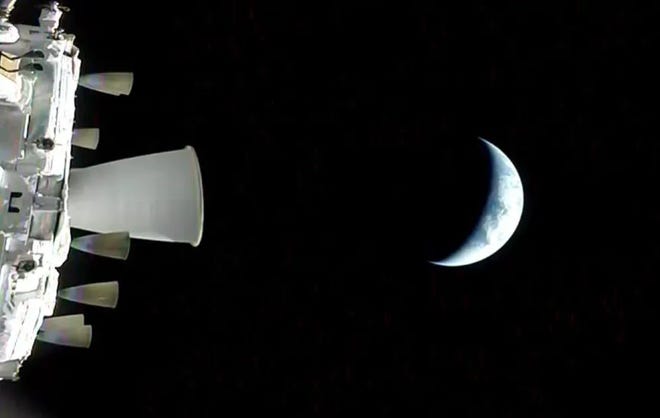
Artemis II itself is a crewed lunar flyby mission, and NASA says the broader Artemis program is meant to rebuild human spaceflight beyond low Earth orbit and prepare for future missions deeper into space. The Saudi CubeSat rides along as one part of that architecture, separating after Orion is safely on its way.
That setup matters because it shows how Artemis is being used. The crew mission gets the headline, but the satellite payloads create the science and partnership layer around it. For countries like Saudi Arabia, that is a practical entry point into the next phase of space activity.