8,000 Pakistani Troops Arrive in Saudi Arabia With Chinese Air Defenses
 Skasif
19/05/2026
Skasif
19/05/2026 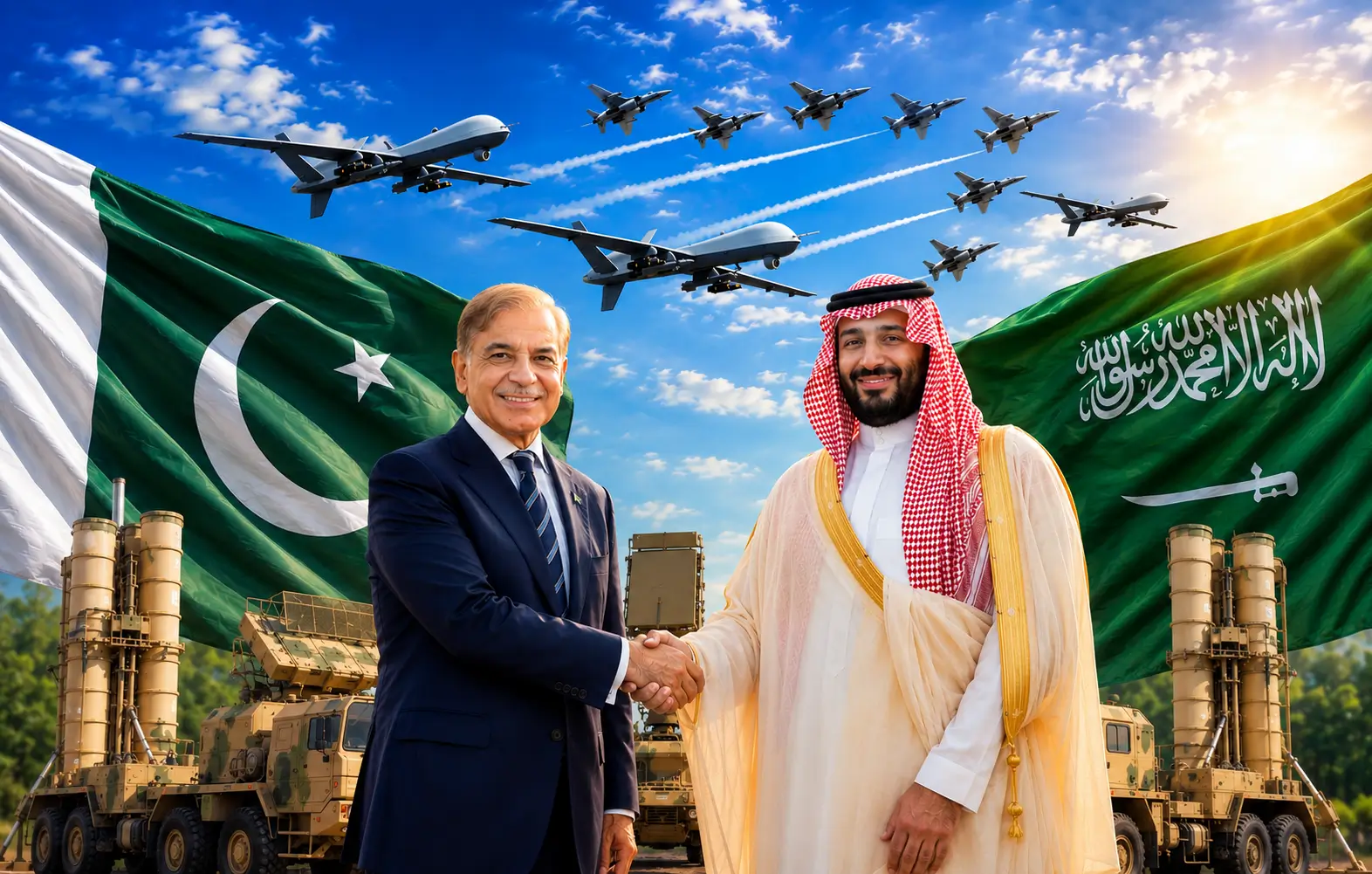
PM Shehbaz Sharif & Crown Prince MBS solidify the Pakistan Saudi defense pact, backed by newly deployed assets including an HQ-9 air defense system.
Pakistan deploys 8,000 troops to Saudi Arabia. That is the main point from a new report out Monday. The country also sent a squadron of about 16 fighter jets, mostly JF-17 models made with China, plus an HQ-9 air defense system. All of this started in early April. Saudi Arabia is paying the bill, and Pakistani soldiers and pilots are the ones operating the equipment on the ground.
News comes as the fighting between the US, Israel and Iran keeps going. Iran has fired drones and missiles toward Gulf countries. Some of those strikes hit Saudi targets earlier. This is why the pact between Pakistan and Saudi Arabia is getting so much attention right now.
What the Pakistan Troop Deployment to Saudi Arabia
8,000 troops add to Pakistani forces already in the kingdom from older deals. Most of them will focus on training and giving advice to Saudi units. But sources told Reuters the group is ready for combat if needed. The pact itself allows for up to 80,000 Pakistani troops if Saudi Arabia asks for more help to guard its borders.
Jets arrived in early April too. Two security officials said Pakistan also sent some drones. The HQ-9 system is a full Chinese surface-to-air missile setup. It sits right next to Saudi Arabia’s big collection of US-made Patriot and THAAD batteries. Saudi Arabia has the largest stock of Patriot interceptors anywhere in the Gulf.
Pakistani warships may be part of the deal as well, but Reuters could not confirm if any have reached Saudi ports yet. The Strait of Hormuz is basically shut down by Iranian and US blockades right now. Saudi Arabia’s Red Sea coast is still open but faces risks from the narrow Bab el-Mandeb Strait, where Houthi attacks have happened before.

How the Mutual Defense Pact Between Pakistan and Saudi Arabia Started
The two countries signed the pact back in September 2025. That came soon after Israel hit Hamas negotiators in Doha, Qatar. Saudi leaders wanted extra guarantees for their security beyond the long-standing ties with the United States.
Pakistan has made it clear in the past that it would support Saudi Arabia in a big crisis. Some Saudi voices even talked about being under Pakistan’s nuclear umbrella during the first weeks of the Iran war. A US official said Washington noticed that language and brought it up with Riyadh.
The timing of the actual troop movement lines up with the war heating up. Iran answered the first US-Israeli strikes by launching thousands of drones and missiles at Gulf states. Pakistan had already sent jets once before after Iranian strikes on Saudi energy sites.
Mix of Chinese and US Gear Inside Saudi Arabia
One thing that stands out is the Chinese HQ-9 system now operating in Saudi Arabia. It works alongside the high-tech American equipment the kingdom already has. Pakistani crews run the new Chinese gear, while Saudi forces keep control of their US systems.
The JF-17 jets are familiar to Saudi pilots from joint exercises. They are built in Pakistan with Chinese help and have been flying in multinational drills near Karachi as recently as February 2025. This setup gives Saudi Arabia another layer of air defense without relying only on US suppliers.
Pakistan’s Work as Mediator in the Iran Conflict
At the same time Pakistan deploys 8,000 troops to Saudi Arabia, it has also stepped in as the main go-between for peace talks. Islamabad hosted the only direct round of US-Iran talks so far. More rounds were planned until both sides stopped them.
Saudi Arabia quietly backed those talks. When the UAE pulled a $3 billion loan to Pakistan because of the hosting, Saudi Arabia stepped in with its own financial help. That shows how closely the two countries work together even when other Gulf states do not agree.
Pakistan has a long record of military support for Saudi Arabia. It has sent training teams and advisers many times, especially when Riyadh faced money problems. This new deployment fits that pattern but on a bigger scale.
Saudi Arabia’s Financial Role and Other Moves
Saudi Arabia is covering the full cost of the troops, jets, drones and air defense system. The equipment stays under Pakistani operation for now. The deal also opens the door for more forces if the situation gets worse.
In April, Pakistan sent five cargo planes of weapons to Libya’s eastern government led by Khalifa Haftar. Saudi Arabia paid for that too. It looks like Riyadh is using Pakistani help to reach out to other players in the region and pull some away from the UAE’s side.
Talks have also happened about bringing Turkey into the security pact. That would create a wider group outside the usual Gulf and US circles.
Long History of Close Ties Between the Two Countries
Pakistan and Saudi Arabia have worked together on security for decades. Pakistani forces have trained Saudi troops many times. The relationship goes back years and has grown stronger during tough times for both sides.
Right now, Pakistan’s economy gets real help from Gulf money. Saudi Arabia has given loans and support when Pakistan needed it. In return, Pakistan offers reliable military partners who know how to operate in the region.
The full terms of the latest pact are still secret. Both countries say it means they will defend each other if attacked. Pakistani officials have called the current group of troops and equipment “substantial” and ready to grow.
What Happens Next With the Pakistan Troop Deployment to Saudi Arabia
The troops who arrived in April are there for advisory and training work first. They will share knowledge on the new Chinese systems and help Saudi forces get used to them. Exchanges between the two militaries have already taken place.
If the Iran war brings more attacks on Saudi soil, the numbers could rise quickly toward that 80,000-troop limit. Saudi Arabia has carried out its own unpublicized strikes inside Iran, according to later Reuters reporting. The conflict is more back-and-forth than many people outside the region realize.
Pakistan’s leaders did not comment on the deployment when asked. Saudi government media also stayed quiet. The scale only became public with the May 18 report.
How This Affects the United States and Europe
For the US, the sight of Chinese air defense gear and Pakistani troops inside Saudi Arabia adds a new twist. The kingdom still depends heavily on American weapons and intelligence. But it is clearly spreading its bets.
Europe feels this in the energy markets. Blocked shipping lanes in the Strait of Hormuz and threats in the Red Sea hit oil supplies that head to European ports. Any bigger role for Saudi Arabia in the fighting could push prices higher and create more supply worries.
Pakistan itself is a nuclear-armed nation with its own close links to China. Having its forces embedded in Saudi defense planning gives the whole picture an extra layer that both Washington and European capitals will watch closely.
The deployment is not symbolic. It is real people, real planes and real missile batteries moving into place. Saudi Arabia gets extra protection at a dangerous time. Pakistan gets financial backing and a chance to show it is a serious partner in the Gulf.
Story is still developing. More troops could head out if Riyadh calls for them. The confidential pact makes quick expansion possible. For now, the arrival of 8,000 Pakistani troops, JF-17 jets and the HQ-9 system marks a clear step in how Saudi Arabia is building its security during the Iran war.