China Confirms On-Site Support for Pakistan in India War
 Skasif
08/05/2026
Skasif
08/05/2026 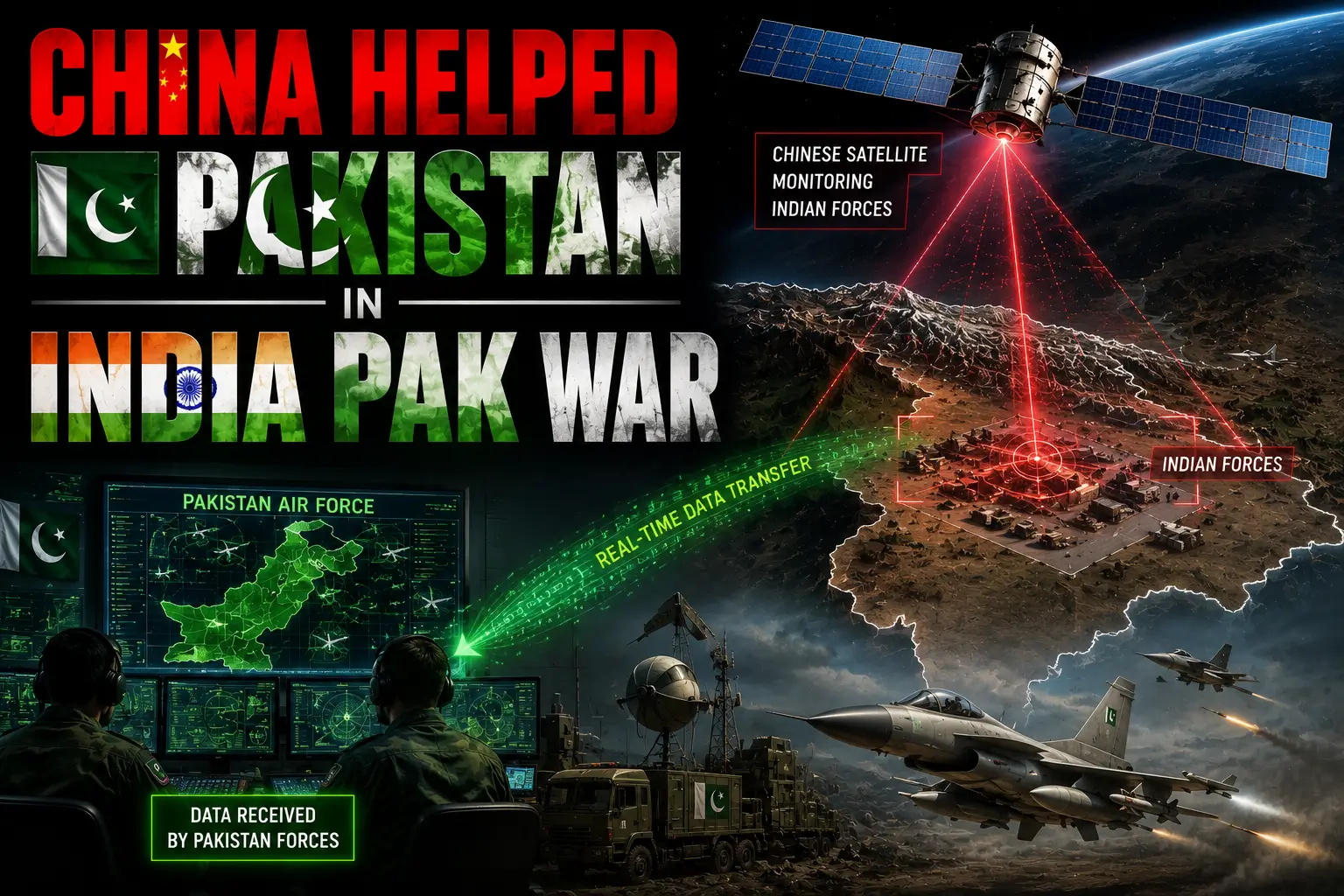
China's alleged military support to Pakistan during during India-Pakistan war.
China has now publicly confirmed what Indian officials have asserted since the fighting ended. Beijing provided direct, on-site technical support to Pakistan during last year’s four-day clash with India.
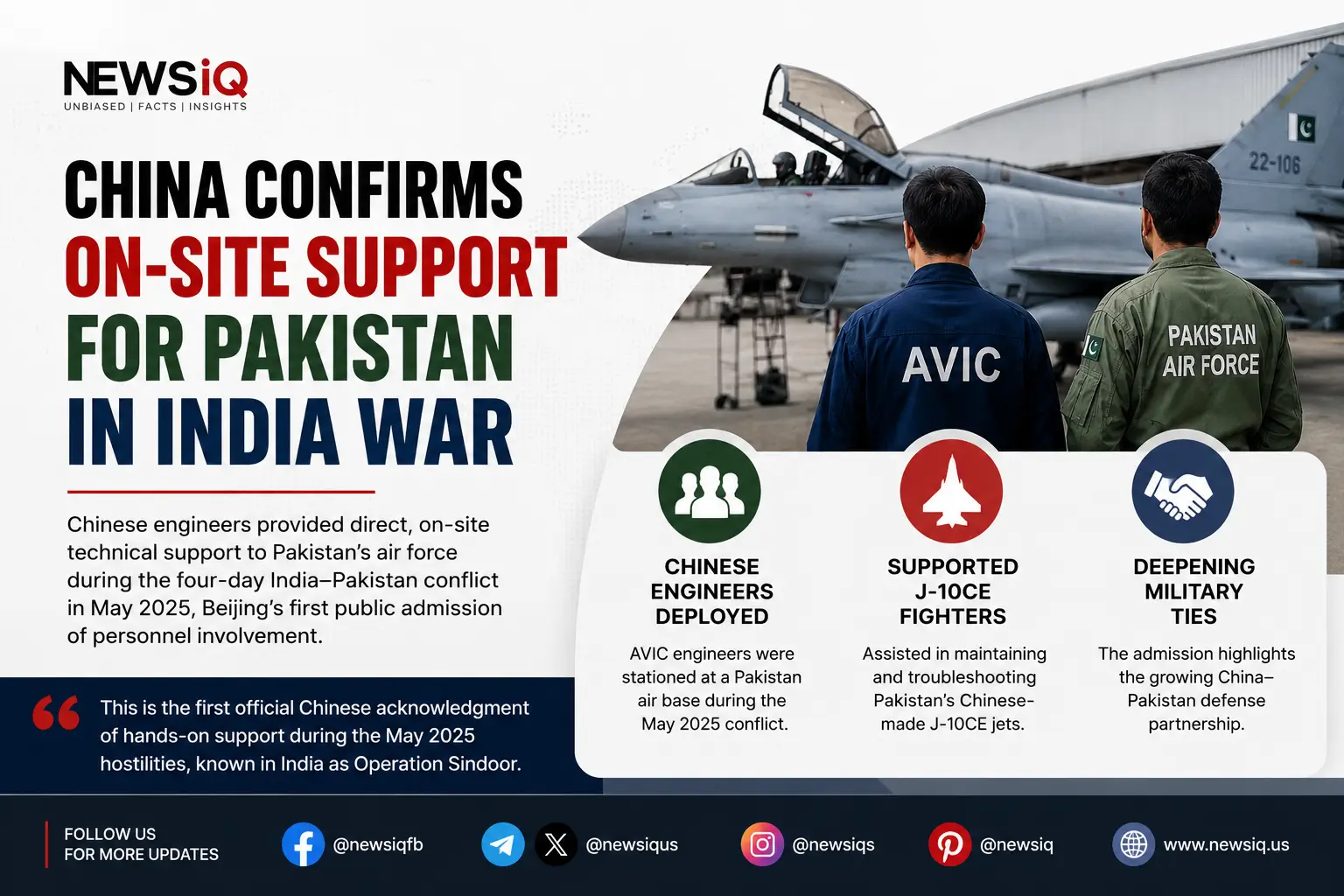
The disclosure came through China’s state broadcaster CCTV, which aired an interview on May 7, 2026, with Zhang Heng, an engineer from the Aviation Industry Corporation of China’s (AVIC) Chengdu Aircraft Design and Research Institute. South China Morning Post reported the details the following day. Zhang described being stationed at a Pakistani support base during the conflict, where his team kept Chinese-made J-10CE fighters flying amid constant air-raid sirens and temperatures pushing 50 degrees Celsius.
“At the support base, we frequently heard the roar of fighter jets taking off and the constant wail of air-raid sirens,” Zhang told CCTV, according to the SCMP account. “By late morning, in May, the temperature was already approaching 50 degrees Celsius (122 degrees Fahrenheit). It was a real ordeal for us, both mentally and physically.”
He framed the effort as driven by a desire to prove the aircraft’s full combat potential and to strengthen the “deep bond” formed working side by side with Pakistani counterparts. Another engineer, Xu Da, compared the J-10CE to a “child” that the Chinese team had nurtured and then handed over for real-world testing.
This marks first official Chinese acknowledgment that its personnel played a hands-on role in the May 2025 hostilities, known in India as Operation Sindoor.
India-Pakistan War Had a Third Player
Fighting erupted after a terrorist attack in Indian-administered Kashmir’s Pahalgam area that killed 26 civilians. India responded on May 7, 2025, with a calibrated tri-services operation targeting nine major pakistani camps identified through multi-agency intelligence. The strikes aimed to dismantle infrastructure across the Line of Control and deeper inside Pakistan while minimizing civilian casualties.
Pakistan retaliated with missiles, drones, and artillery. The nuclear-armed neighbors traded blows for four days before agreeing to a ceasefire. Pakistani claims focused heavily on the performance of its Chinese-supplied J-10CE fighters, which the air force operates as its most advanced platform. Reports citing SCMP noted that at least one of these aircraft was credited with downing a French-built Indian Rafale jet the first recorded combat loss of a Rafale and the J-10CE’s combat debut.
India has consistently disputed the exact numbers of losses but acknowledged some aircraft were hit. Pakistani officials described the engagement as a validation of their Chinese hardware; Indian officers countered that the operation demonstrated effective multilayered air defense supported by the Integrated Command and Control Strategy.
What the Engineers Actually Did?
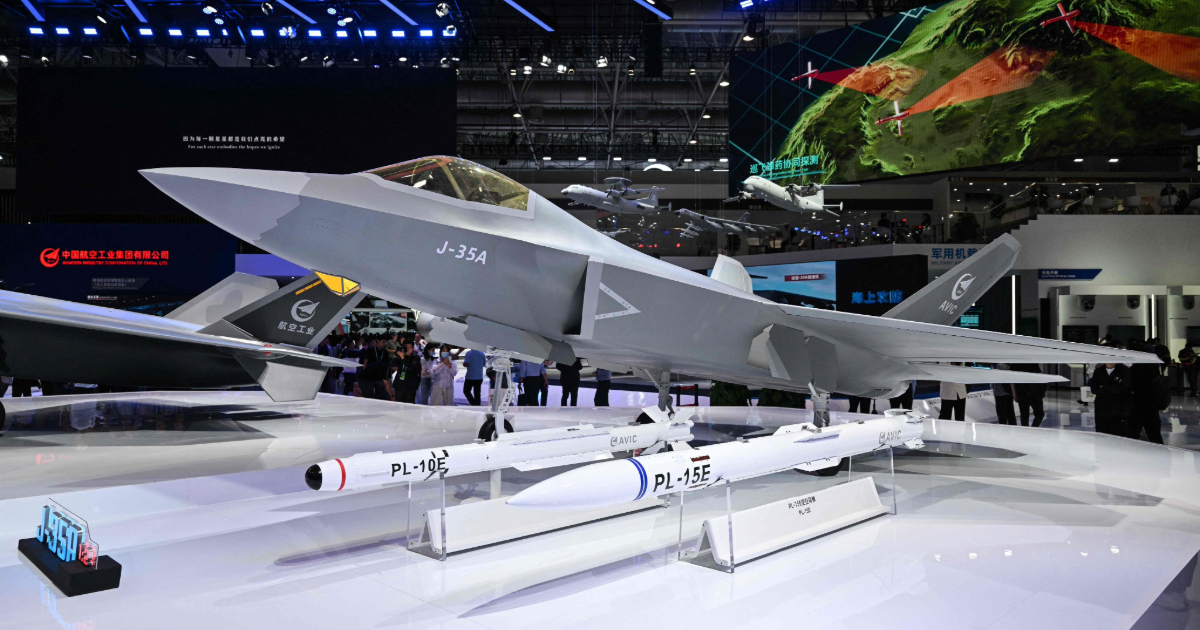
Zhang’s team was not flying the jets themselves. Their role was technical sustainment. troubleshooting, maintenance, and ensuring the aircraft could “truly perform at its full combat potential” under live combat stress. J-10CE is the export variant of China’s J-10C 4.5-generation fighter, equipped with an active electronically scanned array (AESA) radar and compatible with advanced PL-15 air-to-air missiles. Pakistan is the only known foreign operator, having ordered 36 jets and 250 missiles in 2020.
Engineers’ presence in a forward base during active hostilities goes beyond routine training or spare-parts delivery. It signals a level of integration that allows Chinese personnel to operate inside a partner’s combat zone while under potential threat. Zhang described the motivation as more than professional pride.
“That wasn’t just a recognition of the J-10CE; it was also a testament to the deep bond we formed through working side by side, day in and day out.”
A second engineer, Xu Da, echoed the sentiment, saying the team had “nurtured it, cared for it, and finally handed it over to the user.” The tone in the state-media interview frames the episode as a successful real-world validation of Chinese engineering under extreme conditions.
China’s Secret Role in the India-Pakistan War
Indian officials had been far less circumspect. In July 2025, Lieutenant General Rahul R. Singh, then Deputy Chief of Army Staff, stated publicly that India had faced “three adversaries” during Operation Sindoor: Pakistan as the “front face,” with China and Türkiye supplying vital support. He specifically cited Pakistan receiving “live inputs” on key Indian positions from China during director-general-of-military-operations-level talks.
“Pakistan … said that we know that your such and such important vector is primed and it is ready for action … he was getting live inputs from China,” Singh told a defense industry audience in New Delhi.
At the time, Indian defense sources also highlighted Pakistan’s heavy dependence on Chinese military hardware. July remarks came after India had initially downplayed direct Chinese involvement, noting that satellite imagery can be commercially available. The new Chinese admission shifts the conversation from intelligence sharing to physical, on-the-ground presence.
Türkiye’s role was also acknowledged by Singh. Ankara supplied Bayraktar and other drones along with “trained individuals.” Pakistani officials have not publicly detailed the extent of either partner’s assistance beyond general expressions of solidarity.
Deeper Military and Economic Partnership
The revelation fits a long pattern. According to the Stockholm International Peace Research Institute, China accounted for nearly 80 percent of Pakistan’s arms imports between 2021 and 2025. Beyond the J-10CE, Pakistan relies on the jointly developed JF-17 fighter as a backbone of its fleet. The China-Pakistan relationship is often described in Islamabad as “higher than the mountains, deeper than the oceans.”
For China’s defense industry, conflict offered a rare live-fire showcase. AVIC’s Chengdu subsidiary, which produces the J-10 family, saw the episode as proof that its export products could deliver when it counted. The engineers’ comments were framed domestically as a point of national pride rather than a provocative admission.
From a broader market perspective, the successful combat use of the J-10CE has reportedly drawn interest from other potential buyers, though specific negotiations remain unconfirmed in open sources.
Strategic Implications One Year Later
The timing of the disclosure exactly one year after the fighting carries its own message. China waited until the anniversary window to allow its engineers to speak openly on state television. The move normalizes the idea of Chinese technical personnel operating in a third country’s combat theater, something rarely acknowledged by major powers.
For India, the episode reinforced the need for accelerated air-defense modernization. Singh’s July 2025 call for urgent upgrades to the country’s systems remains relevant. New Delhi has since pushed defense indigenization and diversified procurement, yet the dependence on certain platforms like the Rafale highlighted vulnerabilities when facing coordinated threats.
Regionally, China-Pakistan axis continues to shape security calculations across South Asia. The brief war did not escalate into full-scale conflict, yet it demonstrated how quickly limited strikes can draw in external support networks. The fact that China provided tangible assistance even after a October 2024 border disengagement agreement with India illustrates the durability of its “all-weather” partnership with Pakistan.
From a U.S. and European vantage point, story underscores persistent challenges in the Indo-Pacific. India remains a key partner in efforts to balance Chinese influence, yet the depth of Beijing’s commitment to Islamabad complicates that dynamic. Western defense analysts will study the J-10CE’s reported performance against Western-origin aircraft, even while noting that exact kill claims remain contested between the two sides.
Lingering Questions and Unresolved Disputes
Several details are still disputed. Exact numbers of aircraft losses on both sides have never been independently verified. Pakistan celebrated the J-10CE’s “outstanding results” as inevitable once the aircraft received the right opportunity; India emphasized the precision and restraint of its own strikes against terror infrastructure.
The Chinese foreign ministry and Pakistan’s military public-relations wing have not issued additional statements beyond the CCTV interview and SCMP reporting. Beijing continues to frame its relationship with Islamabad in terms of economic investment and sovereignty support, as the Chinese foreign minister reiterated shortly after the ceasefire.
One year on, the conflict’s human and material costs linger. Pakistan has planned commemorative events to promote its “victory” narrative, while India points to the operation’s success in disrupting terror networks and boosting domestic defense exports, which reportedly reached record levels in the following months.
The engineers’ willingness to speak publicly suggests Beijing views the episode as a net positive for its military diplomacy and export credibility. For observers in Washington, Brussels, and New Delhi, it serves as a reminder that alliances in South Asia operate on different rules and that technical “support” can quickly blur into operational partnership when bullets start flying.
The story is still developing. Further details on the exact scope of Chinese involvement, any follow-on contracts, or Indian countermeasures are likely to emerge in coming weeks as both sides continue to shape the historical record of the 2025 clash.