China Offers Pakistan Up to 40 J-35 Stealth Fighters
 Skasif
02/04/2026
Skasif
02/04/2026 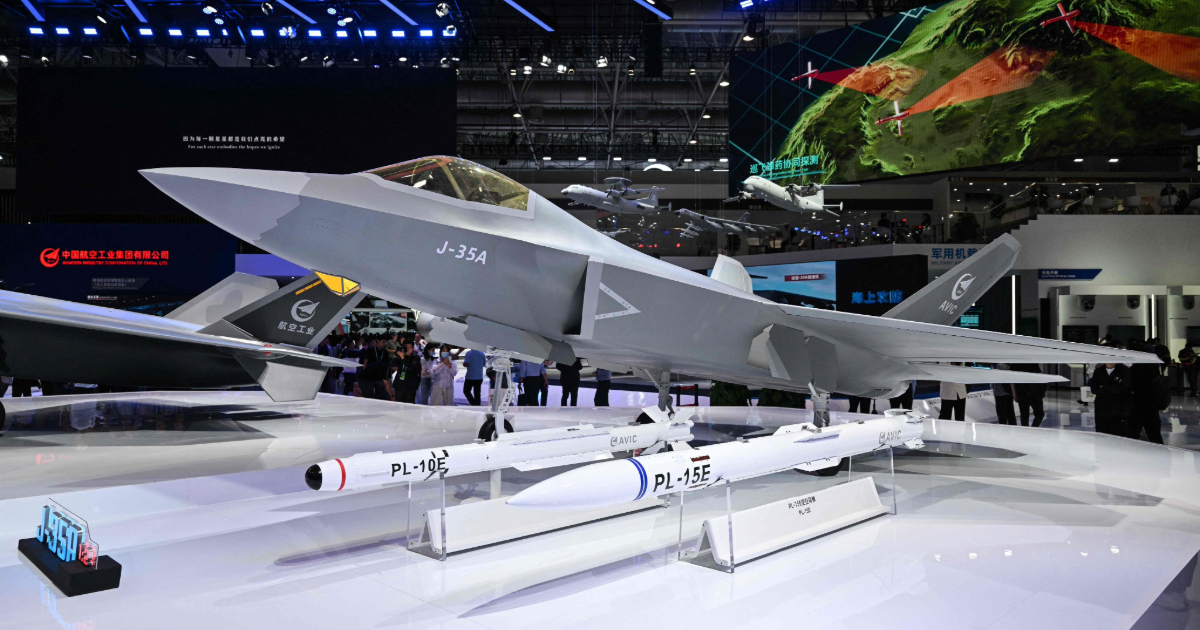
China has offered Pakistan up to 40 J-35 stealth fighters with possible 2026 deliveries
China has offered Pakistan a batch of J-35 fifth-generation stealth fighters. The number could go as high as 40 jets. Deliveries might begin as early as 2026.
If the deal goes through, Pakistan becomes the first foreign operator of the aircraft. That puts a modern stealth fighter in South Asia before most Western allies have even finished upgrading their own fleets.
The offer is not a rumor. Pakistan’s government listed it publicly in June 2025. The Pentagon’s own China Military Power Report later confirmed Beijing’s proposal. The package also includes KJ-500 airborne early warning planes and HQ-19 air defense systems.
This is not a small upgrade. This is a shift.
What the J-35 Actually Is
The J-35 is a twin-engine stealth fighter. China developed it from earlier work on the FC-31, sometimes called the J-31. The jet has low-observable design, internal weapons bays, and modern sensors.
It is not a copy of the F-35. But it fills a similar role: a multirole stealth aircraft meant to operate in contested airspace.
Key features reported by defense analysts:
Internal bays for PL-10 short-range and PL-15 long-range air-to-air missiles
Estimated combat radius useful for regional missions
Land-based variant (J-35A) ready for export
Advanced radar and electronic warfare systems
The PL-15 missile matters here. Export versions are often cited with ranges above 200 kilometers. That gives Pakistan the ability to target high-value aircraft without getting close.
Compared to what Pakistan flies now JF-17 Thunder jets and recently delivered J-10CE fighters the J-35 is a generational jump. Those are capable fourth-generation platforms. The J-35 adds stealth.
When Could Deliveries Start?
Timelines vary by source. But the most consistent reporting points to early 2026 as the earliest possible arrival for an initial batch.
Some defense outlets expect four to twelve jets to land between early 2026 and early 2027. Pakistani pilots have reportedly started training in China already. That suggests the transfer is moving past the planning stage.
The full number up to 40 jets would take longer. Production slots matter. China is building J-35s for its own air force and navy. Export models have to fit into that line.
A signed contract has not been made public. But the government acknowledgment and Pentagon report make it clear: this is a real offer, and both sides are acting like it will happen.
What Else Is in the Package
The J-35 offer is not standalone. China bundled it with other systems.
KJ-500 AEW & C: An airborne early warning and control aircraft. It extends radar coverage and improves command and control. Pakistan already operates older systems. The KJ-500 is a clear upgrade.
HQ-19 air defense: A surface-to-air missile system designed to intercept ballistic missiles and aircraft. It adds layered protection around air bases, cities, and strategic sites.
Together, these three pieces create an integrated network. Stealth fighters strike. Early warning planes see threats coming. Ground-based defenses cover the gaps.
That is the kind of package militaries build when they want to change a regional balance.
Why Pakistan Wants This Now
Pakistan has one main security focus: India. The two countries fought an air engagement in May 2025. India operates Rafale fighters from France, plus a large fleet of Su-30MKIs and other jets.
Pakistan sees the J-35 as an equalizer. Stealth makes detection harder. Longer-range missiles allow engagement before Indian fighters can respond. That changes the math for Indian air defenses and early warning networks.
The relationship with China makes this deal logical. Pakistan and China have worked together on defense since the 1960s. They co-produce the JF-17. China recently delivered J-10CE fighters. Pakistan is a trusted export partner and a real-world testing ground.
For Islamabad, this is about deterrence. For Beijing, it is about export credibility.

What the Pentagon Says
The Pentagon’s 2025 China Military Power Report confirmed the J-35 offer. The report framed it as part of deepening military ties between China and Pakistan.
That matters because the Pentagon does not usually comment on unconfirmed sales. Their inclusion signals that US intelligence treats the offer as credible.
The same report noted China’s growing willingness to export advanced systems. That includes not just fighters but also missiles, drones, and air defense networks. Pakistan is the most visible example, but likely not the last.
How This Changes South Asia
A Pakistani J-35 fleet would reshape air power in the region. Stealth aircraft complicate radar coverage. They force adversaries to invest in new detection methods, new tactics, and more expensive defenses.
India already has countermeasures in development. New Rafale orders. Indigenous advanced fighter programs like AMCA. Upgraded ground radars. But those take years and billions of dollars.
The immediate effect is pressure. India will need to answer the J-35. That could mean accelerating purchases, shifting basing strategies, or investing harder in electronic warfare.
There is also a risk of an arms race spiral. Both countries already spend heavily on defense. A stealth fighter on one side almost guarantees a response on the other.
Unanswered Questions
Not everything is final. Some details remain unclear.
Has a contract been signed? Pakistan’s government acknowledged the offer. The Pentagon confirmed it. But no signed contract has been made public. That leaves room for delays or renegotiation.
When exactly will the first jets arrive? Early 2026 is the earliest estimate. But production, testing, and training could push that back. Defense timelines slip all the time.
How capable is the export version? The J-35 has not seen combat. Its sensors, radar performance, and reliability are not battle-tested. Export models sometimes have reduced capabilities compared to domestic versions.
What about India’s response? India has not announced a direct counter yet. But past patterns suggest new purchases, faster indigenous development, or closer defense ties with Western partners.
What Happens Next
Watch for three things.
First, a public contract announcement. If Pakistan and China formalize the deal in writing, that removes most remaining uncertainty.
Second, confirmed pilot training. Reports already say Pakistani pilots are in China. Official acknowledgment would signal the deal is operational.
Third, first delivery. If jets arrive in 2026, that changes the timeline for everyone else.
For now, the offer itself is the story. A fifth-generation stealth fighter is moving to a new country. That does not happen often. It matters when it does.
China gets to test its export model. Pakistan gets a capability edge it has never had. And everyone else in the region has to adjust.