Indian Supreme Court Frees Two Men Who Gang-Raped Bilkis Bano
 Skasif
18/11/2026
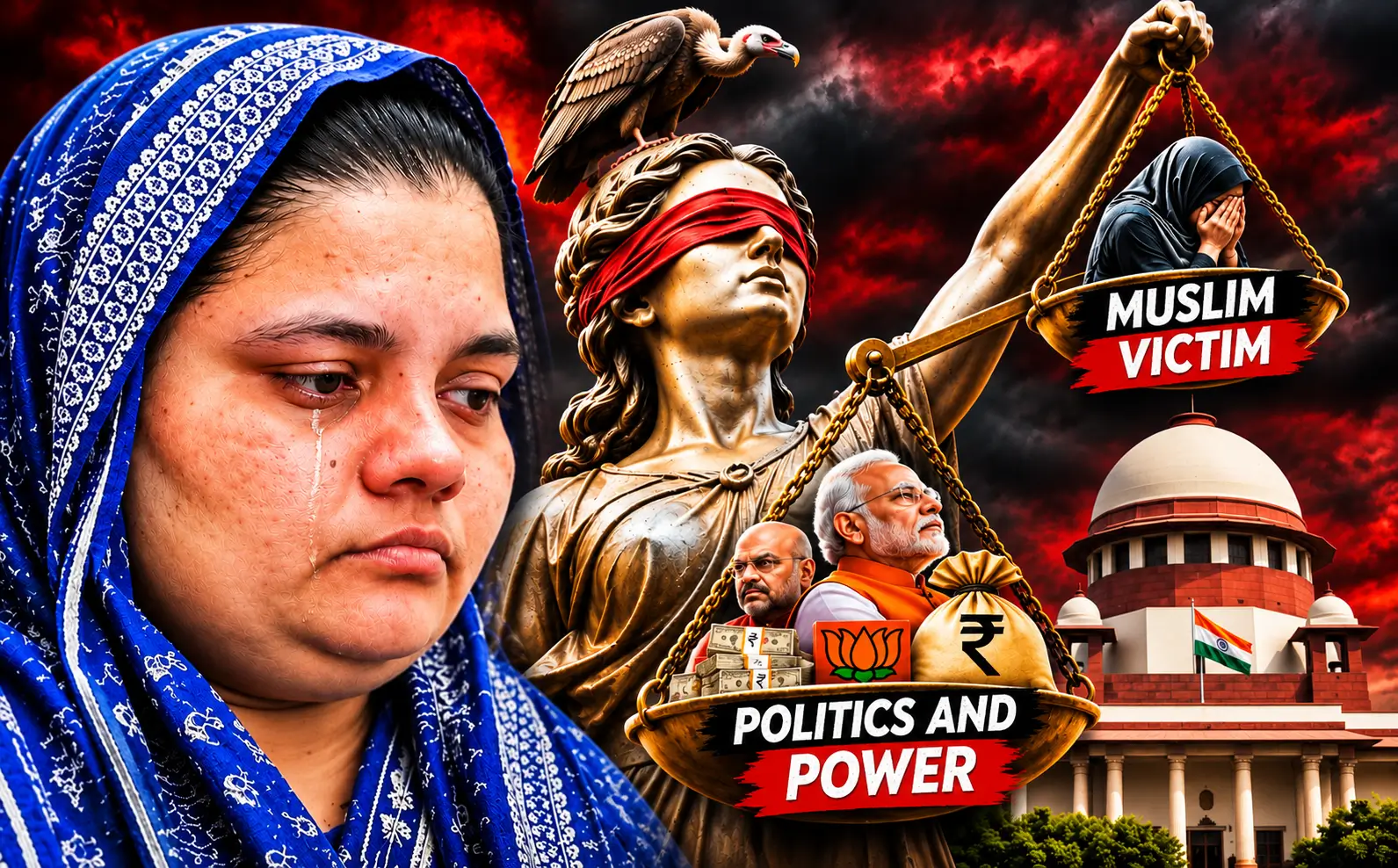
Bilkis Bano spent 24 years fighting for justice. When the Supreme Court granted bail to two men convicted in her case, she says she learned about it from the press.
Opinion | November 18, 2026
Bilkis Bano gave the police the names of men she recognized. Their names never made it into the first police report. Neither did her account of being raped. Twenty-four years later, a lawyer arguing for bail in the Supreme Court pointed out that his client’s name was missing from that report. The judges heard that argument. Bilkis says nobody even told her the hearing was taking place. According to the The Indian Express
Those facts alone cannot tell us whether she named that particular man in 2002. They do tell us why hearing from her mattered. Bilkis knew firsthand how the police had recorded her complaint. She also knew what it meant for her family when men convicted in the case came home. She learned that the Supreme Court had granted two of them bail the same way the public did. In her words, “I learnt of this through press reports.”
Before asking why a Muslim woman might lose faith in Indian justice, look at what she had to do to get her own gang rape investigated.
Bilkis named men she knew. Gujarat police asked to close the case.
On March 3, 2002, Bilkis was fleeing communal violence in Gujarat with her family when a mob caught up with them. In her own account, she was 19. She was five months pregnant. Her daughter, Saleha, was three. Members of the mob gang-raped Bilkis and killed Saleha. A newborn in the family was also killed. Among the attackers were men Bilkis recognized.
According to the chronology published by The Indian Express, Bilkis identified 12 attackers. The initial police report named none of them. In November 2002, the Limkheda police asked to close the case. Their position was that a crime had taken place but they could not trace the culprits. A court told them to keep investigating. They came back in 2003 and asked again. This time, a magistrate accepted their request.

Imagine giving the police the names of men you know, then having to go to India’s highest court because the police say they cannot find out who did it. That was Bilkis Bano’s introduction to the justice system.
In December 2003, the Supreme Court handed the investigation to the Central Bureau of Investigation. After Bilkis received death threats, the trial moved out of Gujarat to Mumbai. In January 2008, a special court convicted 11 men and sentenced them to life in prison. The Bombay High Court upheld their convictions in 2017. Remember how close this case came to ending with a magistrate accepting the police paperwork. Those convictions exist because Bilkis refused to let that be the end of it.
Rapists received garlands by radical Hindus
On August 15, 2022, all 11 men walked out of prison. Gujarat’s BJP government had granted them remission, cutting short their sentences. Who else approved it? The Union Home Ministry under Narendra Modi’s government, according to the affidavit Gujarat itself filed in the Supreme Court. ThePrint reported that disclosure. Anyone asking where politics enters the Bilkis Bano case can start with that affidavit.
Outside prison, some of the men were welcomed with garlands and sweets. Then C.K. Raulji, a BJP legislator who sat on the panel that recommended remission, spoke publicly about the Brahmin identity and supposed good values of some of the convicts. This was a man who had a say in whether they went home. What, exactly, did he believe their caste told him about their character? And how was Bilkis supposed to hear those remarks after spending years proving what happened to her family?
Bilkis went back to court. On January 8, 2024, Justices B.V. Nagarathna and Ujjal Bhuyan struck down all 11 remission orders. Since the men had been sentenced in Maharashtra, Maharashtra had the authority to consider their applications. Gujarat had exercised a power it did not possess. The bench also found that one convict had withheld material facts to obtain an earlier Supreme Court ruling directing Gujarat to consider his request. All 11 were ordered to surrender.
The judges who corrected that injustice deserve credit. So does the woman who brought it before them. But consider the division of labor here. Gujarat processed the release. Delhi approved it. Supporters supplied the flowers. Bilkis had to establish that Gujarat never had the authority to release the men in the first place.
What the Supreme Court decided on October 28
The latest order concerned two of the 11 men, Bipinchand Kanaiyalal Joshi and Pradip Ramanlal Modhiya. Both appealed the Bombay High Court judgment. On October 28, Justices M.M. Sundresh and Prasanna B. Varale suspended their life sentences and granted them bail pending appeal. The bench cited more than 17 years in custody, Joshi’s severe disability, and questions of fact and law it still had to decide. It left the bail conditions to the trial court. Both convictions remain in force.
As The News Minute reported, senior advocate Siddharth Luthra argued that Modhiya had been implicated nearly three years after the attack and that Joshi had a severe disability after leg surgery. The government’s lawyer opposed bail, citing the gravity of the crimes and the findings of the trial court and the High Court. This time, the government argued to keep the men in prison. The bench decided to grant bail.
Seventeen years in custody deserved the judges’ attention. So did Joshi’s health. But who could tell the court what the last release had meant inside Bilkis’s home? Who could speak about the fear that returned when she heard the news, or the children she now worries about? The government’s lawyer could argue the seriousness of the offense. Only Bilkis could speak for Bilkis. She says the judges decided without giving her that chance.
Why should a Muslim woman have to keep winning the same fight?
Bilkis does not need anyone to tell her that courts can deliver justice. She has won there. She knows the names of the courts that convicted the men, upheld their convictions, and overturned their unlawful release. In her statement through senior advocate Shobha Gupta, she recalled how those judgments helped restore her faith. She also spoke about something a court calendar will never record. With help from family and friends, she had learned to smile again.
What she is asking now is painfully modest. Before deciding whether two men convicted in her case could go home, why couldn’t the court make sure she knew? This was a survivor who had received threats serious enough for the trial to leave her home state. She had already challenged one early release and won. The history that made her voice worth hearing was sitting in the judiciary’s own files.
And yes, her being Muslim belongs in this story. She was attacked while fleeing communal violence. Years later, a politician involved in the remission decision publicly invoked the caste of some of the convicted men in their defense. It takes a peculiar kind of selective outrage to accept his discussion of their identity, then object when someone asks how hers shaped the treatment she received. The record gives India more than enough reason to take that question seriously.
Bilkis says she will challenge the order for her children and in memory of Saleha. When The Indian Express asked Gupta what came next, her answer exposed the problem more plainly than any speech could. First, she needed a copy of the convicts’ petition. The men already had a decision on their request. The survivor’s lawyer was still trying to get the papers.
In 2002, Bilkis had to fight to get her account into the record. In 2026, after convictions, appeals, and a Supreme Court victory, she says she still had to read the news to find out what had happened in her own case. India has spent 24 years asking this woman for evidence, testimony, patience, and courage. She has one question for its highest court. “How could they not even inform me?”