Maduro’s Quran Isn’t a Conversion Story. It’s a Mirror for Islamophobia
 Skasif
10/11/2026
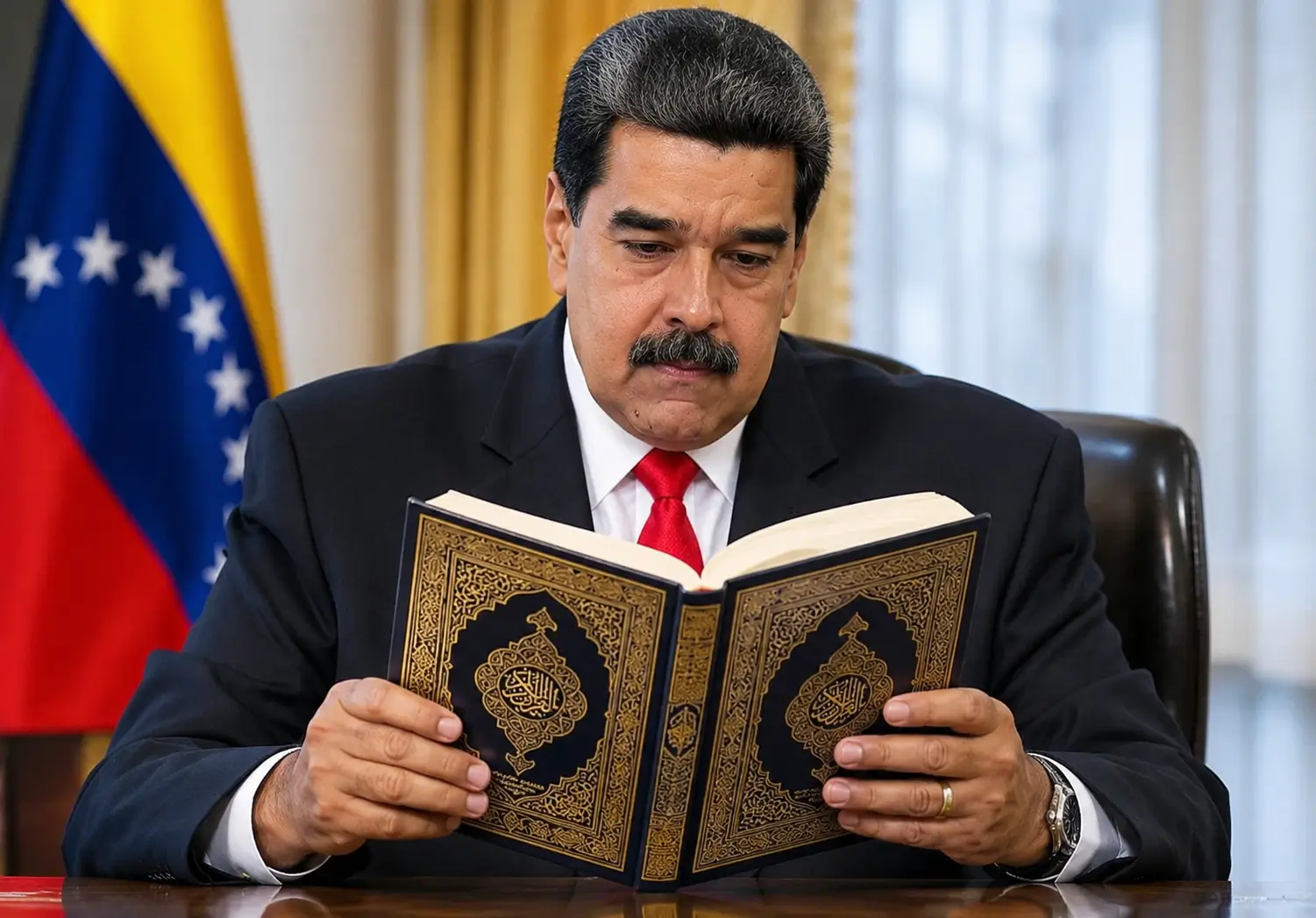
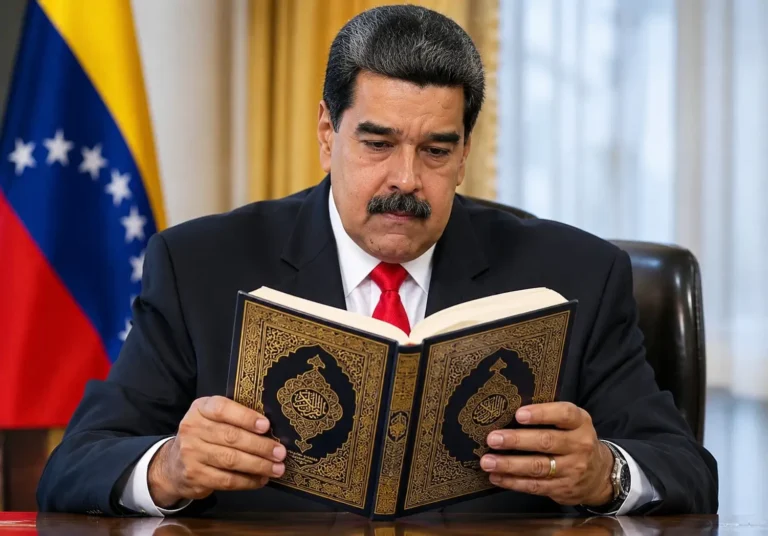
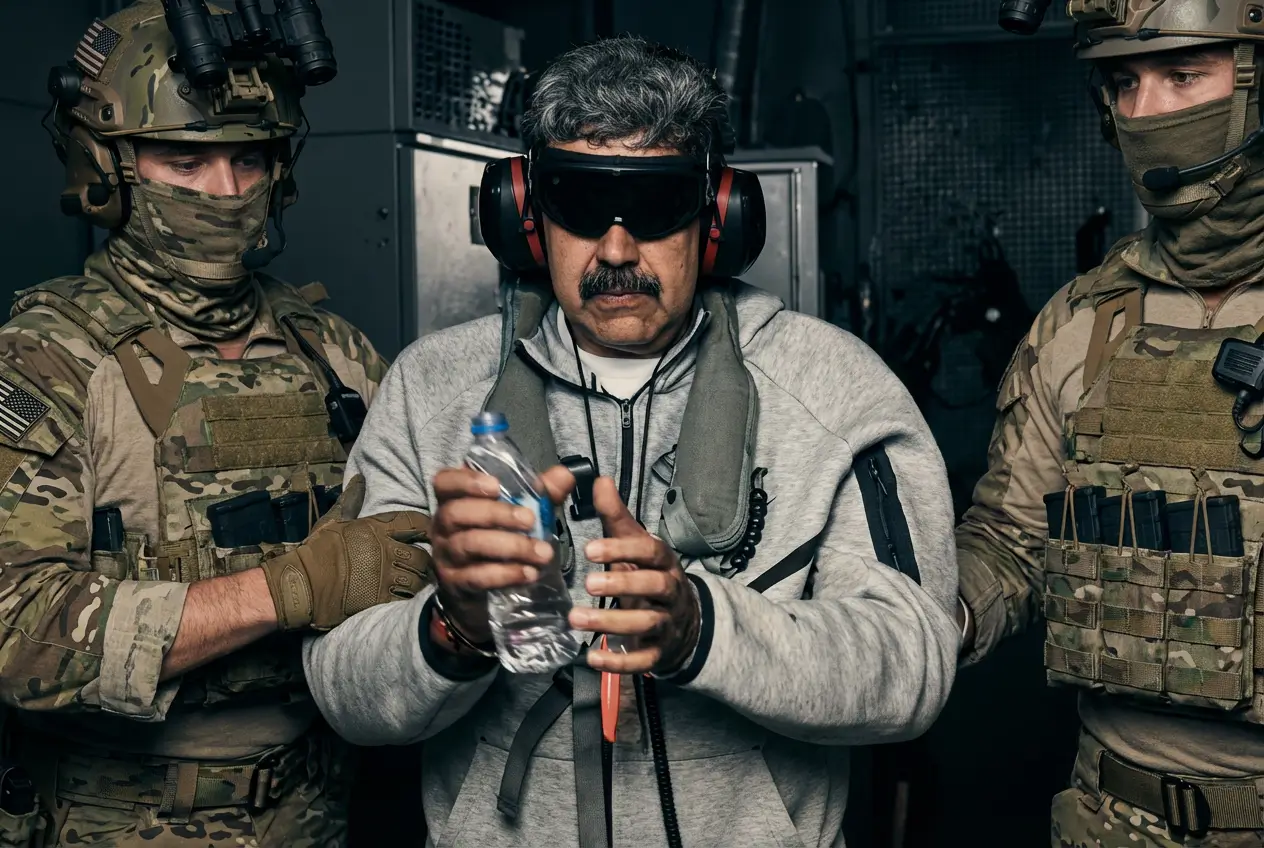
AI-generated illustration of former Venezuelan President Nicolás Maduro reading the Holy Quran. The New York Times reported on November 8, 2026, that Maduro has been studying the Quran, Bible, and other religious texts while detained in Brooklyn, New York.
NewsIQ Opinion · November 10, 2026
Former Venezuelan President Nicolás Maduro is reportedly reading the Quran and the Bible in a Brooklyn jail. Has he accepted Islam? There’s no public confirmation that he has. The part worth talking about is right there in the original report. A man who spent years in power now spends much of his time reading, and the Quran is one of the books he chose to open.
Why should that surprise anyone? Think about how often Islam comes up in the news alongside words like threat, radical, or extremist. Now think about how rarely the same audience hears a verse from the Quran in its own context. If you’ve spent years hearing people argue about a book they’ve barely quoted, someone quietly opening it and reading for himself is a story worth telling.
Is Nicolás Maduro Becoming Muslim?
In November, The New York Times reported that Maduro was spending much of his free time at the Metropolitan Detention Center in Brooklyn reading religious and philosophical works. The paper spoke with six people familiar with his time in custody. Their accounts included the Quran and the Bible, along with meetings with prison chaplains, including a Catholic priest and a rabbi. Maduro also faces federal charges that include drug trafficking and has pleaded not guilty.
What we know about Maduro’s interest in faith
Maduro’s interest in religion goes back further than his time in New York. The reporting describes him as a practicing Catholic who courted evangelical Christians while in office. He has also spoken publicly about his Sephardic Jewish ancestry. His reading in jail fits into a longer history of engaging with different religious traditions. What he’s taking from those books today is something only he can tell us.
Muslims can be glad that someone is reading the Quran and give him the privacy we’d want for ourselves. Imagine opening a religious book because you had questions and finding that thousands of strangers were already answering them on your behalf. A person deserves time to read, think, and reach his own conclusions.
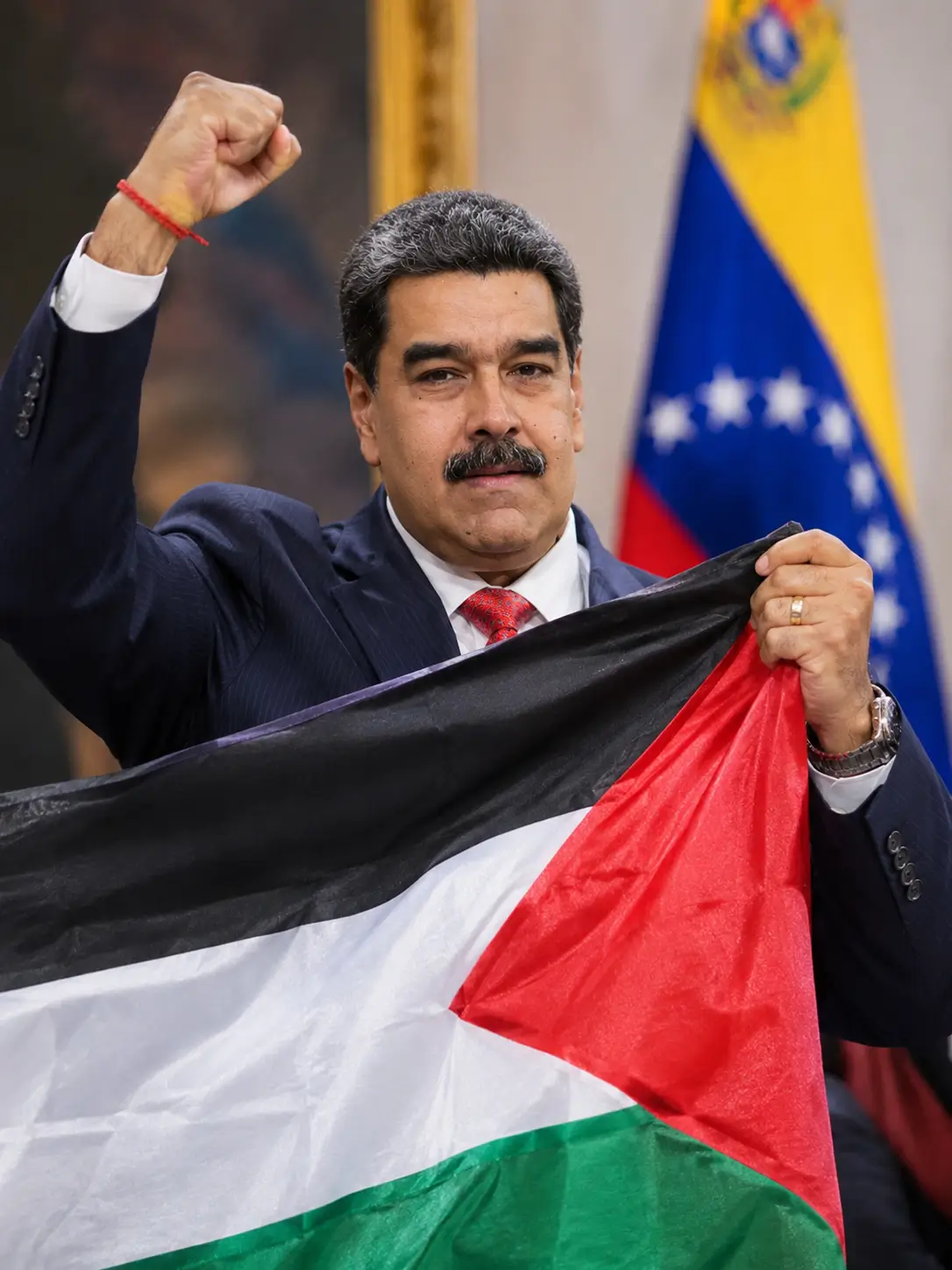
Why Maduro’s Support for Palestine Matters to This Story
Many readers who shared the news about Maduro’s Quran reading already knew his name from his speeches on Gaza. At a November 2024 solidarity conference in Venezuela, he condemned Israel’s actions in Gaza, described them as genocide, and defended the Palestinian people’s right to an independent state. For people who wanted world leaders to speak plainly about Palestinian suffering, that public stand mattered.
I understand why those readers paid attention when they heard what he was reading in Brooklyn. I’d keep the two facts separate. We know what Maduro said about Palestine because he said it publicly. We know the Quran is among the books he reportedly reads because people familiar with his time in jail spoke to reporters. His own explanation for picking it up would tell us more than any theory we could build from his speeches.
And Palestinians’ rights stand on their own. You can give Maduro credit for speaking up for them and still ask hard questions about his time in power. The same standard of justice should apply when we discuss people we admire, people we distrust, and people whose politics we only agree with some of the time.
How Anti-Muslim Propaganda Turns One Person’s Crime Into Everyone’s Problem
One of the oldest tricks in anti-Muslim propaganda is to turn one person’s actions into an accusation against everyone who shares their religion. A Muslim suspect makes the news. Before the public has a clear account of the motive, someone is already asking what the crime tells us about Islam. The local Muslim family, the woman in a hijab on her way to work, and the kid trying to get through school are suddenly expected to answer for a person they’ve never met.
What a study of U.S. news coverage found
Researchers Erin Kearns, Allison Betus, and Anthony Lemieux studied U.S. terrorist attacks from 2006 through 2015. They found that attacks by Muslim perpetrators received 357% more media coverage on average than other attacks, after accounting for factors such as fatalities, target type, and whether the perpetrator was arrested. That’s one study of a specific category of violence over a specific period. It gives us a concrete reason to ask how the amount of coverage shapes what people come to associate with Muslims.
Countering Islamophobia in media starts with questions any editor should be able to answer. What evidence links the act to the person’s faith? How much attention would a comparable case get? Who gets quoted when the story turns to what Muslims believe? You can report a crime honestly and give readers the context to understand it. The trouble begins when a person’s religion is treated as a motive before anyone has established one.
The same care applies when the headline flatters us. If we object when people jump from a Muslim name to a sweeping claim about Islam, we should think twice before jumping from a Quran on someone’s reading list to a conversion announcement.
What the Quran Actually Asks of Its Readers
A celebrity or a world leader can make people curious about the Quran. The book itself gives them more demanding questions to sit with. Take this instruction on justice.
“Do not let the hatred of a people lead you to injustice.” — Quran 5:8
Read that when you’re angry at somebody. Read it when a clip lands in your feed and you’re about to share it because it confirms what you already think. The verse asks you to be fair at the exact moment you can think of ten reasons to make an exception.
The Quran also gives a reason for human diversity. God made us into peoples and tribes “so that you may get to know one another.” Think about what that asks of someone who has heard hours of commentary about Muslims but has never had a real conversation with one. It asks something of Muslims, too. Who have we decided we already understand without ever taking the time to listen? Quran 49:13
And for anyone following the speculation about Maduro’s faith, there’s a verse worth keeping in view.
“Let there be no compulsion in religion.” — Quran 2:256
Someone can open the Quran out of curiosity. They can come back to it after a loss, or because a passage stayed with them, or because they have questions they can’t settle in one sitting. There’s dignity in giving people room for that.
Islam Will Reach Every Door, Insha’Allah
“Islam will reach every door” echoes a hadith narrated by Tamim al-Dari and recorded in Musnad Ahmad. The Prophet Muhammad ﷺ said that this matter would reach every place reached by night and day. For Muslims, it’s a reminder that the message can reach people in circumstances we could never have predicted. A palace and a prison cell seem worlds apart. The same book can be opened in either place.
I keep coming back to the first command revealed to the Prophet ﷺ.
“Read, ˹O Prophet,˺ in the Name of your Lord Who created.” — Quran 96:1
That’s where I’d start with anyone who’s curious about Islam after seeing Maduro’s name in the news. Pick a passage. Read the verses around it. Ask about the parts that confuse you. If most of what you know about the Quran came from people arguing on television or online, give yourself the chance to hear what it says in full.
As for Maduro, I hope his reading brings him clarity. Faith is personal, and guidance belongs to Allah. May Allah guide every sincere heart toward the truth and grant relief to the oppressed in Gaza and everywhere else. Ameen.