How Indian Police Illegally Demolished a Legal Mosque at 5 A.M.
 Skasif
05/09/2026
Skasif
05/09/2026 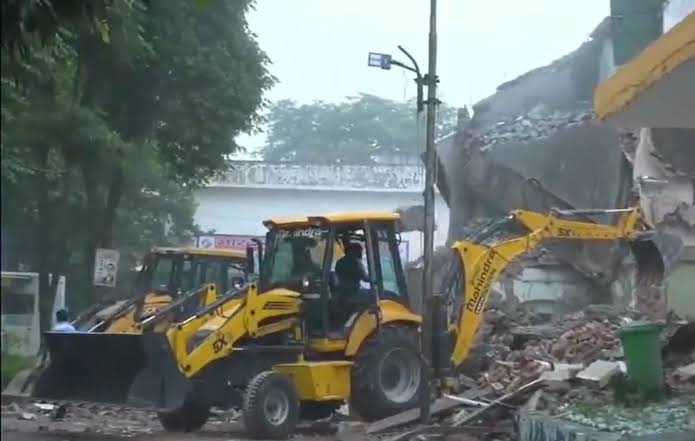
I. The 5:00 A.M. Protocol
SAHARANPUR, INDIA — Cover India’s political transformation long enough through fractured mandates, communal flashpoints, and the slow institutional erosion that defines this era and you learn something: absolute state power rarely moves in the dark when its legal ground is already solid.
At 4:00 a.m. on Saturday, September 5, while the agricultural and industrial hub of Saharanpur in western Uttar Pradesh lay quiet, heavy earth-moving machinery rolled into the District Magistrate’s Collectorate campus. Rapid Action Force (RAF) units and armed provincial police sealed the perimeter. Five entrance gates were padlocked from the inside. Auxiliary streetlights cut through rising exhaust as hydraulic excavators began tearing into a 3,300-square-foot, two-story brick-and-mortar mosque that had stood on the grounds for more than a century.
Just hours earlier, community representatives and opposition lawmakers had asked regional bureaucrats for a straight answer. They were told the campus would be temporarily cordoned off to prevent disorder while appeals were still pending. By dawn, roughly 70 percent of the structure had been reduced to cracked masonry and exposed rebar.
Twenty miles away in Kairana, police squads parked heavy vehicles across the driveway of Iqra Hasan, the newly elected Member of Parliament from the Samajwadi Party. The Iqra Hasan house arrest blocked her from leaving to meet administrative magistrates a now-familiar move in Indian policing: unwritten, unexplained, and effective. Across town, Congress MP Imran Masood took to social media past midnight, urging his constituents not to stage counter-protests that could hand the state a pretext for a crackdown, and promising that senior advocates were drafting an emergency writ petition for the Allahabad High Court.
State didn’t wait for the High Court. By 6:30 a.m., the site was largely leveled.
To a casual reader skimming a wire report, this looks like routine administrative cleanup — an alleged public encroachment cleared out after a lower magistrate’s ruling. But to anyone who understands how Indian governance actually works today, this wasn’t municipal zoning. It was a refined administrative technique in action: using procedure to launder ideological erasure.
VIDEO | Shamli: Uttar Pradesh police places Samajwadi Party Lok Sabha MP Iqra Hasan under house arrest ahead of her departure for Saharanpur.
— Press Trust of India (@PTI_News) September 5, 2026
(Full video available on PTI Videos - https://t.co/d8jp61yd2p) pic.twitter.com/AXcCPwCK1v
II. The Chronology of an Administrative Ambush
Understanding how a century-old house of worship gets demolished in ninety minutes means tracing the bureaucratic machinery that built up to it. The timeline shows how hardline ideological networks coordinate with the machinery of the state:
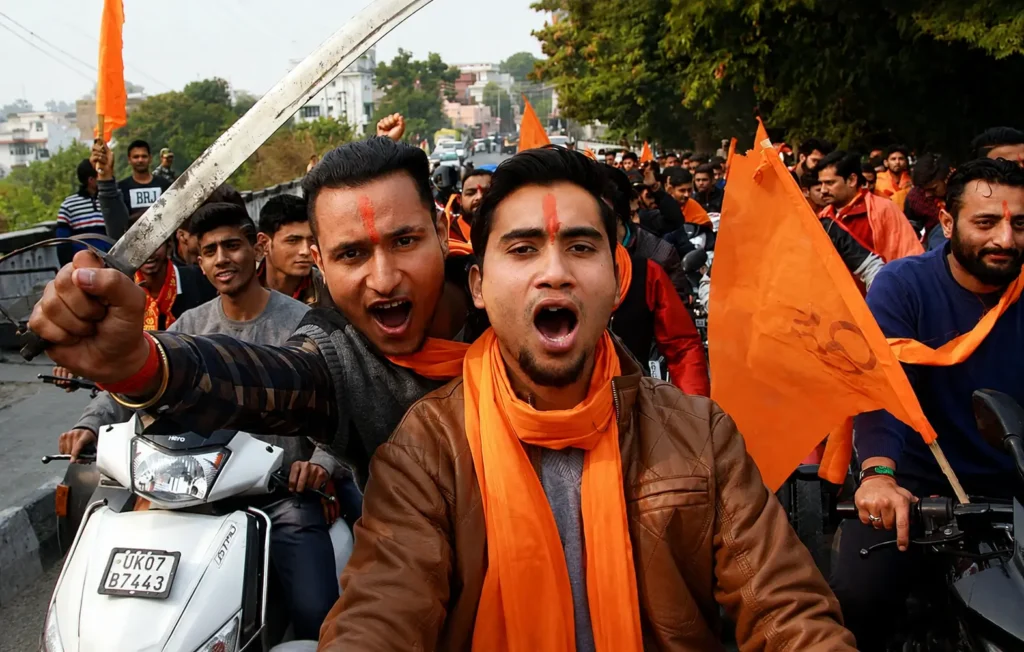
February–March 2025: The dispute doesn’t start with an urban decongestion plan or a highway expansion blueprint. It starts with a formal complaint from Vikas Tyagi, a former provincial convenor of the Bajrang Dal, the militant youth wing tied to the Rashtriya Swayamsevak Sangh (RSS), the ideological parent of Prime Minister Narendra Modi’s Bharatiya Janata Party (BJP). Tyagi petitions Uttar Pradesh Chief Minister Yogi Adityanath, claiming a century-old mosque inside the district administrative perimeter poses a “security and confidentiality threat” to sensitive government operations.
March 24, 2025: Moving with unusual speed, the regional administration opens summary eviction proceedings under the UP Public Premises Act 1972 — formally, the Uttar Pradesh Public Premises (Eviction of Unauthorised Occupants) Act, 1972. Outside worshippers lose access; armed police are stationed permanently at the gates.
July 16–17, 2026: City Magistrate Kuldeep Singh rules that the 315-square-meter parcel (Khasra No. 539) is unauthorized encroachment on state property. He fines the mosque’s management committee ₹6.41 crore (roughly $770,000) for long-term unauthorized occupation and orders the site vacated within thirty days.
July 20, 2026: The mosque committee appeals to the Saharanpur District Judge. Their defense includes archival revenue records, British-era land transfer documents, and utility ledgers showing continuous electricity service dating back to January 1, 1911 — proof that the prayer hall predates the modern administrative campus and originally served Muslim scribes, peons, and low-wage workers brought in under colonial rule.
September 2, 2026: District Judge Satendra Kumar dismisses the mosque committee’s appeal outright, backing the magistrate’s position that the land is registered government property.
September 4–5, 2026: Less than 72 hours after the lower court’s dismissal timed deliberately over a weekend so the mosque committee has no window to file an urgent stay petition with the Allahabad High Court or the Supreme Court the bulldozers move in.
In Indian legal circles, this is known as creating an irreversible fait accompli. Turn the structure to rubble overnight, and constitutional remedies become meaningless. A High Court bench can scold a rogue magistrate. It cannot un-bulldoze a leveled building.
III. The Legal Shell Game: Bypassing the Places of Worship Act
The Saharanpur demolition isn’t a one-off. It’s a textbook use of a legal workaround built specifically to hollow out constitutional protections.
1. Evading the 1991 Freeze
After nationwide communal violence in the late 1980s, India’s Parliament passed the Places of Worship Act 1991 — formally, the Places of Worship (Special Provisions) Act, 1991. Section 4(1) freezes the religious character of any house of worship exactly as it stood on August 15, 1947 (the date of Indian independence), and explicitly bars courts from altering, converting, or extinguishing that status.
Under a normal civil title suit, archival proof of regular prayer and pre-1947 utility connections would trigger this statutory immunity. So the Uttar Pradesh executive changed the legal frame entirely: it skipped civil courts of original jurisdiction altogether.
Instead, it invoked the summary powers of the Public Premises Act, 1972. By labeling a pre-independence religious site as nothing more than an administrative nuisance an illegal encroachment on public land executive magistrates sidestep the statutory freeze, dodge the Waqf Act’s doctrine of “waqf by user,” and turn what should be historic civil litigation into an unappealable eviction order decided by bureaucrats, not judges.
2. The Selective Yardstick of Khasra No. 539
The bias baked into this demolition shows up in the land record itself.
Regional cadastral records confirmed by parliamentary documents show the land parcel — Khasra No. 539 — historically belonged to two prominent Muslim landowners, Wahid Khan and Yaqub Khan, who donated parts of their private holdings to the colonial government for administrative construction. On that exact parcel sit the Collectorate, the now-demolished mosque, and an active Hindu temple.
If Khasra 539 is genuinely state property where non-government structures aren’t allowed, the rule of law demands the same standard for everyone. Yet on September 5, the state’s backhoes tore down only the Islamic prayer hall. The Hindu shrine, sitting on the same revenue plot, was left standing.
Across India, thousands of temples, roadside shrines, and sacred structures sit on government land sidewalks, traffic dividers, police station campuses without formal deeds. They’re treated as customary civic fixtures or given quiet official protection. A mosque with 115 years of documented history, by contrast, gets rebranded overnight as a security hazard.
3. Sidestepping the Supreme Court’s Anti-Bulldozer Ruling
On November 13, 2024, a Supreme Court bench led by Justices B.R. Gavai and K.V. Viswanathan handed down a sweeping ruling against bulldozer justice in India. The bench said the state cannot act as investigator, prosecutor, and executioner all at once, and it laid down firm procedural requirements: mandatory 15-day written notices, reasoned explanations, enough time to exhaust legal appeals, and personal financial liability for officials who demolish property without following process.
The Saharanpur administration got around the ruling by framing the operation as an eviction order, not punishment against an accused person. But sending in heavy machinery within hours of a lower court’s dismissal while detaining local lawmakers to block an emergency High Court hearing breaks the core of what the Supreme Court actually required: the right to exhaust every appeal first.
IV. Minorities Under Structural Siege
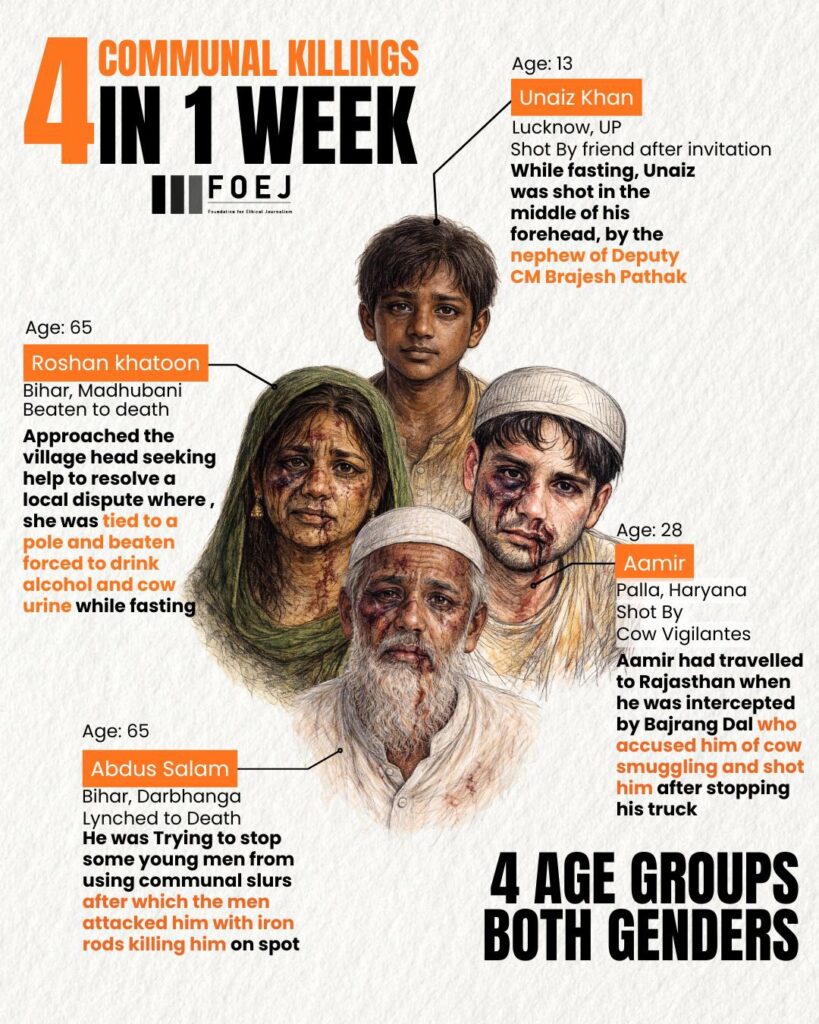
Saharanpur demolition can’t be judged in isolation. It fits a wider pattern spreading across northern and central India since the June 2024 general elections.
In that election, the ruling BJP suffered real losses it dropped its single-party parliamentary majority and lost key seats across the Hindi heartland, especially in Uttar Pradesh, where an opposition coalition built on lower-caste and minority voters pushed back hard against communal messaging. Instead of moderating course, ground-level reporting shows a hardened strategy aimed at rebuilding ideological control ahead of upcoming state assembly elections.
The pressure on marginalized communities is showing up on multiple fronts:
- Muslims (a shrinking public footprint): Municipal demolition squads have gone from fringe enforcement to standard policy. From the clearance of historic settlements like Akbar Nagar in Lucknow to contested sites in Sambhal, minority landmarks keep getting reframed as civic violations. Alongside physical demolitions, voter rolls are being quietly purged data from think tanks studying Special Summary Revisions (SIR) shows disproportionate deletions in heavily minority constituencies across Delhi and Uttar Pradesh, where tens of thousands of eligible voters lost their names from the rolls.
- Christians (anti-conversion laws as a weapon): In BJP-run states like Uttar Pradesh, Madhya Pradesh, and Chhattisgarh, loosely worded “Freedom of Religion” laws get used routinely against small prayer gatherings in rented halls, rural schools, and private homes. Vigilante groups show up backed by local police. Pastors get jailed without bail on unverified complaints, and formal institutions rarely step in.
- Dalits and Sikhs (pushed to the margins): Communities that resist folding into a single nationalist identity face sharp institutional pushback. Dalit informal workers bear the brunt of slum clearance drives dressed up as urban “beautification.” Meanwhile, prominent Sikh farm groups — whose mass protests forced the repeal of central farm laws in 2021 — face ongoing smear campaigns painting legitimate economic protest as anti-national activity.
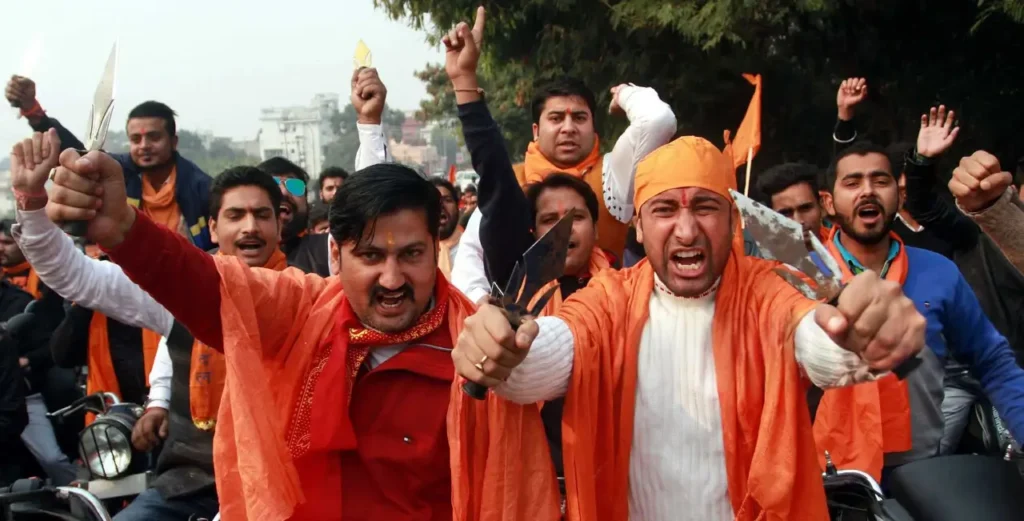
- An architecture of impunity: Dissenters, independent journalists, and student activists face indefinite pre-trial detention under harsh anti-terror laws like the Unlawful Activities Prevention Act (UAPA). Meanwhile, right-wing vigilantes operate with visible political cover. Some openly brag on social media and podcasts about orchestrating violence against peaceful protesters and community elders, claiming top-level political protection keeps them out of jail.
V. The End of Recourse
As morning broke over Saharanpur on September 5, the city didn’t erupt into rioting. Residents already knew that any public demonstration would be met with baton charges, preemptive arrests, and property seizures under anti-riot laws.
Instead, community elders sat in closed rooms, holding yellowed utility ledgers from 1911, land transfer records written in Urdu script, and copies of a Constitution that feels increasingly distant from their day-to-day reality.
Reacting to the dawn demolition, Samajwadi Party chief Akhilesh Yadav went straight to the point: “What was the harm in waiting for the High Court to sit? The administration did this deliberately so the higher judiciary would have nothing left to decide.”
That’s the real lesson from Saharanpur. When an administrative branch can send armed forces in the middle of the night, box in elected lawmakers, and tear down a century-old house of worship before a constitutional bench can even open its docket, this stops being about one building. It becomes the quiet surrender of due process dismantled not in a dramatic coup, but before sunrise on an ordinary Saturday morning.