North Korea Fires Missiles Into Sea of Japan on Heels of U.S. Action in Venezuela
 Skasif
04/01/2026
Skasif
04/01/2026 
North Korea Fires Two Ballistic Missiles Into Sea of Japan
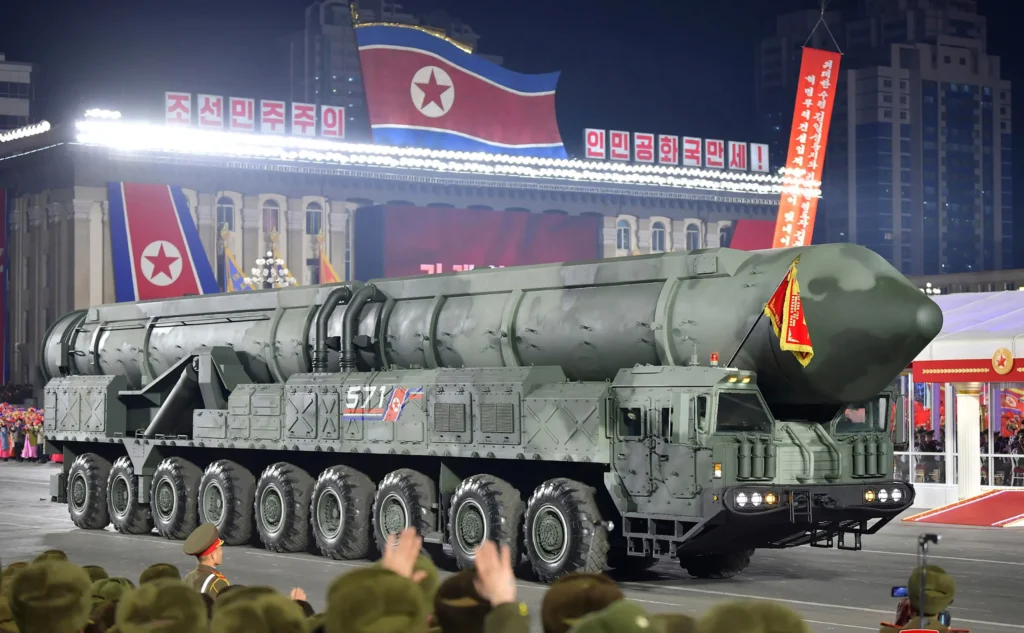
North Korea opened 2026 with a sharp reminder of its military ambitions, launching at least two ballistic missiles from an area near Pyongyang into waters off its eastern coast on Saturday, January 4.
The missiles flew between 900 and 950 kilometers before splashing down in the Sea of Japan, remaining outside Japan’s exclusive economic zone. No damage to ships or aircraft was reported, and no immediate threats materialized. Yet the tests triggered emergency monitoring in Tokyo, Seoul, and Washington, and drew swift international criticism.
Japan’s Defense Ministry described the flight paths as irregular, with an unusually low apogee of around 50 kilometers. That kind of depressed trajectory far lower than the high-arcing paths seen in many earlier tests allows North Korea to gather data on longer-range performance while keeping the missiles below the altitude where many defense systems are most effective.
Technical Details Point to Evasion Advances
Analysts have long watched North Korea’s experiments with non-standard trajectories. By flying lower and flatter, the missiles spend less time in space and re-enter the atmosphere sooner, potentially complicating interception by systems designed for higher-arcing threats.
Japan, South Korea, and the United States are still analyzing the data, but initial assessments suggest the weapons were solid-fuel short- or medium-range ballistic missiles systems Pyongyang has prioritized in recent years for their mobility and rapid launch capability.
Solid-fuel missiles do not require lengthy pre-launch fueling, making them harder to detect and destroy on the ground. Saturday’s test fits a pattern seen in multiple 2024 and 2025 launches, where North Korea has steadily refined these technologies despite repeated United Nations prohibitions.
Timing Aligns with High-Level Diplomacy
The launches occurred as South Korean President Lee Jae-myung arrived in Beijing for a state visit and summit with Chinese President Xi Jinping. The scheduled talks covered trade, investment, and regional security, with the situation on the Korean Peninsula explicitly on the agenda.
South Korea’s National Security Council convened an emergency session and condemned the tests as a deliberate provocation that undermines stability. Seoul called the timing especially regrettable given the ongoing diplomatic effort to reduce tensions.
North Korea has frequently timed missile activity to coincide with diplomatic engagements involving its neighbors or the United States. The pattern serves as both a signal of displeasure and a bid for attention, reminding the world that Pyongyang remains a central player in any discussion about its own future.
China, North Korea’s closest ally and largest trading partner, has not yet issued a detailed public response. Beijing traditionally urges restraint from all sides while resisting stricter enforcement of UN sanctions.
Echoes of U.S. Action in Venezuela
The tests also followed closely on a separate and dramatic U.S. military operation that resulted in the capture of Venezuelan President Nicolás Maduro. North Korea and Venezuela have maintained warm diplomatic ties for decades, with Caracas offering consistent support for Pyongyang at international forums.
While North Korean state media has not directly linked the missile launches to events in Latin America, some regional observers see the timing as more than coincidence. Pyongyang has previously expressed solidarity with governments it views as resisting U.S. influence, and the rapid sequence of events has fueled speculation that the tests were meant, in part, to signal defiance against perceived American overreach.
Coordinated Condemnation from Allies
Japan lodged a formal protest through diplomatic channels, labeling the launches a clear threat to regional peace and stability.
The U.S. Indo-Pacific Command confirmed it had tracked the missiles, assessed no immediate danger to American personnel or territory, and reaffirmed Washington’s unwavering defense commitments to both Japan and South Korea.
Senior officials from the three countries held urgent consultations Saturday evening, issuing a joint statement that described the activity as blatant violations of multiple UN Security Council resolutions.
Those resolutions, dating back to 2006, explicitly ban North Korea from conducting any ballistic missile tests, regardless of range or trajectory.
Persistent Challenge to Regional Security
Saturday’s launches ended a roughly two-month pause in visible missile activity the longest quiet period since late 2023. The respite had prompted cautious optimism among some analysts that diplomatic channels might be opening, or that internal technical issues were delaying new tests.
That hope now appears premature. North Korea’s missile program has accelerated dramatically over the past five years, with Pyongyang conducting more launches in 2024 and 2025 combined than in any previous comparable period.
The regime’s stated goal remains the development of reliable nuclear-capable missiles that can reach the U.S. mainland, while simultaneously fielding shorter-range systems designed to overwhelm defenses protecting South Korea and Japan.
Each successful test particularly those demonstrating solid-fuel technology and maneuverability narrows the gap between North Korea’s ambitions and its operational capabilities.

Escalation Risks and Diplomatic Paths
The trilateral response from Washington, Seoul, and Tokyo has grown increasingly coordinated in recent years, including expanded joint exercises, real-time intelligence sharing, and layered missile defense improvements.
Yet the fundamental challenge remains unchanged: North Korea shows no willingness to abandon its nuclear and missile programs in exchange for sanctions relief or security guarantees, and diplomatic talks have been stalled since 2019.
China holds unique leverage as North Korea’s economic lifeline, but Beijing’s priorities stability above all, and avoiding any scenario that could lead to regime collapse often conflict with calls for tougher pressure.
For now, regional militaries will continue enhanced vigilance. The Sea of Japan will remain a frequent proving ground unless broader political conditions shift dramatically.
Saturday’s launches, while not the most advanced or longest-range in North Korea’s recent arsenal, served their purpose: they reasserted Pyongyang’s relevance, tested technical progress, and reminded neighbors and adversaries alike that the Korean Peninsula’s long standoff is far from over.