How 10 World-Class Hackers Got Arrested by FBI
 Skasif
04/09/2026
Skasif
04/09/2026 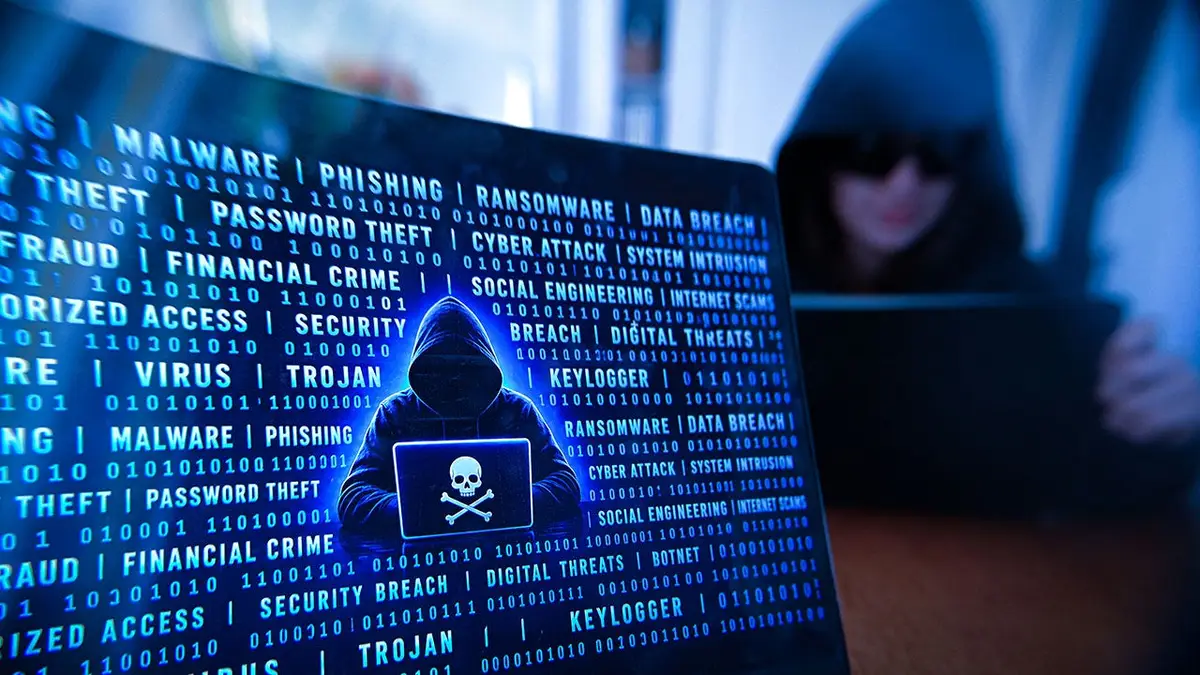
Representative image. Most cases of how famous hackers got caught came down to simple human slip-ups and weak habits, not broken encryption.
Clues FBI Used to Arrest the World’s Best-Known Hackers
Most famous hackers didn’t get taken down by a supercomputer or some genius agent typing furiously while a green “TRACING…” bar fills up on a screen.
They got taken down by old emails. Airport lines. A cat’s name. A birthday cake.
People still search “how did hackers get caught” like it’s some kind of magic trick. It isn’t. The tools these guys used were genuinely strong. The habits around them were not.
Tor worked. Encryption worked. Bitcoin worked. Fake names worked, for a while.
Then someone reused a Gmail. Someone crossed a border they shouldn’t have. Someone posted a photo. Someone trusted the wrong friend.
Security people have a term for this. They call it an OPSEC failure Operational Security failure, if you want the full version. Regular people just call it being human.
Here are 10 real cases. Sourced from court filings and official press releases, not forum legend.
Ross Ulbricht left a real name on a fake market
Silk Road launched in 2011, running on Tor, taking payment in Bitcoin. The man behind it called himself Dread Pirate Roberts.
His real name was Ross Ulbricht.
The site grew fast, and investigators didn’t need a Hollywood-style “trace.” They needed the oldest posts on the internet.
Back in the early days, a user calling himself “altoid” hyped up Silk Road on public forums. Later, that same handle turned up asking for help finding a Bitcoin developer — and listed a contact email: rossulbricht@gmail.com.
That’s it. That’s the whole thing. Court papers and later trial testimony laid that breadcrumb trail out in public.
The internet does not forget a Gmail address.
Agents arrested him on October 1, 2013, inside a San Francisco library. They needed his laptop open when they moved in, so they staged a distraction that pulled his eyes off the screen for just long enough. The machine stayed unlocked.
The Justice Department later charged him as the owner of what it called the most sophisticated criminal marketplace on the internet at the time.
Lesson: a new alias is easy to build. Teaching the old internet to forget your real one is not.
Sabu stayed hidden until one IP, then switched sides
LulzSec turned hacking into public theater in 2011. Sony was one of the targets. The loudest voice in the group went by Sabu.
Sabu was Hector Xavier Monsegur, from New York.
Anonymity has one mean rule: you can be careful 999 times. The 1,000th slip still counts, and nobody’s giving you credit for the streak.
Investigators tied him to a real IP address, then to a real home address. The FBI arrested him on June 7, 2011. He started cooperating that same night.
That cooperation later helped stop hundreds of planned attacks and led to more arrests, according to the FBI’s own account. A judge even called it “truly extraordinary.” He got time served.
Underground hacking groups run on trust more than code. Break the trust, and the whole chain snaps at once.
Lesson: a VPN can hide your connection. It cannot hide a talkative partner.
Jeremy Hammond encrypted the files, then used “Chewy123”
Jeremy Hammond helped breach the intelligence firm Stratfor in 2011. Emails leaked. Card data leaked. The Justice Department put the damage at around 860,000 subscriber records and roughly 60,000 stolen cards.
He used real encryption. That part wasn’t sloppy at all.
Then the password story went public. Associated Press reporting on the case named the passphrase found on seized material as “Chewy123.” Chewy was his cat.
Hammond later said he wasn’t sure that password is actually what opened the drive in question, so the neat little internet version of the story — “FBI guessed the cat’s name, case closed” is probably too tidy. But the password itself was real, and it was found.
Sabu’s cooperation helped build the case. Hammond was arrested in Chicago in 2012. In 2013, a judge gave him 10 years.
Lesson: strong encryption doesn’t save you from a password your friends could guess over dinner.
Maxim Senakh was safe at home, then he left home
Some hackers get caught by a code mistake. Some by an email. Maxim Senakh’s story is the airport-arrest kind.
The Russian citizen was tied to the Ebury botnet, malware that hit thousands of Linux servers and stole login credentials. The Justice Department said the crew behind it used those hijacked machines for click fraud and spam, and made real money doing it.
Knowing someone’s name is not the same as being able to grab them. Senakh was in Russia, and that alone kept him out of reach for years.
Then in 2015, he traveled to Finland. Finnish police arrested him on a U.S. request. He was extradited in 2016, pleaded guilty in 2017, and got 46 months.
No dramatic password failure here. No blown cover. The map just changed, and the law changed right along with it.
Lesson: the internet ignores borders. Extradition treaties do not.
Yevgeniy Nikulin hacked LinkedIn, then took a trip to Prague
U.S. prosecutors tied Yevgeniy Nikulin to 2012 intrusions at LinkedIn, Dropbox, and Formspring. A San Francisco jury eventually convicted him. In 2020, a judge handed down 88 months.
Digital evidence existed for years before that. So did Nikulin’s safety, because he was still in Russia the whole time.
Then he went to Prague. Czech police arrested him there on October 5, 2016. After a long extradition fight, he was sent to the United States.
Some online write-ups claim Instagram photos gave away his exact location. Official case summaries don’t rest the arrest on that particular claim — the trip itself was enough of a mistake on its own.
Lesson: a warrant sitting in another country is still an OPSEC problem, whether you remember it or not.
Su Bin didn’t just steal files, he organized them
Su Bin was a Chinese aviation businessman. U.S. prosecutors said he helped military hackers pick their targets inside American defense contractors.
wish list wasn’t small. C-17. F-22. F-35.
He sent emails. He flagged useful files. He explained, in writing, why a document mattered. The Justice Department said he pleaded guilty and received 46 months in 2016, after first being arrested in Canada back in 2014.
Crime running through a network still leaves office work behind it. Spreadsheets. Contact lists. Project notes with names attached.
Investigators love paperwork. It doesn’t encrypt itself, and most people forget that part.
Lesson: if the job needs Excel, there’s a decent chance the case file will need Excel too.
Park Jin Hyok was named by a web of accounts, not one resume
Park Jin Hyok is the name U.S. prosecutors put on a North Korea-linked hacking operation.
The complaint tied that operation to the Sony Pictures attack, the Bangladesh Bank theft, and WannaCry. The FBI had already publicly blamed North Korea for the Sony hack back in 2014.
The internet’s shorthand version makes it sound simple: one personal Gmail, one reused password, case closed. The real complaint is messier and honestly more convincing. Shared devices. Shared recovery data. Shared infrastructure. Personas like “Kim Hyon Woo” showing up again and again. Dozens of links pointing the same direction, not one lucky break.
Park was charged in 2018. He was never arrested North Korea doesn’t hand people over.
He lost the mask anyway. His name and face went public regardless.
Lesson: building ten fake identities is easy. Keeping every one of them from ever touching each other is genuinely hard.
Behzad Mesri stole Game of Thrones and kept his freedom, not his name
In 2017, someone broke into HBO’s systems and grabbed unreleased shows and internal files. Then came a ransom demand for roughly $6 million in Bitcoin.
The Justice Department charged Iranian national Behzad Mesri, also known online as Skote Vahshat. Prosecutors said he’d previously done network attacks for Iran’s military.
Some write-ups claim he bragged under his real name and outed himself. The actual indictment doesn’t need that scene to work — it leans on his older technical footprint instead.
He was never arrested. He’s believed to be in Iran, where anonymity dies but the passport still works just fine at home.
Lesson: a mask only works for as long as nobody prints the face behind it.
Hushpuppi built a crime life, then posted the cake
This is probably the most colorful name on the list: Ramon Abbas, known online as Hushpuppi.
His Instagram sold a lifestyle. Cars. Watches. Private jets. Dubai, constantly.
U.S. prosecutors said the money behind it came from business email scams and laundering. In 2022, a Los Angeles judge gave him 135 months after a guilty plea.
Secrecy and influencer math genuinely do not mix. As FBI case file data showed, investigators tied phones, emails, transfers, and the public Instagram account together, piece by piece. Birthday posts helped more than anyone expected. One cake read “Happy Birthday Ramon.” That date matched old visa records on file.
The cake wasn’t the whole case. It was just a stupid extra clue nobody needed to hand over.
Dubai police arrested him in June 2020. The feed stopped. The federal case started.
Lesson: followers aren’t the only ones watching your grid.
Marcus Hutchins stopped WannaCry and still walked into an old case
Marcus Hutchins is the odd one on this list. He got famous for helping, not hurting.
In May 2017, WannaCry ransomware was locking up hospitals and companies worldwide. Hutchins found an unregistered domain sitting inside the malware’s code and registered it himself. The worm’s spread slowed almost immediately. That domain turned out to be a kill switch.
Months later he flew to Las Vegas for Black Hat and DEF CON. After the conference wrapped, agents stopped him at the airport.
The arrest had nothing to do with WannaCry. It was tied to older work on the Kronos banking trojan, and the indictment was already sitting in place before he ever landed in the U.S. The popular “drunk confession at a party” version of the story doesn’t match the actual record.
He later pleaded guilty to two counts. The judge weighed his later research work and gave him time served plus supervision.
Two very different lives. One internet memory that kept both of them.
Lesson: you can genuinely change. The archive does not reset itself along with you.
Four traps that show up again and again
Put all ten names in one room, and the same plot repeats itself.
Personal life leaks into the fake life. Ulbricht’s Gmail. Park’s linked accounts. Abbas’s public face. It only takes one crossover point.
Ego wants a crowd, crime wants a basement. Those two wants fight each other constantly, and ego usually yells first.
Geography is a quiet killer. Senakh and Nikulin were both hard to touch at home. One trip fixed that problem for investigators.
The internet keeps receipts. Old forum posts. Old chats. Old visa forms. A joke post from five years ago becomes exhibit B.
Why smart people keep making small mistakes
Skill is not the same thing as discipline.
If nobody knocks for two years straight, shortcuts start to feel safe. Same laptop, “just this once.” Same phone. One photo, because the watch finally looks good enough to show off.
A case rarely needs your whole life laid bare. It needs one mistake that points toward the next mistake.
Then the next one.
Then a library table. Or a gate at an airport.
weak link was never Tor
Tor did not call the FBI.
Encryption did not mail anyone a confession.
Bitcoin did not print a home address on a receipt.
VPN software did not book anyone’s ticket to Finland.
The weak link sat at the keyboard the whole time. An old email. A reused handle. A predictable password. A public cake. A holiday abroad.
Security is not one product you buy once. It’s a long chain of small choices, made over and over, and the chain fails at its worst link, not its best tool.
Hollywood wants green code on screen and someone shouting “got him.” Real cases look duller than that. A clerk reads a 2011 forum thread. An analyst matches an IP to a coffee shop. Someone checks a visa date against a photo.
Then the ghost finally gets a name.
That’s how famous hackers actually got caught. Not because the machines quit working. Because the people running them didn’t stay boring enough, long enough.

FAQs
1. What is the most common reason famous hackers get caught?
Reusing personal information an old email, a real name, or a linked device across an anonymous account is the pattern that shows up most often, according to court records in these cases.
2. Did Ross Ulbricht really get caught because of a Gmail address?
An early forum handle linked to Silk Road later listed rossulbricht@gmail.com as a contact email. That connection, laid out in court filings, was a key thread investigators pulled on.
3. Was Jeremy Hammond’s password actually his cat’s name?
Investigators found the passphrase “Chewy123” on seized material, and Hammond’s cat was named Chewy, per Associated Press reporting. Hammond himself later said he wasn’t certain that password was what unlocked the drive in question.
4. How did the FBI catch Hushpuppi (Ramon Abbas)?
Investigators connected his phones, emails, financial transfers, and public Instagram posts, including birthday photos that matched dates on old visa records, according to FBI case file details.
5. Why was Marcus Hutchins arrested after stopping WannaCry?
His arrest was unrelated to WannaCry. It stemmed from an earlier indictment tied to the Kronos banking trojan, which was already in place before his U.S. trip.