Bangladesh Moves Toward the Saudi-Pakistan Military Alliance: New Delhi on High Alert
 Skasif
26/08/2026
Skasif
26/08/2026 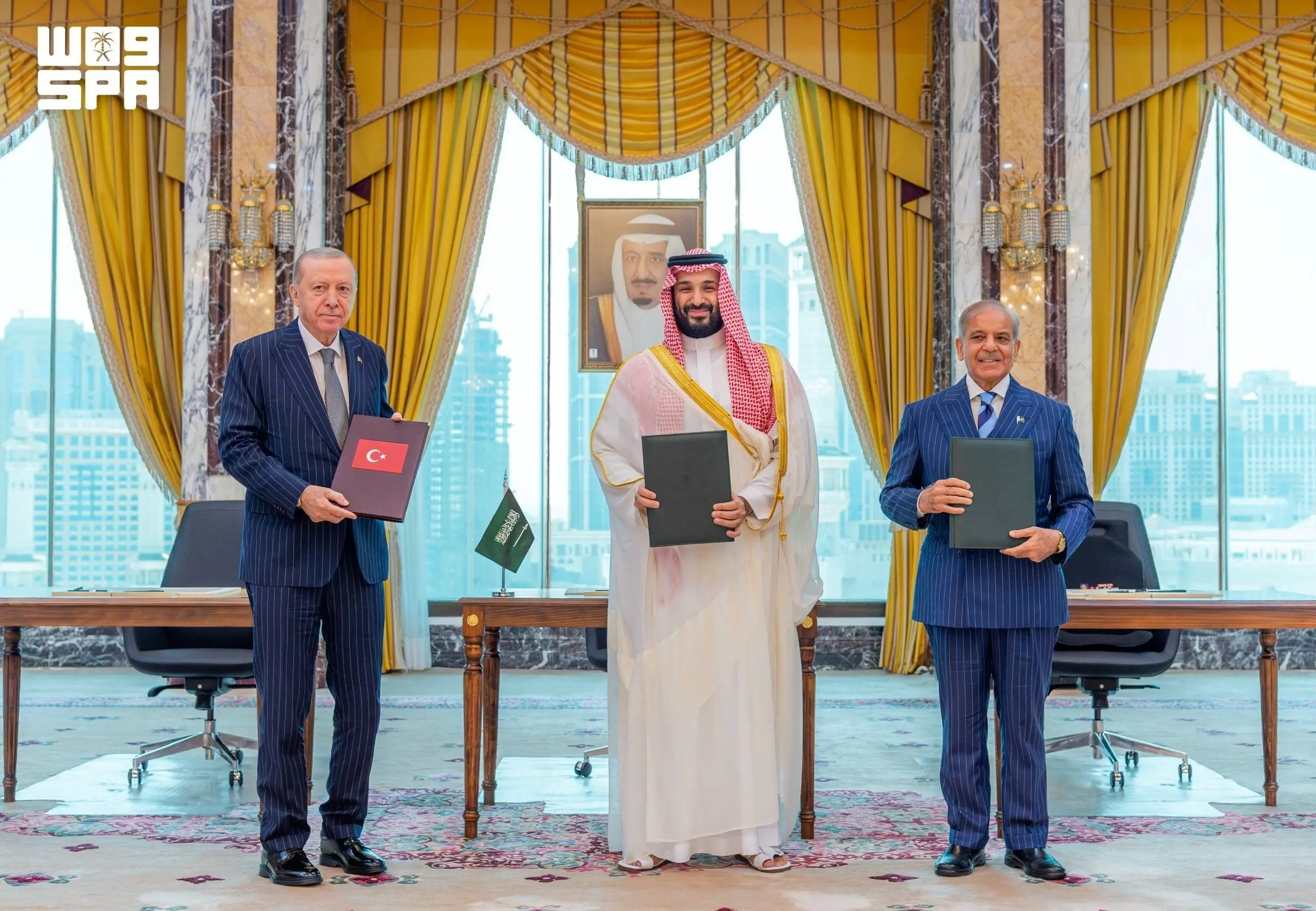
Turkish President Recep Tayyip Erdoğan, Saudi Crown Prince Mohammed bin Salman and Pakistani Prime Minister Shehbaz Sharif pose with the signed documents of the Mecca Joint Defense Agreement in Mecca, Saudi Arabia, on August 7, 2026.
Summary
Bangladesh has not joined the Mecca defense pact. State Minister for Foreign Affairs Humayun Kabir said on 24 August 2026 that Dhaka is interested and views the idea positively. No cabinet decision, treaty text for Bangladesh, or joining date has been announced.
The pact is a mutual defense deal signed on 7 August in Mecca by Saudi Arabia, Türkiye, and Pakistan. An attack on one would be treated as an attack on all. That NATO-style clause is why the Bangladesh Mecca defense pact talk now matters in Dhaka, New Delhi, and the Gulf.
A Reuters-cited foreign ministry official, speaking without authorization, said the invitation came from Riyadh. The three founding embassies in Dhaka did not immediately comment.
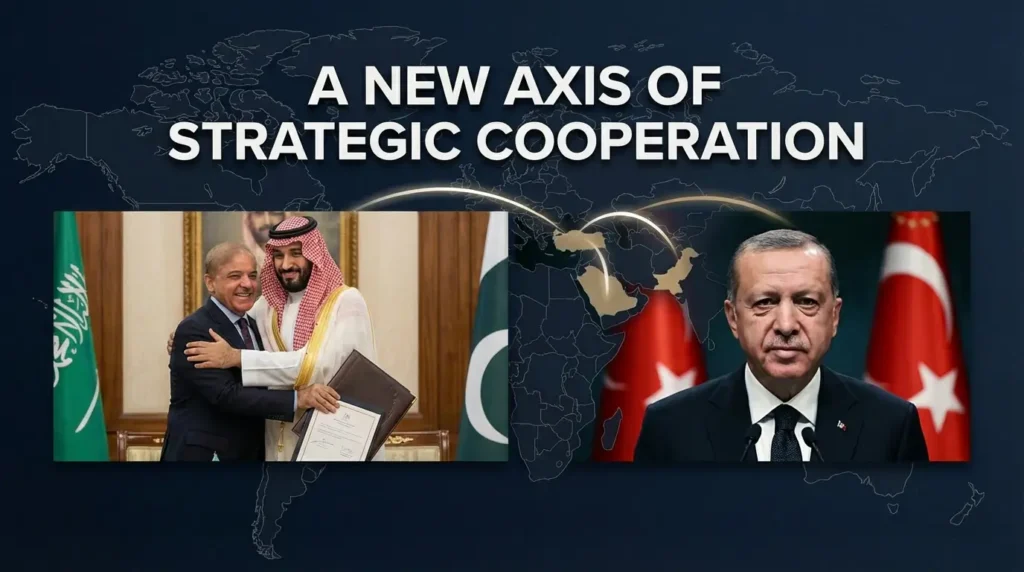
Humayun Kabir said on 24 August
Kabir spoke to reporters at the foreign ministry in Dhaka. Local outlets including Views Bangladesh and The Daily Observer reported that no final decision has been taken.
“If there is a security arrangement among Islamic nations in the Middle East, it is not unusual for us to consider participating. It is being viewed positively,” Kabir said, according to Reuters.
He also said partners in West Asia and the wider Muslim world were inviting Bangladesh’s leadership. He named Prime Minister Tarique Rahman in particular.
“Let’s see,” he added in remarks carried by Dawn and Anadolu Agency. “The matter is being viewed positively.”
Kabir was appointed state minister last week. He had earlier served as an adviser to Rahman. On 20 August he told BSS, as quoted by ThePrint, that Dhaka would weigh “its own interests and the changing dynamics of the global economy and trade.”
That is the confirmed official line. Interest. No signed accession. No public timetable.
What the Mecca Joint Defense Agreement actually is
Saudi Crown Prince Mohammed bin Salman, Turkish President Recep Tayyip Erdoğan, and Pakistani Prime Minister Shehbaz Sharif signed the deal at Al-Safa Palace on 7 August.
Joint statements from the three governments said the pact is meant to strengthen collective deterrence. They said any armed attack on one state “shall be regarded as an attack against them all.” They also pledged wider defense cooperation. CBS News and Reuters reported those terms from the official texts.
The public statement did not spell out troop numbers, automatic war plans, or how a member would have to fight. That gap matters. A political pledge is not the same as a tested command system.
The three members bring different assets. Saudi Arabia is a top oil exporter and host of Islam’s holiest sites. Pakistan is a nuclear-armed state. Türkiye fields NATO’s second-largest army and a growing defense industry.
The deal builds on a Saudi-Pakistan Strategic Mutual Defense Agreement signed in September 2025. The Mecca text adds Türkiye.
Türkiye’s defense ministry said on 13 August that the three sides plan political and military mechanisms. Those would include defense ministers, foreign ministers, and military chiefs. Joint exercises and industry ties were also listed.
A Turkish official told Reuters the pact is “purely defensive.” The official said it is not aimed at one country and does not replace existing alliances.
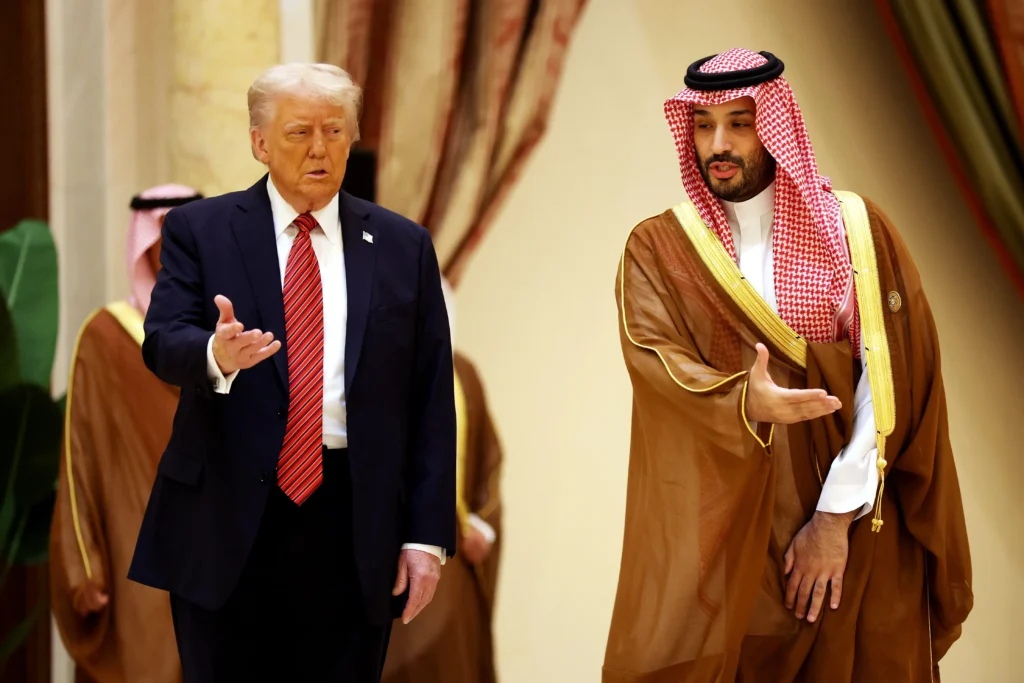
Why founders say the door is open
Erdoğan has pushed expansion. In an 12 August interview with Asharq Al-Awsat, reported by Daily Sabah, he said the vision “is not limited to three countries.”
“We want it to expand further and, if possible, one day bring all countries in the region under this framework,” he said.
Turkish Foreign Minister Hakan Fidan has separately said Egypt could join later. That has not happened. Egypt is not a member as of 26 August 2026.
Bangladesh would be a different kind of add-on. It is not a Gulf state. It sits on India’s eastern flank. It has a large UN peacekeeping record and a Muslim-majority population in a secular republic.
More than 90 percent of Bangladeshis identify as Sunni Muslim, Reuters noted. The constitution still describes the state as secular.
Invitation status remains incomplete
Two claims are now in circulation. They are not the same.
Kabir said leadership in the Muslim world is inviting Rahman “to come and participate.” That language can mean summits, visits, or talks. It does not by itself prove a formal accession offer.
A Bangladesh foreign ministry official told Reuters that Saudi Arabia had invited Dhaka to join. The official gave no date. The official spoke on condition of anonymity because he was not authorized to talk to the press.
Saudi, Turkish, and Pakistani embassies in Dhaka did not immediately respond to Reuters.
Until Riyadh, Ankara, or Islamabad confirm a written invitation, the Saudi offer should be treated as reported, not independently verified in public.
Iran says it got no formal invite
Iran is not a member. Iranian Foreign Ministry spokesman Esmaeil Baghaei said on 24 August that Tehran had received no official invitation.
IRNA quoted him saying talks on regional security had been raised. He said that was not the same as a membership offer.
A day earlier, Mehdi Rahimi of Iran’s parliamentary news agency told Al Mayadeen that Tehran had an invitation and was reviewing it. Iran’s foreign ministry did not confirm that claim. Neither did the three signatories.
Baghaei also said Tehran had “no reason to think” the three-country pact was aimed at Iran. Some Iranian lawmakers have called it a paper agreement. That is their view, not a proven fact.
The pact was signed during the 2026 Iran war. Reuters reported Iranian missile fire across the Middle East and pressure on Gulf energy routes. Founders insist the text is defensive. Intent and effect can still diverge. That is analysis, not a finding.
Why a Bangladesh move would test old foreign policy
Dhaka has long tried to avoid picking a military camp. The aim has been trade, investment, and room to deal with rival powers at once.
Joining a mutual-defense bloc would change that posture. Analysts quoted by Reuters said the shift would not automatically break existing ties. It would make alignment harder to deny.
Geopolitical analyst Kollol Kibria told Reuters that formal membership could unsettle relations with India, China, Iran, Japan, Kuwait, Oman, Qatar, Russia, the UAE, and the United States.
“These relationships would not automatically break,” Kibria said. “But once Bangladesh joins a military bloc, the question of which side Bangladesh is on becomes much harder to avoid.”
Asif Shahan, a development studies professor at Dhaka University, made a similar point. “If Bangladesh joins this alliance, several countries, including India, will not be pleased,” he said. “However, that should not be the basis of Bangladesh’s decision.”
Those are expert judgments. They are not government policy.
India is watching, and ties are already strained
The timing is sensitive. Rahman took office on 17 February 2026 after the BNP’s election win. His government is about six months old.
Bangladesh has asked India to extradite former prime minister Sheikh Hasina. She has lived in India since her ouster in August 2024. India says it is examining the request.
Dhaka has also accused Indian border forces of pushing people into Bangladesh. India has not accepted that charge as stated.
Rahman has not set a date for a first prime ministerial visit to New Delhi. His press secretary A.A.M. Saleh told Reuters on 21 August that no decision had been made. Dhaka is waiting on the Hasina request.
After Hasina spoke to journalists in New Delhi this month, Bangladesh said a visit needed a “propitious environment.”
India’s Ministry of External Affairs has not issued a detailed verdict on a Bangladeshi accession. Spokesperson Randhir Jaiswal said New Delhi was “closely” following developments in West Asia. Reuters recorded the same line when asked about the pact.
Analysts told Reuters that New Delhi is unlikely to welcome a Bangladesh seat beside Pakistan. That is an assessment. India has not announced a formal objection to Dhaka joining.
External Affairs Minister S. Jaishankar has questioned what the pact has done in live military crises facing its own members. That comment was about the three founders, not about Bangladesh.
Money is the quiet constraint
Bangladesh’s economy still runs on two external pipes.
Ready-made garments dominate exports. Most of those clothes go to Britain, the European Union, and the United States. Bangladesh Bank data put FY26 RMG export earnings at about $38.97 billion. That was less than 1 percent higher than the previous year.
Remittances are the other pillar. Workers abroad, many in the Middle East, sent a record $35.60 billion in FY25-26, bdnews24.com reported from official figures. Inflows were still rising in August 2026, according to BSS.
A defense alignment that unsettles buyers in the West or employers in the Gulf would not be cost-free. That risk is not a prediction of sanctions. It is the obvious exposure of an export-and-remittance economy.
Saudi labor markets and pilgrimage ties also cut the other way. Mecca has political and religious weight in Bangladesh. Kabir underlined that point. A closer security link with Riyadh could be sold at home as natural. The foreign-policy cost would appear later, in New Delhi, Washington, Beijing, and Gulf capitals that are not in the pact.
What is confirmed, and what is not
Confirmed as of 26 August 2026:
- The Mecca Joint Defense Agreement exists and was signed on 7 August 2026.
- It contains a collective-defense clause.
- Kabir said Bangladesh is interested and views participation positively.
- No Bangladeshi signature or cabinet ratification has been announced.
- Iran’s foreign ministry denies a formal invitation of its own.
- India says it is watching West Asia.
- Founding embassies in Dhaka had not publicly confirmed a Saudi invitation when Reuters asked.
Not confirmed in public documents:
- The exact date and legal form of any invitation to Bangladesh.
- Whether Rahman will travel to Saudi Arabia to discuss accession.
- What military duties Dhaka would accept if it joined.
- How an “attack on one” clause would work for a South Asian state far from the Gulf front line.
Reports that Rahman may visit Riyadh in October have circulated through secondary outlets citing unnamed diplomatic sources. Those dates are unconfirmed.
What happens next
The next hard fact will be simple. Either Bangladesh issues a formal note of interest, or one of the three founders confirms an invitation in public.
Until then, Dhaka has opened a door without walking through it. That is a signal. It is not yet a treaty.
For readers in India, the live question is alignment on the eastern border. For readers in the United States and Europe, the live question is whether a major garment supplier is moving into a new military club. For readers in the Gulf, the live question is whether the pact stays a three-country shield or becomes a wider Sunni defense list.