Grok 4.6 Release Date: What to Expect From xAI’s New Model
 Skasif
29/07/2026
Skasif
29/07/2026 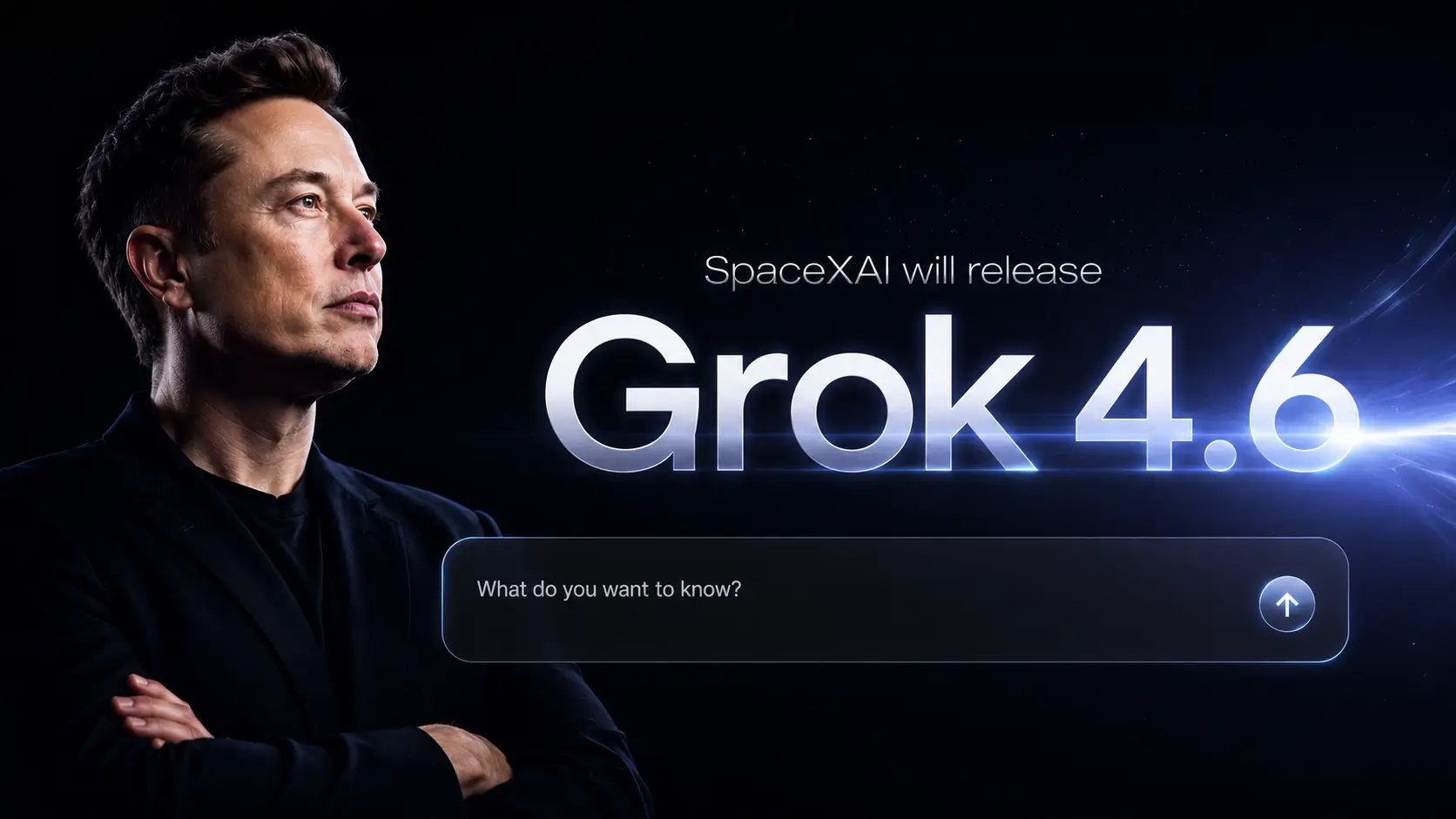
Elon Musk announces the official Grok 4.6 release date scheduled for August 7, 2026.
Artificial intelligence moves fast, and xAI is keeping up a rapid pace with its Grok series. Following the mid-July release of Grok 4.5, many developers and tech enthusiasts are already looking ahead to the next update. Elon Musk recently confirmed details about the Grok 4.6 release date, expected model improvements, and what comes next for xAI’s flagship AI lineup.
Whether you rely on Grok for software development, everyday research, or automated security tasks, understanding what is changing helps you plan your workflows. Here is a full breakdown of the launch schedule, model specs, performance benchmarks, and what to expect from both Grok 4.6 and its larger sibling, Grok 4.7.
Grok 4.6 Release Date and Launch Timeline
The official Grok 4.6 release date is scheduled for around August 7, 2026. Elon Musk shared this timeline on July 28, 2026, giving users a clear window for when the new model will become available.
This short gap between releases highlights xAI’s strategy of shipping continuous, smaller updates rather than holding back improvements for major annual rollouts. Instead of waiting many months to bundle updates, xAI releases new versions as soon as training, fine-tuning, and safety evaluations finish.
Key Factors Behind the Grok 4.6 Release Date
Several factors explain why xAI is able to move so quickly from Grok 4.5 to Grok 4.6:
Targeted Post-Training Updates: Grok 4.6 maintains a similar core parameter size to Grok 4.5 while concentrating heavily on refining post-training techniques.
Rapid Research Integration: New methods in supervised fine-tuning (SFT) and reinforcement learning (RL) are built into the model pipeline continuously.
Large Compute Infrastructure: Training runs take place on massive compute clusters, allowing parallel testing of multiple model variants.
Following this launch, xAI plans to release Grok 4.7 just a few weeks later. This creates a two-step release structure: first delivering immediate post-training refinements with Grok 4.6, then introducing a larger parameter base with Grok 4.7.
Interesting.
— Elon Musk (@elonmusk) July 28, 2026
Grok 4.6 releases around August 7. This will be the 1.5T model with significantly improved SFT & RL.
Grok 4.7 will be the 2.1T model released a few weeks later. This will be better than 4.6 in every way, except slightly slower to serve, albeit with even better… https://t.co/dJjXVnFwoA

What Is Grok 4.6? Specs and Model Size
Grok 4.6 is a 1.5 trillion parameter model. While the total parameter count remains in the same range as Grok 4.5, the major gains in version 4.6 come from deeper post-training optimizations.
Understanding the 1.5 Trillion Parameter Size
A 1.5 trillion parameter architecture gives the model enough raw capacity to retain deep domain knowledge, handle complex logic, and understand subtle instructions. By keeping the parameter size consistent while improving the underlying training quality, xAI aims to boost answer accuracy without increasing computational costs or slowing down response speeds.
For practical day-to-day use, this means:
Consistent Latency: Response generation times should remain fast and comparable to Grok 4.5.
Stable Usage Costs: Token pricing on the API is expected to remain steady.
Fewer Hallucinations: Improved data curation reduces inaccurate facts in responses.
Improvements in Fine-Tuning and Reinforcement Learning
The most substantial upgrades in Grok 4.6 focus on two core training stages: Supervised Fine-Tuning (SFT) and Reinforcement Learning (RL).
Supervised Fine-Tuning (SFT): During SFT, the model learns from high-quality, curated examples of human and machine interactions. Upgrades here help Grok 4.6 follow multi-part instructions more accurately, output clean code formats, and adhere closely to user-defined constraints.
Reinforcement Learning (RL): RL rewards the model for choosing logical steps during complex problem-solving. Enhanced RL helps the model plan multi-step tasks, correct its own errors during reasoning, and handle long conversations without losing track of details.
How Grok 4.5 Sets the Stage for Version 4.6
To understand why Grok 4.6 is generating attention, it helps to review how Grok 4.5 has performed since its launch in mid-July 2026. Grok 4.5 established strong credentials in coding, logical reasoning, and cost-effective performance.
Cybersecurity and Cost-Effectiveness
One area where Grok 4.5 stood out was independent cybersecurity evaluation. In benchmark testing on Vercel’s DeepsecBench a suite designed to test how well AI models identify security vulnerabilities in source code Grok 4.5 delivered strong results relative to its cost.
According to test data shared by Vercel CEO Guillermo Rauch, Grok 4.5 performed closely alongside far more expensive models while keeping operational costs significantly lower:
10x cheaper than top-tier model Sol.
5.7x cheaper than Opus 5.
2.2x cheaper than Kimi K3, while achieving comparable recall and precision.
In one representative run, Grok 4.5 completed the high-difficulty evaluation setting in approximately 1 hour and 24 minutes for a total API cost of $5.60. For teams running automated code audits or continuous integration security checks, this balance between price and performance is a major operational advantage.
Grok generated millions of nude images. read below

Benchmark Performance and Token Efficiency
Beyond cybersecurity, Grok 4.5 has competed effectively across standard coding and reasoning benchmarks. Pricing for Grok 4.5 was set at $2 per million input tokens and $6 per million output tokens, making it competitive for high-volume enterprise API usage.
A major driver of Grok 4.5’s cost-efficiency is its token economy. On tasks like SWE-Bench Pro, Grok 4.5 averages around 15,954 output tokens per task solution. By contrast, competing models sometimes consume over 67,000 output tokens to reach similar outcomes. Using fewer tokens to reach a correct answer saves both execution time and money.
Grok 4.5 compares across key technical benchmarks:
Benchmark Name | Grok 4.5 | Claude Fable 5 (max) | Claude Opus 4.8 (max) | GPT-5.5 (xhigh) | Key Observation |
|---|---|---|---|---|---|
Terminal-Bench 2.1 | 83.3% | 84.3% | 78.9% | 83.4% | Tight cluster among top models |
SWE-Bench Pro (resolve) | 64.7% | 80.4% | 69.2% | 58.6% | Grok outpaces GPT-5.5 |
DeepSWE 1.0 | 62.0% | 66.1% | 55.75% | 64.3% | Solid score above Opus 4.8 |
DeepSWE 1.1 (neutral) | 53.0% | 70.0% | 59.0% | 67.0% | Standardized comparison run |
SWE Marathon (pass@1) | 29.0% | 24.0% | 26.0% | N/A | Grok leads reported results |
These benchmark figures show that xAI’s focus on output efficiency and targeted reasoning has paid off, establishing a solid baseline for Grok 4.6 to build upon.

Grok 4.6 vs. Grok 4.7: Comparing the Upcoming Models
Shortly after the Grok 4.6 release date, xAI plans to introduce Grok 4.7. While both models build on the same core research, they target slightly different use cases.
       Grok 4.5 (Mid-July 2026)
       • 1.5T Parameters
       • Focus: Cost efficiency & coding
                  │
                  ▼
       Grok 4.6 (~August 7, 2026)
       • 1.5T Parameters
       • Focus: Upgraded SFT & RL reasoning
                  │
                  ▼
       Grok 4.7 (Late August 2026)
       • 2.1T Parameters
       • Focus: Expanded scale & raw capacity
Grok 4.6 Focus
Grok 4.6 is optimized for speed, precision instruction following, and practical day-to-day work. Because its parameter size remains at 1.5 trillion, it requires no extra computational overhead compared to Grok 4.5. It serves as an immediate, refined drop-in upgrade for current Grok workflows.
Grok 4.7 Focus
Grok 4.7 expands the parameter count to 2.1 trillion. Elon Musk noted that Grok 4.7 will be superior to 4.6 across most capabilities, though it will be slightly slower to serve due to its larger size. However, xAI anticipates that further improvements in token efficiency will help balance out the increased compute demands, keeping total generation costs reasonable.
Feature / Metric | Grok 4.5 | Grok 4.6 | Grok 4.7 |
|---|---|---|---|
Expected Launch | Mid-July 2026 | Around Aug 7, 2026 | Late August / Early Sept 2026 |
Parameter Size | 1.5 Trillion | 1.5 Trillion | 2.1 Trillion |
Primary Strength | Price-performance leader | Enhanced SFT & RL logic | Maximum capacity & depth |
Serving Speed | Fast | Fast (similar to 4.5) | Slightly slower (larger model) |
Token Efficiency | High | High | Very High |
Best For | General API & coding | Complex instruction following | Heavy research & advanced logic |
How to Access Grok 4.6 Upon Release
When Grok 4.6 launches, access options are expected to follow the same rollout path as previous xAI releases:
X Platform : Subscribers with eligible accounts can interact with Grok 4.6 directly inside the web interface and mobile applications.
Grok Standalone Apps: Mobile and desktop apps will update automatically to route queries to the latest model version.
xAI API: Developers can select
grok-4.6in their API request headers once endpoint access opens.SuperGrok Tier: Subscribers on higher-tier tiers may receive priority access rates and higher token limits during peak usage hours.
FAQs
When is the Grok 4.6 release date?
Grok 4.6 release date is set for around August 7, 2026, based on public updates shared by Elon Musk.
How big is the Grok 4.6 model?
Grok 4.6 is a 1.5 trillion parameter model. It focuses on better post-training methods, including enhanced supervised fine-tuning (SFT) and reinforcement learning (RL).
When will Grok 4.7 be released?
Grok 4.7 is expected to launch a few weeks after Grok 4.6, likely in late August or early September 2026.
Will Grok 4.7 be slower than Grok 4.6?
Yes. Because Grok 4.7 features a larger 2.1 trillion parameter architecture, it will be slightly slower to serve. However, higher token efficiency is expected to help offset the difference in speed and cost.
How much does Grok cost to run via API?
Grok 4.5 was priced at $2 per million input tokens and $6 per million output tokens. Pricing for Grok 4.6 is expected to remain in a similar competitive range.
Key Takeaways
The upcoming Grok 4.6 release date marks another fast-paced milestone in xAI’s development roadmap. By refining the 1.5 trillion parameter architecture through improved supervised fine-tuning and reinforcement learning, Grok 4.6 aims to deliver better logic, cleaner code generation, and tighter instruction following without increasing latency or cost.
For developers, security teams, and daily users, Grok 4.6 offers a refined, highly practical update, while the upcoming 2.1 trillion parameter Grok 4.7 will soon provide even deeper capacity for heavy reasoning tasks. Keep an eye on official xAI channels around August 7 for live deployment and API endpoint availability.